

How Your Bra Size Changes During Pregnancy: Trimester By Trimester
Your body changes fast during pregnancy, and your bras often stop fitting before you expect them to. Cups feel tight, bands dig in, and styles that once worked no longer give enough support. These shifts can start early and continue even after birth.

Your bra size can increase by one to three cup sizes during pregnancy, with changes happening in every trimester and often again when your milk comes in. Hormones cause swelling and tenderness in the early weeks. As your breasts grow and your rib cage expands, both your cup and band size may change.
You can stay comfortable when you understand what drives these changes and how to adjust your fit along the way. From measuring tips to choosing maternity and nursing bras, you can find support that keeps up with your body at every stage.
Understanding Breast Changes Throughout Pregnancy

Your breasts start changing early in pregnancy and keep shifting until after birth. Growth does not happen in one steady line, so your bra size can move up, down, and sideways as your body adjusts.
Typical Breast Growth Patterns
Pregnancy breast changes often begin in the first few weeks. You may notice tenderness, swelling, or a heavy feeling before you even show. Increased blood flow and fluid make your breasts feel fuller fast.
Most people go up one to two cup sizes during pregnancy. Some grow more, especially if this is their first pregnancy. Your band size can also increase as your rib cage expands to make room for your growing uterus.
Growth does not always feel smooth. You might have sudden spurts where your bras feel tight overnight.
Common early changes include:
- Soreness or sensitivity
- Visible veins
- Darker areolas
- A tingling feeling
These shifts show that your breast tissue is preparing to make milk. Knowing this helps you understand how pregnancy affects bra size and why your old fit no longer works.
Size Fluctuations in Each Trimester
First trimester (weeks 1–12):
This is when many bra size changes during pregnancy begin. Swelling and tenderness are common. You may need a softer bra with more stretch, even if your cup size has not changed much yet.
Second trimester (weeks 13–27):
Your breasts often continue to grow, but the soreness may ease. Milk-making glands expand, which can increase cup size again. Some people notice small leaks of colostrum.
Your band size may also shift as your rib cage widens. This is a normal size fluctuation during pregnancy.
Third trimester (weeks 28–40):
Growth may slow, or you may go up another cup size. Breasts often feel heavier and firmer. Planning for nursing bras at this stage can make the early postpartum period easier.
How Hormones Influence Breast Size
Hormones drive most pregnancy breast changes. As estrogen and progesterone rise, they increase blood flow and help breast tissue grow. This causes swelling and fullness.
As per the research by Academic OUP, Current oral contraceptive users in one study showed a significant increase in breast size between cycle days 5–10 and 18–23.
Prolactin also plays a key role. It prepares your breasts to produce milk by building more glandular tissue. More tissue means more volume, which affects how pregnancy impacts bra size.
Hormones also cause:
- Fluid retention
- Expansion of milk ducts
- Darkening of the nipples and areolas
These internal changes lead to outside size fluctuations during pregnancy. Because hormone levels rise and shift across each trimester, your bra size may change more than once. Supporting breast changes in pregnancy with flexible, well-fitted bras helps you stay comfortable as your body adapts.
Finding Your Fit: Bra Fitting Tips for Every Trimester
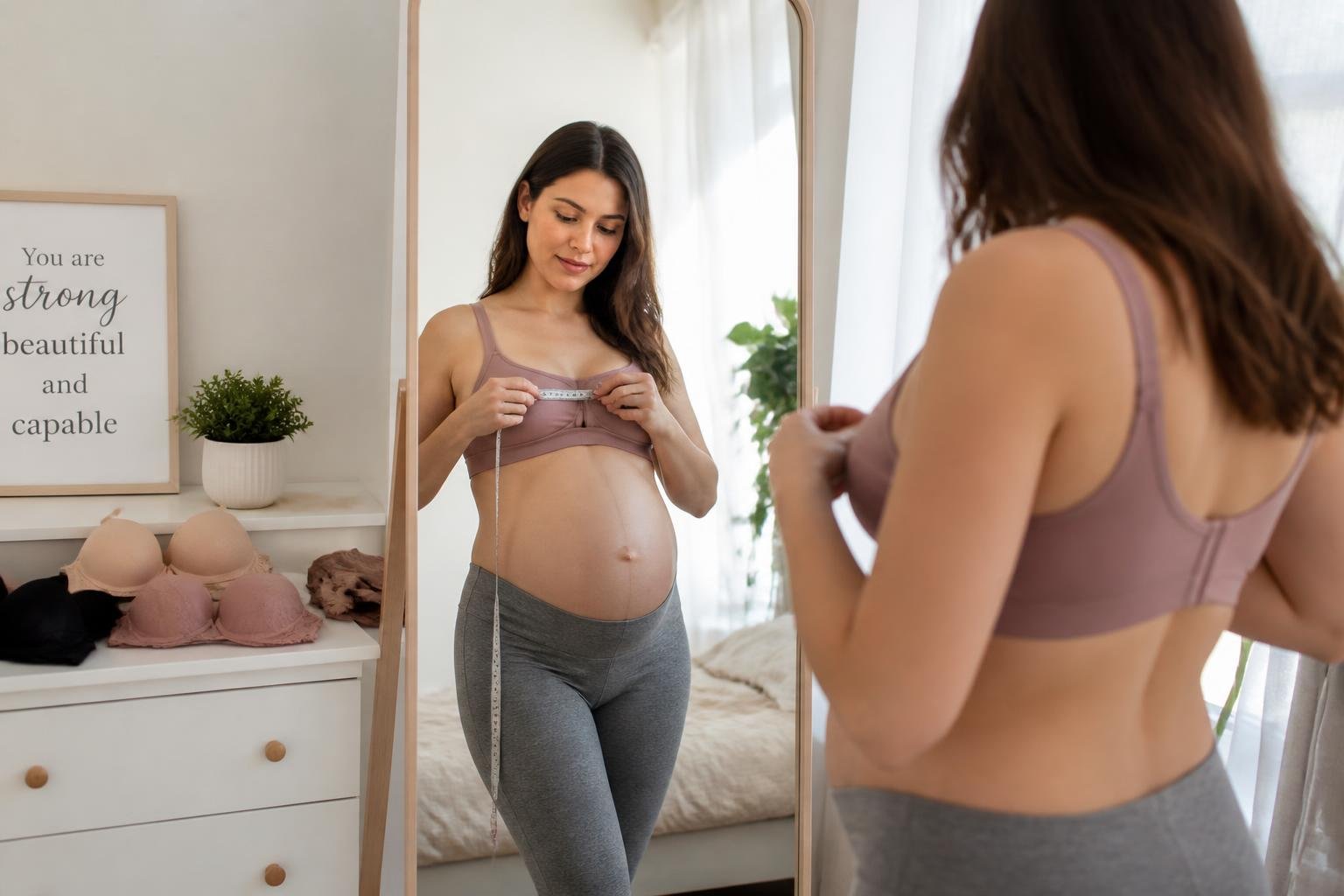
Your body changes fast during pregnancy, and your bra should keep up. You need to measure often, check the fit in real life, and adjust for comfort and support at each stage.
First Trimester: Early Adjustments
In the first trimester, your breasts may feel sore, heavy, or swollen. Even if your size has not changed much, your usual bra can start to feel tight.
Start with a simple check:
- Put your bra on the loosest hook.
- Make sure the band sits level across your back.
- Check that the cups do not press or gap.
If the band feels snug, try going up one band size. If the cups feel tight or cut into breast tissue, go up one cup size.
Soft, stretchy bras often work best now. Look for wireless styles with light support. Many people gain about one band size and one cup size during pregnancy, and growth can begin early.
Measure every 4–6 weeks. Early changes can be small but steady, so small bra size adjustments during pregnancy can make a big difference in comfort.
Second Trimester: Accommodating Growth
The second trimester often brings steady breast growth. Your rib cage may expand as your baby grows, which can change your band size.
Re-measure both your underbust (for band size) and full bust (for cup size). Use a soft tape and stand straight. The tape should feel snug but not tight.
During this stage of the trimester-by-trimester bra fit, focus on:
- A firm band that stays level
- Cups that fully contain your breasts
- Straps that do not dig into your shoulders
You may need another cup size up. Some people go up two cup sizes by this point.
Choose bras with multiple hook settings. This gives you room to tighten the band as it stretches out over time. Seamless maternity bras or light support bras with wide straps often feel more stable as your breasts get heavier.
Third Trimester: Maximizing Support
By the third trimester, your breasts may feel fuller and heavier than ever. Support matters more now.
Check for these signs of a good fit:
- No spillage at the top or sides
- No underwire pressing on breast tissue
- A snug band that does not ride up
If you wear underwire, make sure it sits flat against your rib cage and fully surrounds your breast. If it presses into soft tissue, switch to a larger cup or a wireless style.
Look for wide straps, a wide band, and strong side panels. These features help spread the weight evenly. Many pregnancy bra sizing guides suggest buying bras with extra stretch in the cups during this stage, since your breasts may be preparing for milk production.
Try your bra on at the end of the day. That is when swelling is often worse, and you will get a more realistic fit.
Bra Size Adjustment During Pregnancy
Bra size adjustment during pregnancy is not a one-time event. Your size can change several times. As stated by Medical News Today, cup size commonly starts increasing toward the end of the 1st trimester and may keep rising through pregnancy.
Follow these pregnancy and bra-fitting tips:
- Measure regularly, about once each trimester or more if you feel discomfort.
- Always fit to your current size, not your pre-pregnancy size.
- Buy one or two bras at a time instead of replacing everything at once.
Remember that tape measurements give you a starting size. The real test is how the bra feels after a few hours of wear.
If you plan to breastfeed, consider waiting until late in the third trimester to buy nursing bras. Choose styles with flexible cups that can handle early postpartum changes.
A steady, practical approach makes bra fitting for each trimester simpler and more comfortable.
Measuring and Choosing the Right Bra Size
Your rib cage expands, and your breast tissue grows at different points in pregnancy. You need to measure often, check the fit in real life, and choose styles that adjust as your body changes.
Using a Bra Size Guide
A bra size guide gives you a clear starting point. During pregnancy, your band size may increase as your rib cage widens, especially in the second and third trimesters. At the same time, your cup size can go up one to three sizes.
Most pregnancy bra sizing guides tell you to measure two areas:
- Underbust (band size): Measure snugly around your rib cage, right under your breasts.
- Bust (cup size): Measure around the fullest part of your breasts without pulling the tape tight.
Use a size chart to match these numbers to a band and cup size. If you fall between sizes, choose the larger cup. Breast shape often changes in pregnancy, and many women need more room than the chart suggests.
Check the fit on the loosest hook. The band should sit level across your back and not ride up.
How to Use a Bra Size Calculator
A bra size calculator can save time, especially when your size keeps changing. You enter your underbust and bust measurements, and the calculator suggests a size.
Start with fresh measurements. Do not rely on your pre-pregnancy size. Hormones and swelling can change your breasts quickly, even within a few weeks.
Keep in mind that calculators give an estimate. During pregnancy, they may underestimate cup size because breast tissue becomes fuller and heavier. If the suggested size feels tight across the cups or causes spilling, go up one cup size.
Use the result as a guide, not a final answer. Try on bras in that size and move around in them. Lift your arms. Sit down. Make sure the band stays in place, and the cups fully cover your breasts.
Tips for Accurate Sizing at Home
You can measure at home with a soft tape measure and a mirror. Wear a light, non-padded bra or measure without a bra for the most accurate numbers.
Follow these tips:
- Stand straight and keep the tape level all the way around.
- Keep the tape snug, but do not squeeze your skin.
- Measure at the same time of day, since swelling can change your size.
- Re-measure every trimester, or sooner if your bras feel tight.
When choosing bras during pregnancy, look for adjustable straps and multiple hook settings. Stretchy fabrics and wireless styles often feel more comfortable as your size shifts.
If a bra leaves deep marks, gaps at the cups, or a band that rides up, it does not fit well. Your size will likely change again, so choose bras that can adapt with you.
Types of Pregnancy and Postpartum Bras
Your body changes fast during pregnancy and after birth. The right bra at each stage can improve comfort, support breast growth, and make nursing easier.
Best Bras for Each Pregnancy Stage
In the first trimester, your breasts may feel sore and swollen. Choose a soft, wireless bra with light support. Stretchy cups and a wide band help as your size shifts week to week.
During the second trimester, many people go up about one band size and one to two cup sizes. Look for maternity lingerie with adjustable straps and multiple hook-and-eye closures. This extra room lets you loosen the band as your rib cage expands.
In the third trimester, support matters more. Your breasts feel heavier, and your belly changes your posture. Try bras with:
- Wider straps
- Full-coverage cups
- Strong elastic under the bust
- Breathable fabric like cotton
Some people prefer light underwire for lift, but only if it fits well and does not press into breast tissue.
Comparing Maternity Lingerie Options
Maternity lingerie comes in several styles. Each one serves a different need.
| Type | Best For | Key Features |
|---|---|---|
| Wireless maternity bras | Daily comfort | Soft cups, flexible fit |
| Underwire maternity bras | Extra lift | Structured support |
| Sleep bras | Nighttime | Pull-on style, light hold |
| Sports bras (pregnancy-safe) | Low-impact exercise | Compression, wide straps |
Wireless styles work well for most of pregnancy. They reduce pressure on tender tissue.
Underwire bras can work if they fit perfectly. Make sure the wire sits flat against your rib cage and not on breast tissue.
Many pregnancy lingerie recommendations focus on comfort first. Soft seams, tag-free designs, and stretchy fabric matter more than lace or padding.
Transitioning to Postpartum and Nursing Bras
You can buy nursing bras in the late third trimester, but wait to buy too many. Your size may change again after your milk comes in.
Postpartum bras and nursing bras often look similar to maternity bras. The main difference is the drop-down or clip-down cups. These let you feed your baby without removing your bra.
When you buy nursing bras, look for:
- Easy one-hand clips
- Extra hook settings
- Room for breast pads
- Firm but flexible support
In the early weeks after birth, your breasts may feel full and heavy. A supportive but non-restrictive bra helps you stay comfortable while your body adjusts.
Comfort and Support for Changing Bodies
Your breasts can grow, feel tender, and change shape at every stage of pregnancy. The right materials, fit, and support help you stay comfortable as your size shifts from trimester to trimester.
Selecting Comfortable Materials
Your skin often feels more sensitive during pregnancy. Hormone changes can make your breasts sore, warm, or itchy, especially in the first trimester.
Choose soft, breathable fabrics like cotton, modal, or bamboo blends. These materials allow airflow and reduce rubbing. Stretch fabrics with a small amount of spandex help the bra adjust as your cup size increases.
Look for:
- Seamless cups to reduce friction
- Wide straps that do not dig into your shoulders
- Soft bands with gentle elastic
- Tag-free designs to prevent irritation
Avoid stiff lace, rough seams, and tight underwires if they press on tender tissue. Some people still wear underwire bras during pregnancy, but the wire must fully encase the breast without sitting on breast tissue.
As your body changes, comfortable bras for pregnancy stages should feel supportive but never restrictive.
Preventing Discomfort with the Right Fit
A poor fit can cause back pain, shoulder strain, and skin marks. Since many women go up about one band size and up to two cup sizes during pregnancy, you may need to measure more than once.
Check your fit every trimester. Your bra should:
- Sit level across your back
- Rest flat between your breasts
- Fully contain breast tissue without spilling
- Feel snug on the loosest hook
Use bras with multiple hook settings so you can adjust the band as your rib cage expands. Some women notice their band size increases in the second and third trimesters as the baby grows and the rib cage widens.
If your breasts feel heavy, choose bras with a wider underband and structured side panels. These features spread the weight more evenly and reduce strain.
Supporting Breast Changes in Pregnancy
Breast growth often begins in the first trimester. By the second and third trimesters, you may notice fullness at the top of the cup, darker nipples, and visible veins due to increased blood flow.
Supporting breast changes in pregnancy means planning for both growth and milk production. Many people switch to maternity bras in the second trimester and move to nursing bras closer to birth.
Maternity bras usually offer:
- Extra stretch in the cups
- Flexible sizing
- No rigid structure
If you plan to breastfeed, choose a bra with drop-down cups and room for nursing pads. Do not buy too many nursing bras early, since your size may change again after birth.
Focus on steady support, room to grow, and easy adjustments as your body prepares for the next stage.
Frequently Asked Questions
Your breast size can shift early in pregnancy and keep changing through each trimester. Fit checks, band changes, and supportive styles all play a role in staying comfortable.
How much can my bra size change in the first trimester?
In the first trimester, you may notice tenderness and fullness within the first few weeks. Many people go up about one cup size during this time.
Some people see only a small change, while others need a larger cup right away. Hormones increase blood flow and prepare your breasts for milk production, which causes the growth.
If your bras feel tight or painful, it is a sign your size has likely changed.
When do most people need to buy new bras during pregnancy?
Many people buy new bras in the first or second trimester. It depends on how fast your breasts grow.
By the third trimester, most people have gone up at least one or two cup sizes. Some need new bras more than once during pregnancy.
You might also switch to maternity or nursing bras later in pregnancy to prepare for breastfeeding.
Is it normal for my band size to increase as my bump grows?
Yes, your band size can increase as your rib cage expands. Your body makes room for your growing uterus, which can push your ribs outward.
You may go up one band size, especially in the second or third trimester. If your band feels tight on the loosest hook, you likely need a larger band.
How often should I re-measure my bra size while pregnant?
Measure at least once per trimester. Your body can change quickly, so regular checks help you stay comfortable.
You can also re-measure any time your bra feels tight, gaps at the cups, or leaves deep marks. Some experts suggest checking again around 4 to 6 weeks after birth if you plan to breastfeed.
What kind of bra is most comfortable as my breasts get heavier?
Soft, stretchy bras often feel best as your breasts grow. Look for wide straps and a supportive band.
Seamless maternity or nursing bras can adjust to small size changes. Many people prefer wireless styles because they reduce pressure on sore tissue.
The key is support without squeezing.
How do I know if my bra doesn’t fit anymore during pregnancy?
Your bra does not fit if it digs into your shoulders, leaves red marks, or feels tight around your ribs. Spillage over the top or sides of the cups is another clear sign.
If the center of the bra no longer sits flat against your chest, the cup may be too small. Gaping cups can also mean your size has changed.
Comfort matters. If you feel distracted by your bra all day, it is time to try a new size.