

Best Bras for Mature Women (50+): Comfortable, Supportive Picks for Every Body
You want a bra that fits your changing body, feels comfortable all day, and gives reliable support without fuss.
The best bras for women over 50 combine wider bands and straps, stable cups, and softer fabrics so you get comfort, lift, and ease of use.
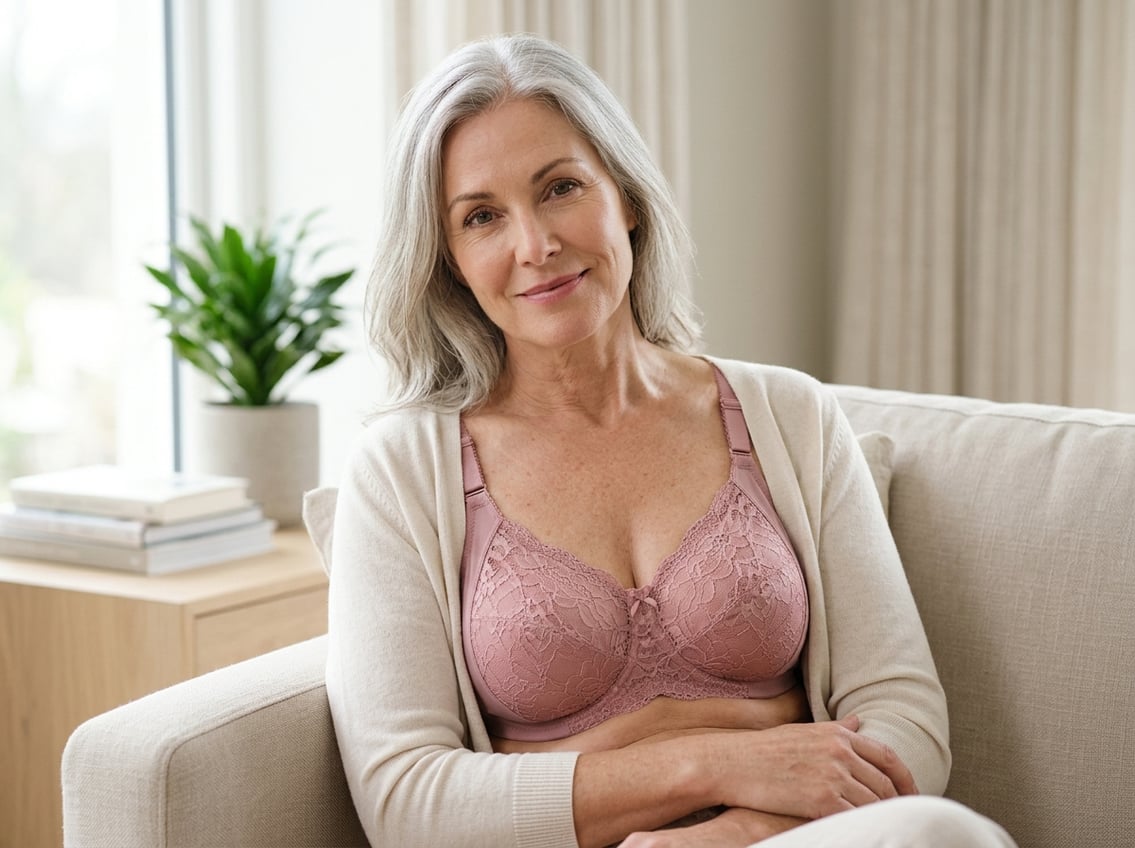
This guide walks you through how breasts change with age and which bra styles work best. You'll get tips on full-coverage and minimizer options, fit checks, and common questions so you can shop with a bit more confidence.
Understanding Changes in Breast Shape and Size Over 50
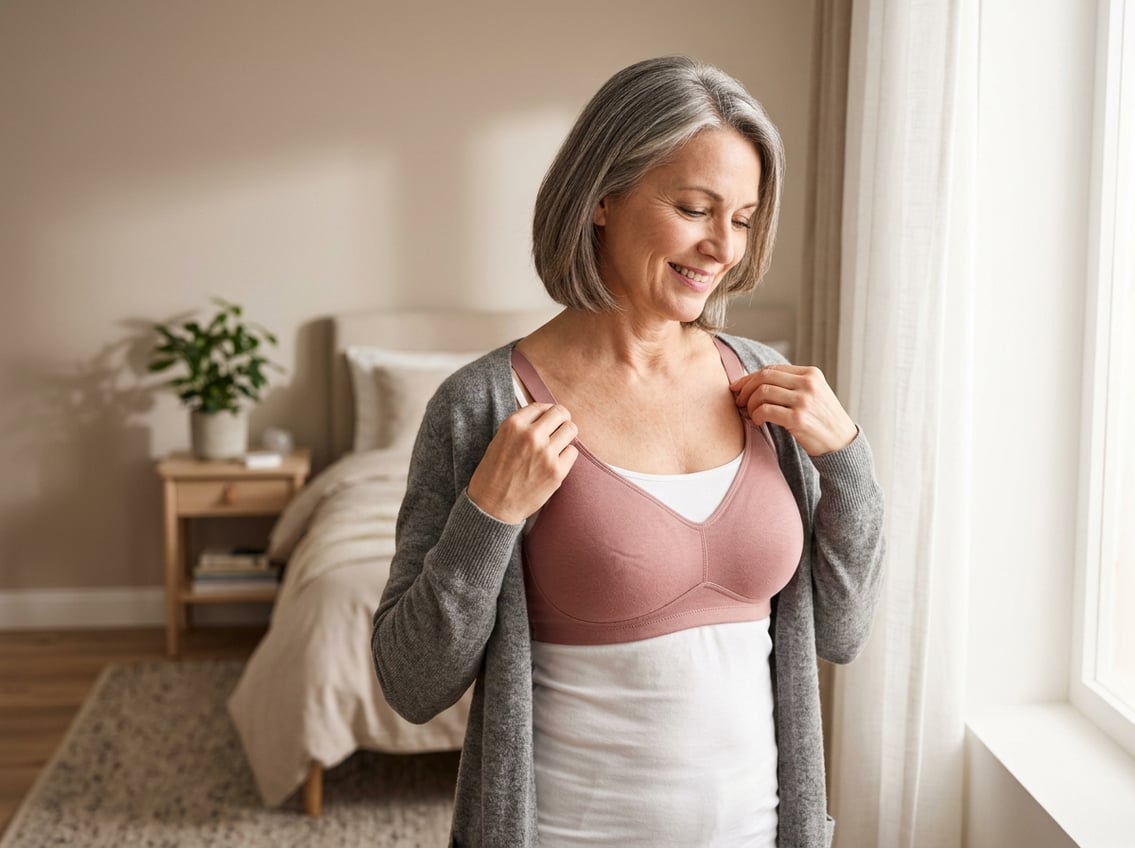
Your breasts change in predictable ways after 50. Expect shifts in volume, firmness, and position that affect fit, support needs, and comfort when you choose a bra.
How Breast Shape Changes With Age
Fat replaces glandular tissue, so breasts often feel softer and less dense. This can reduce natural lift and make the breast tissue sit lower on the chest.
You may notice wider root width, fuller lower poles, or a flatter upper bust that affects how cups fill. Skin and ligament elasticity drops, which increases sagging (ptosis).
Look for bras with wider bands, full-coverage cups, and side panels to center tissue and reduce bulging. For heavy breasts, prioritize strong underband support and wider, padded straps to spread weight and reduce shoulder strain.
If you had a mastectomy or reconstruction, your shape and symmetry can vary. Choose bras with removable pockets for prostheses and adjustable cup depth to get a balanced silhouette.
Common Post-Menopause Breast Concerns
Loss of firmness and volume is common after menopause because estrogen declines. You might gain or lose weight, which changes cup size and band measurements.
Re-measure every 6–12 months to keep fit accurate. Sagging (ptosis) can cause nipple position to drop below the inframammary fold.
For this, front-close, full support bras or bras with a built-in shelf or sling can lift and shape without pressure from underwire. Wireless bras with structured cups also work well if underwire irritates thin tissue.
Older heavy breasts often need bras labeled “support” or “full support.” Seek wide, cushioned straps, firm bands, and multi-panel cups.
If you use a prosthesis after surgery, get bras with pockets or post-mastectomy styles to ensure even balance and comfort.
Interestingly, a peer-reviewed study of 269 mature women aged 40–85 found that up to 70% of older women report dissatisfaction with their breasts, as the physical changes that occur with aging, including increased ptosis (sagging) and breast size changes, significantly fuel this dissatisfaction.
Types of Bras Ideal for Mature Women
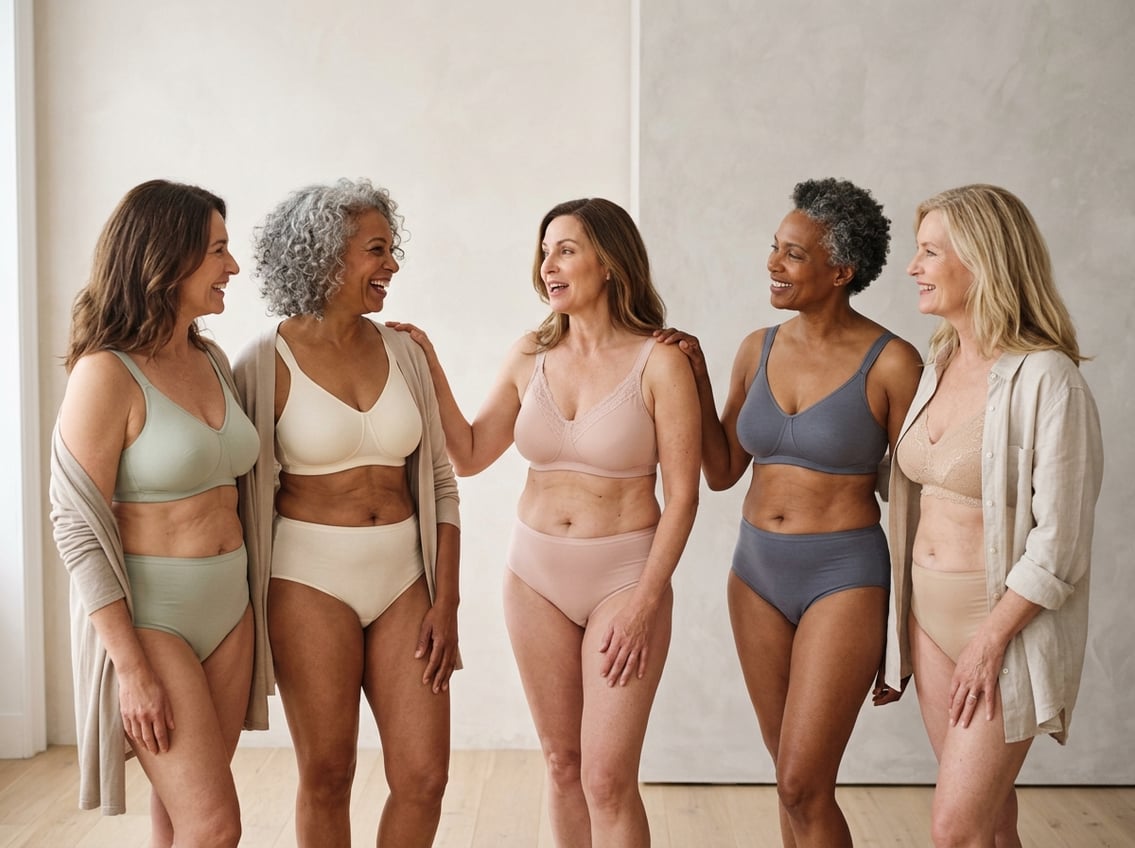
These options focus on fit, comfort, and support that change with age. Choose based on your cup size, activity level, and any medical needs like post-mastectomy care.
Full Coverage Bras Explained
Full coverage bras wrap more of your breast tissue, reducing spill and giving a smooth silhouette under clothes. They work well if you wear larger cups or want extra side and top support.
Look for wider straps, a firm underband, and multi-panel cups to prevent gaps and redistribute weight. For daily wear, choose fabrics with some stretch and breathable linings to avoid irritation.
In Pakistan or similar climates, cotton blends and moisture-wicking linings help keep you cool. If you need a full coverage bra for mature women with added shaping, seek three- or four-part cups that maintain lift without pushing forward.
Key features to check:
- Wide, padded straps for comfort
- Strong back band for support
- Seamed cups for shaping and durability
Supportive and Minimizer Bra Options
Supportive bras use firm bands, reinforced side panels, and structured cups to hold weight close to the chest. They reduce shoulder strain and improve posture important after menopause when tissue changes occur.
A supportive bra for post-menopause should have a snug underband and adjustable straps you can tighten without digging. Minimizer bras reduce apparent bust projection by redistributing breast tissue across the chest.
They help if you want a smaller profile under fitted tops. Choose minimizer bras with smooth, lightly molded cups and a stable center gore.
Ensure the bra does not compress too tightly; it should still allow comfortable breathing and no bulging at the straps or band. Look for:
- Firm elastic underband
- Wide wings and side panels
- Balanced cup shape to avoid flattening completely
Wireless and Non-Wired Choices
Wireless bras remove the underwire but keep shape with stronger fabrics and smart seaming. They suit sensitive skin and those who prefer softer pressure across the ribcage.
A wireless bra for women over 50 can offer excellent support if it has molded cups, wide straps, and a reinforced band. Options include front-close wirefree bras and longline styles that spread support across the torso.
For evewire-freewire-freemfort in warm climates like Pakistan, choose non-wired comfortable bras with breathable materials and a flexible fit. If you need eas,,y on/off, front-closure wireless bras or hook-free bralettes can help while still providing shaping.
Check for:
- Wide, supportive band
- Structured seams or molded cups
- Breathable fabric and wide straps
Post-Mastectomy and Specialty Bras
Post-mastectomy bras include pockets for prostheses, soft seams, and gentle fabrics to protect scar tissue. They come in wired and non-wired styles; choose what feels most comfortable.
If you had lymph node removal or radiation, seek bras with minimal seams and wide straps to reduce rubbing and swelling. Look for certified post-mastectomy features:
- Internal pockets for breast forms
- Soft cotton or microfibre linings
- Adjustable straps and secure back closure
Specialty bras also cover issues like asymmetry, wide-set breasts, or chronic shoulder pain. A professional fitting helps you select the right prosthesis-compatible bra or a custom fitting to match your unique shape.
Achieving Comfort and Support in Lingerie
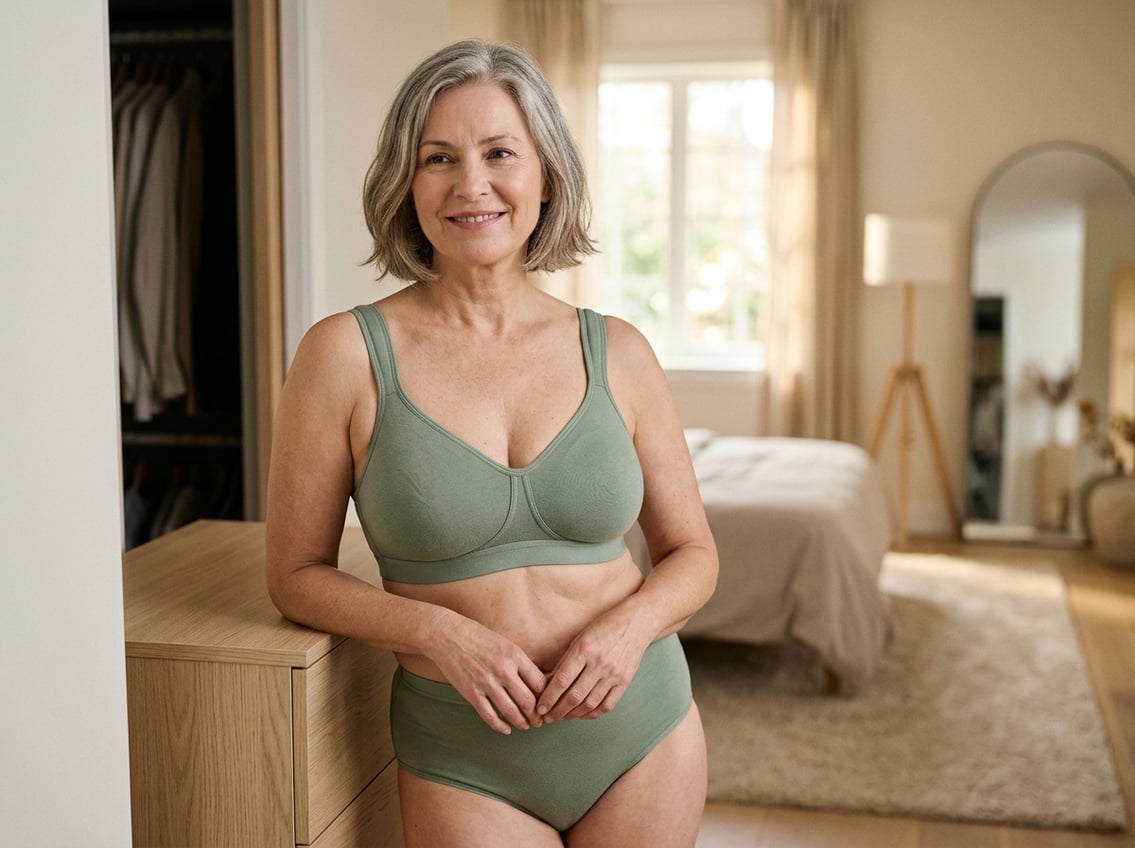
Focus on fit, fabric, and stable design. Pick bras that reduce rubbing, lift without pain, and sit flat under clothing.
Selecting the Right Fit
Measure your band and cup at home or get fitted in-store every year. Your band should be snug on the loosest hook and sit level around your ribcage.
If the band rides up, try a smaller band or a bra with a wider back. Look for cups that enclose your breast tissue without spillage or gaps.
Wide side panels and full-coverage cups give more support and reduce underarm bulge. For a comfortable bra for older women, choose wider straps (at least 1 inch) and a broader center gore to distribute weight.
Pay attention to cup construction: three-seam or molded cups shape without excessive pressure. Try front-close or wireless styles if bending and reaching are hard.
Reassess fit if you gain or lose weight, or if the bra stretches out after repeated washing.
According to a PMC study, more than 80% of breast cancers occur after the age of 50, and with increasing age, the elasticity of the mammary gland decreases as it is replaced by fatty tissue, making proper bra support at this stage critically important for both comfort and health.
Skin-Friendly Fabrics and Features
Choose soft, breathable fabrics like cotton blends, modal, or bamboo for sensitive skin. These fibers reduce irritation and wick moisture during hot flashes or humid days.
Look for tags printed on the fabric or seamless labels to avoid chafing at the back of the neck. Select bras with covered seams, soft-lined cups, and padded straps to cushion pressure points.
If you prefer no underwire, choose a structured wireless bra with reinforced panels for support. For women with very sensitive skin, hypoallergenic fabrics and dye-free options help prevent rash and redness.
Check closures and hardware: smooth-coated hooks and flat rings minimize digging. Consider removable pads and adjustable strap sliders so you can fine-tune comfort without replacing the whole bra.
Bracers That Stay in Place All Day
Stability comes from a firm band, wide straps, and a snug fit. A bra that stays in place all day has a band that fits on the first or second hook and does not stretch out quickly.
Look for bras with reinforced back panels or elastic-lined bands to maintain tension. Wide, cushioned straps prevent slipping and reduce shoulder pain.
Adjustable straps let you move the weight off the shoulders and onto the band. For extra hold, choose bras with side boning or foam-lined wings to stop movement under the arms.
Try styles with a higher back or racerback convertibility to keep straps secure, especially during activity. Test a bra by raising your arms and bending forward; it should stay put without riding up or shifting.
Navigating Sizing and Fit for Body Changes
Your body changes with age, weight shifts, and menopause. Focus on accurate measurements, a snug band, and cups that cradle without gaps or overflow.
Assessing Size After Weight and Body Changes
Re-measure your band and bust every 6–12 months, or after any weight change of 5–10 pounds. Use a soft tape measure: wrap it level under your bust for the band, and around the fullest part for the bust.
Record both numbers and compare them to the current sizing chart. Expect changes such as a wider ribcage, softer breast tissue, or reduced breast volume.
These can move ya ou up or down a cup or change your band size. Try sister sizes (one band size up, cup size down, or vice versa) to find comfort if the chart feels off.
Look for bras with multiple hook settings and adjustable straps. These let you tighten or loosen the band as your body shifts.
If you wear the same size you did in your 30s, test fit before buying, don’t assume it still fits. It’s a little surprising how much things can shift, honestly.
Finding a Proper Bra Fit
Start with the band: it should sit level around your body and feel snug on the loosest hook when new. The band gives most of the support, so avoid straps doing all the work.
Cups should contain breast tissue without spillage or wrinkling. If the center gore (the piece between cups) lifts away from your chest, try a larger cup or a narrower wire.
If cups bulge, try a larger cup or a different style. Check strap comfort: they should sit on your shoulders without digging in.
Use the strap and hook adjustments to balance support between the band and the straps. Move around, raise your arms, and bend to confirm the bra stays in place.
Matching Your Bra to Your Breast Shape
Identify your breast shape: full on top, full on bottom, even, close-set, or widely spaced. Shape guides help match styles to your needs.
For full-on-bottom breasts, choose bras with lower center seams and vertical seaming for lift. For full-on-top or even breasts, molded cups or balconette styles give smooth support.
If breasts sit wide, pick bras with closer-set cups or a narrow center gore. If the tissue is softer or lower, choose a bra with wider underbands, side panels, and supportive wings.
Wireless and minimizer options can offer comfort while still shaping. Try several styles to find what sits best against your chest and under clothing.
Full Coverage vs Minimizer Bras: A Comparative Guide
Full coverage bras give more fabric over the breast and wider bands for support. Minimizer bras reshape the breast to reduce forward projection and create a smoother profile under clothing.
Benefits of Full Coverage Bras
Full coverage bras cover most of the breast tissue from the center gore to the side wing. This reduces side spillage and “quad-boob,” so your silhouette looks smooth in shirts and sweaters.
Wider straps and bands spread weight across your shoulders and back, which helps reduce shoulder pain and back strain common as you age. Look for soft seams and breathable fabrics if your skin is sensitive.
Wire-free or lightly wired options protect tender tissue while still offering lift. Many full coverage bras include an inner sling or molded cups to keep shape without pressing too hard on breast tissue.
Advantages of Minimizer Bras
Minimizer bras work by redistributing breast tissue, which can reduce forward projection by about one cup size. For anyone who's tired of shirts pulling across the bust or wants less pressure on the chest, it's honestly a relief.
Most minimizers use firm, seamless cups and a higher center front, which keeps everything in place and prevents that extra fullness at the top. It's a subtle difference, but it can really change how clothes fit.
If you're picking one out, look for a wide underband and cushioned straps so nothing digs in. Some of the more aggressive minimizers can feel pretty compressive, so if you've lost volume after menopause, maybe start with a gentler version or one with softer molding. No one wants to lose their natural shape entirely, right?
Choosing the Best Option for Your Needs
It really comes down to what feels best for your body, your routine, and your favorite outfits. If you're after maximum support, less bounce, and more comfort for long days, a full coverage bra is usually a solid bet.
But if you want a slimmer look under fitted tops and less forward projection, minimizers are worth a try. It’s not always about the label; fit is everything.
Measure for your real band and cup size, check that straps aren’t slipping or digging, and make sure the center gore actually lies flat. If you’ve got sensitive skin or arthritis that makes clasps tricky, wire-free full coverage bras are a lifesaver.
Honestly, sometimes you just have to test both styles to find the balance between support and shape that feels right for you.
Frequently Asked Questions
These answers focus on practical features and brand types that give better fit, comfort, and ease for women 50+. You’ll find clear options for a lift sensitive skin, small and large cups, closure styles, and trusted makers.
What bra features provide the best lift and support for sagging breasts?
Go for an underwire with a full or balconette cup; they lift breast tissue and really define your shape. Wide, adjustable straps and a firm band do most of the heavy lifting and keep your bra from creeping up your back.
Multi-part (seamed) cups shape and center the breast better than single-piece cups. Wide side panels and a higher gore at the center front help control side tissue and boost lift.
Which bra styles are most comfortable for all-day wear with sensitive or thinning skin?
Wireless, full-coverage bras made from soft, seamless fabrics are usually the winners here. Tagless designs and flat seams help avoid annoying irritation.
Wider bands and straps spread pressure out, cutting down on soreness. Cotton blends or modal? Super gentle and breathable for sensitive skin.
What are the best bras for older women with small breasts that still provide shape and support?
Molded or lightly padded bras add shape without bulk, keeping things smooth under clothes. Balconette and demi styles with lower cups can give a natural lift and a rounded look if that's your thing.
Adjustable wings and a snug band help prevent shifting. Foam lining or thin padding gives you shape while staying comfortable ot too much, not too little.
What bra options work best for older women with large breasts to reduce strain on shoulders and back?
Full-coverage, wide-band bras with strong side panels are htheir their onestly a must for larger busts. Broad, padded straps and a multi-hook back closure help distribute weight and cut down on shoulder pressure.
Front-closure bras with wide bands and solid underband support can ease back strain. Longline styles, with that wider underbust band, help by spreading weight across more surface area.
How do front-closure bras compare to back-closure bras for ease of use and support?
Front-closure bras are just easier to fasten, especially if you’ve got limited shoulder mobility or arthritis. They usually give a smooth front, but sometimes you lose a bit of adjustability in the band compared to back-closure styles.
Back-closure bras let you fine-tune the band with multiple hooks, which can be a game changer for a custom fit. For max support, look for designs that combine a game-changer closure with wide bands and straps.
Which brands are most reliable for supportive, comfortable bras for older women, and how do they compare?
When shopping for bras as an older woman, it's worth focusing on brands with full-coverage fits and soft, forgiving materials. Wide size ranges matter too; nobody wants to squeeze into something that just doesn't fit.
Some brands really stand out for comfort and support, especially those offering wireless full-coverage bras and front-closure designs. Extended cup and band sizes are a big plus, especially as bodies change with age.
It's smart to compare brands by looking at cup construction and how firm the band feels. Strap width actually makes a noticeable difference in comfort, too.
User reviews can be surprisingly honest about fit, especially for sagging or larger breasts. It's worth reading through a few before deciding.
Brands that offer easy returns and solid fitting guides are ideal, so you can test the fit at home without the stress of being stuck with something that doesn't work.
Conclusion
Finding the right bra after 50 isn't always straightforward, and honestly, it might take a bit of trial and error.
But with the right support, fabrics, and features, you can feel comfortable, look great, and maybe even enjoy the process a little. Your needs are unique, so trust your instincts and don't settle for less than what feels good on your body.