

Silk Scrunchies vs Hair Ties: Which Is Better for Your Hair?
A silk scrunchie is usually gentler on your hair than a plain elastic hair tie. Its smooth fabric covering creates less friction and spreads the grip over a wider band, so it snags and creases your hair less. It isn't damage-proof, though: a scrunchie wrapped too tightly still pulls, and a slim covered elastic often holds better during exercise.
If you tie your hair up for most of the day, in the heat, under a dupatta or hijab, or for sleep, the accessory you use matters. The best choice depends on how it fits your hair and how gently you put it on and take it off.
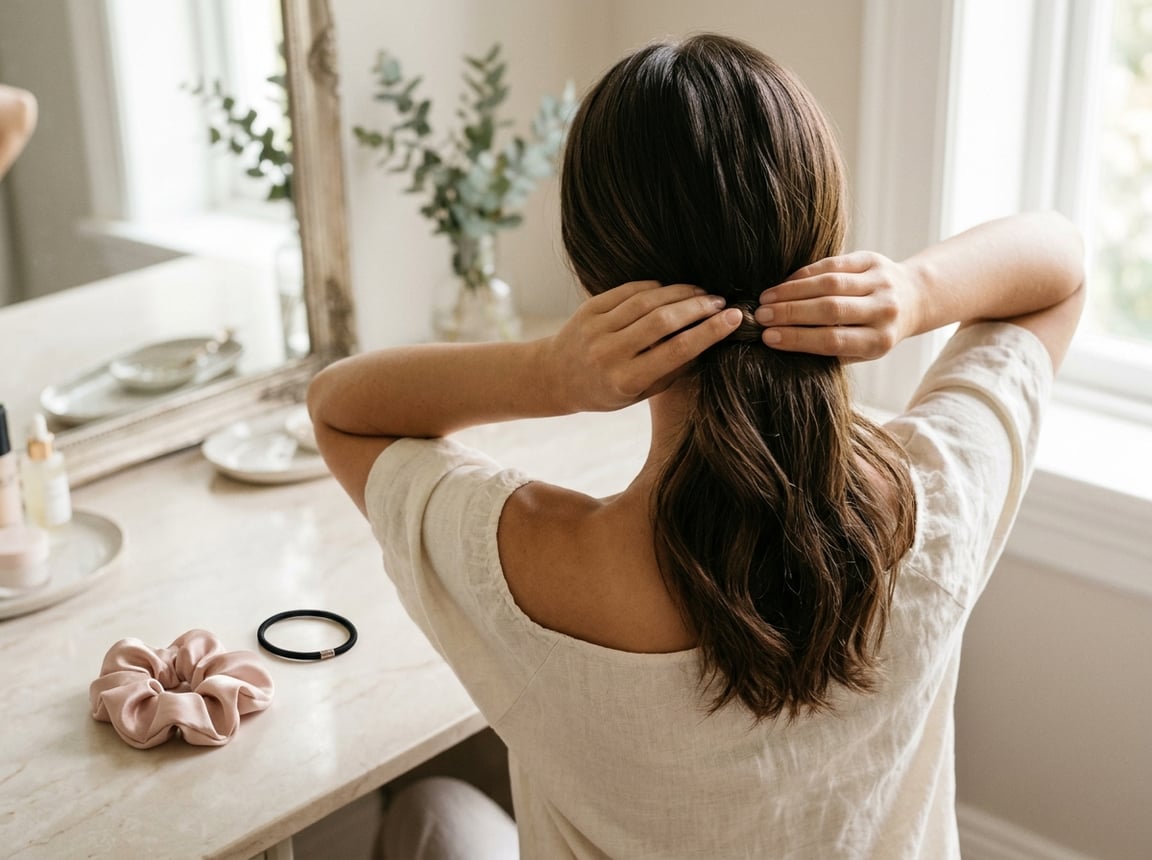
Key Takeaways
- Gentler surface: smooth silk causes less friction than exposed rubber or rough elastic, which helps reduce hair breakage.
- Fit matters most: any tie that's too tight, too loose or dragged out of tangled hair can still damage strands.
- Smoothness matters most: silk and smooth satin are both gentle choices, as long as the seams are neat and the elastic is fully covered.
- Use the right tie for the job: a loose silk scrunchie suits sleep and everyday wear, while a covered elastic often suits workouts.
Are Scrunchies Better for Your Hair Than Elastic Hair Ties?
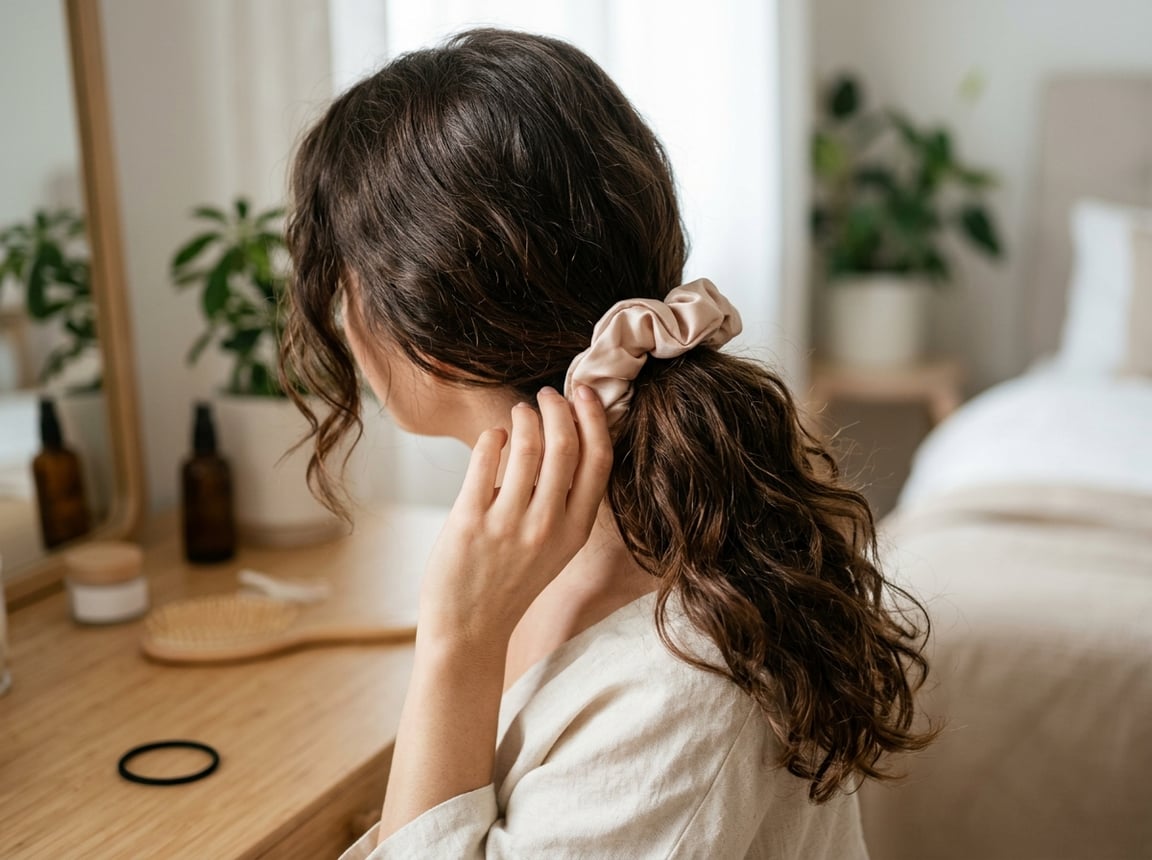
Scrunchies are usually better for your hair than bare elastic hair ties, because the fabric covering is smoother and softer against your strands. But the elastic inside still grips your hair, so tightness and how you remove it matter just as much as the fabric.
How Friction, Tightness and Removal Cause Hair Breakage
When you ask "are scrunchies better for your hair?", start with the surface that touches your strands. Exposed rubber, rough joins and loose threads create catching points every time you put a tie on or take it off.
Your habits matter too. Pulling a ponytail tight every day, or dragging a tie through tangled ends, stresses the same strands again and again. According to the American Academy of Dermatology, a style that hurts is too tight, and broken hairs along your hairline are an early warning sign. Keep your style comfortably loose and change its position between wears.
Silk Scrunchie vs Elastic Hair Tie: Quick Comparison
You'll notice the difference most when you put your hair up and take it down. A scrunchie feels padded, while a slim covered elastic takes up less space. Use this table as a starting point, since the size and strength of each accessory also affect the result.
| What you notice | Smooth silk scrunchie | Slim covered elastic hair tie |
|---|---|---|
| Surface against your hair | Soft fabric folds | Narrow fabric band |
| Feel at the base | Cushioned | Compact |
| Ponytail creases | Fewer, but possible | More likely |
| Snagging points | Seams and loose threads | Joins and worn covering |
| Hold during workouts | Depends on fit | Often firmer |
A crease on its own doesn't mean your hair has broken. Look for short snapped strands, and notice whether the tie catches or pulls when you take it out.
What Makes Silk Different From Satin and Cotton?
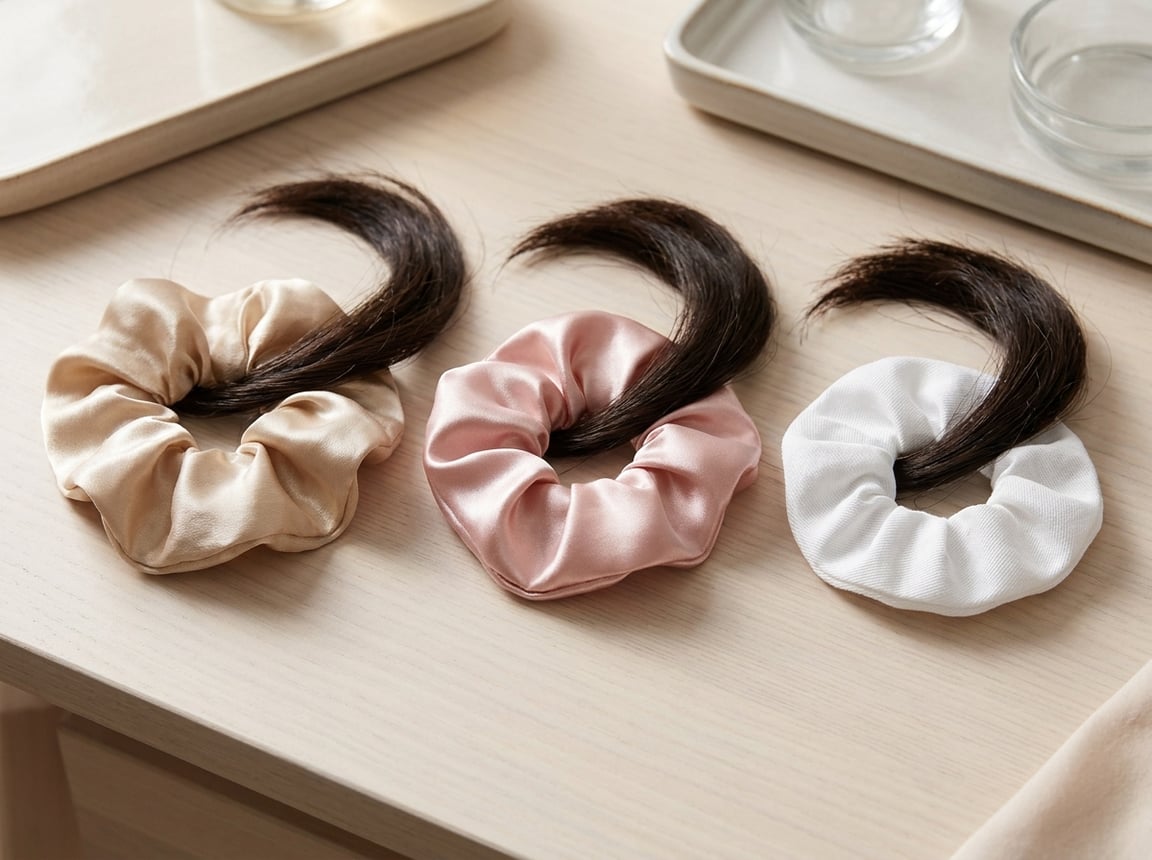
Silk is a natural fibre, while satin is a smooth weave. Both give your hair a slippery, low-friction surface, which is what makes them gentler than rough elastic.
Silk Is a Fibre, Satin Is a Weave
"Silk" is the name of a natural fibre. "Satin" describes a weave with a smooth, shiny face, and it can be made from silk or other fibres. What matters most for your hair is a surface that feels smooth and soft, without rough texture or loose threads.
It's the same difference you'll see when comparing cotton vs satin nightwear. With a cotton scrunchie, check the surface closely: a smooth, tightly woven cotton feels very different from a textured fabric with raised fibres.
Does Mulberry Silk Make a Difference?
A mulberry silk label tells you the type of silk used. It doesn't tell you whether the elastic suits your ponytail or whether the seam will catch your hair.
For a real quality check, look past the fibre name. You want an even fabric surface, tidy stitching and no exposed elastic. As with any fabric and comfort choice, how the finished piece sits against you matters as much as the material.
Which Scrunchies Suit Your Hair Type?
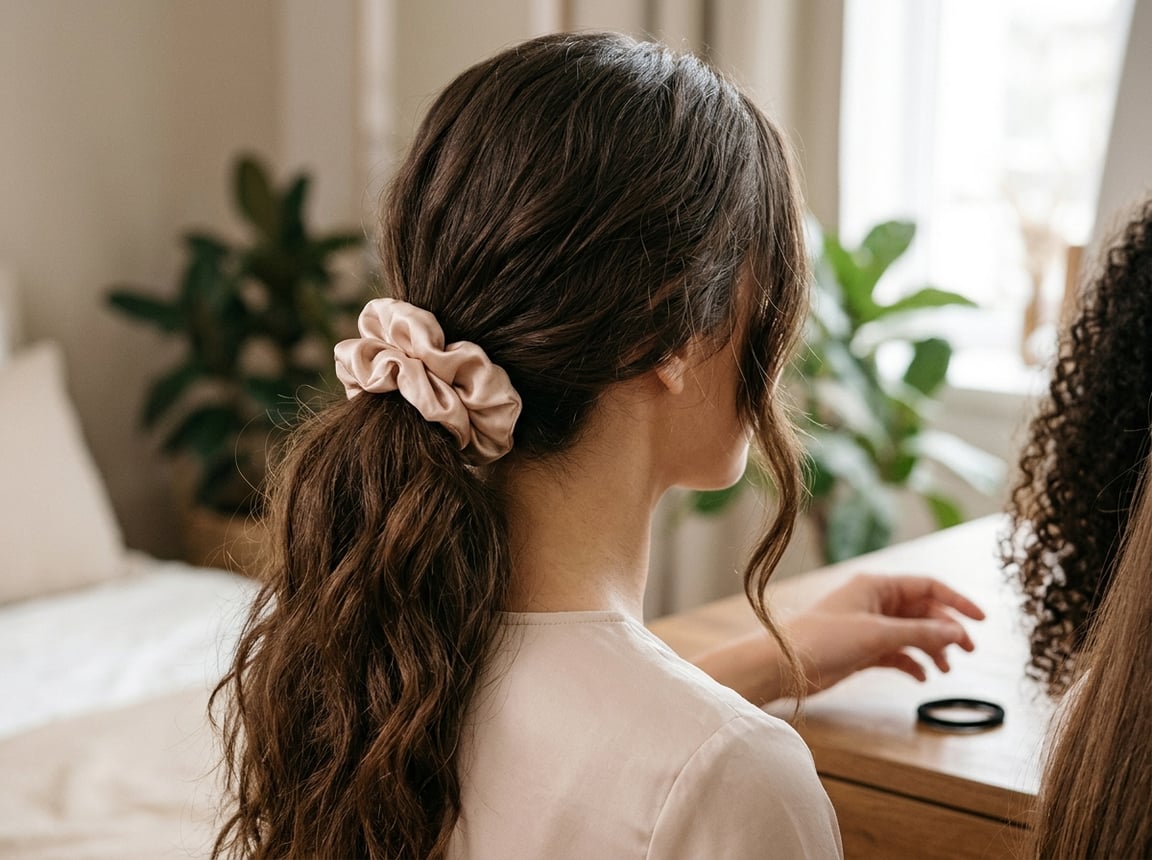
When choosing scrunchies for hair, think about how thick your ponytail is and how much stretch you need to hold it comfortably. Whatever your hair type, the right fit holds your style securely and comes out without a tug.
Scrunchies for Thin or Fine Hair
For scrunchies for thin hair, start with a smaller opening and lightweight fabric. A large, heavy scrunchie is hard to keep in place on a small ponytail.
After you tie it, turn your head and nod gently. If your ponytail slips straight away, try a smaller size or firmer elastic. Wrapping an oversized scrunchie more times adds pressure without fixing the fit.
Scrunchies for Thick Hair
For scrunchies for thick hair, check how far the elastic actually stretches, not just how big the fabric looks. A scrunchie can look large but still have elastic that's too short for your ponytail.
You should be able to make the last wrap without forcing it over your hair. If that wrap pulls sharply at your roots, choose a scrunchie with a larger opening.
Scrunchies for Curly and Fragile Hair
For curly hair, choose smooth fabric and a neat, covered seam. Leave enough room around your curls so the base isn't flattened tightly.
If your hair is bleached or fragile, take extra care with the ends when you remove your scrunchie. Unwind each loop while holding your ponytail, and free any caught strands with your fingers.
How Should You Tie Your Hair for Sleep, Exercise and Under a Hijab?
Use a loose style for sleep and under a head covering, and a secure but comfortable style for exercise. In each case, your scalp should feel relaxed, with no constant pulling at your hairline.
Using a Silk Scrunchie for Sleeping
A silk scrunchie for sleeping works best in a loose braid or a soft, low ponytail. Place it where you won't lie directly on it, and leave your hair loose if tying it feels uncomfortable.
Keep the elastic relaxed enough that you feel no pulling when you turn your head. As with deciding whether to wear a bra to bed, let comfort guide you, and take out anything that feels restrictive.
Balancing Workout Hold With Scalp Comfort
For exercise, choose enough grip to keep hair off your face. Test your style with the moves you plan to do, such as bending forward or jogging on the spot.
Give your hair tie the same attention you'd give to the best bras for gym, yoga and home workouts. A smooth covered elastic is a practical choice if your scrunchie keeps slipping. Avoid pulling it extra tight every session, because the NHS warns that frequently wearing tight styles can lead to a type of hair loss called traction alopecia.
Tying Your Hair Under a Hijab or Dupatta
Many women in Pakistan keep their hair tied under a hijab or dupatta for hours at a time. A tight bun under a head covering pulls on the same spot all day, so tie your hair loosely and low.
A soft scrunchie also avoids the hard ridge a thick elastic can leave under fabric. Just as you'd choose the best bras for women who wear hijab for comfort over long days, choose a hair tie you can forget you're wearing.
How to Remove a Hair Tie Without Pulling
Hold your ponytail near the base with one hand. With the other, loosen and unwind the outer loop before moving to the next one.
Once the loops are open, ease the tie away from your hair. If strands catch, stop and separate them with your fingers, because pulling harder tightens the snag and causes more hair breakage.
What Should You Check Before Buying and Washing a Scrunchie?
Check how the fabric feels, how neat the seams are and how well the elastic springs back before you buy. Then wash your scrunchie gently to keep the surface smooth and the elastic stretchy.
Check the Fabric, Seams and Elastic
When you browse our scrunchies, look for a smooth, soft fabric that glides over your hair without catching.
Check the join for rough stitching or exposed elastic. Gently stretch the scrunchie and let go; it should return close to its original shape. Replace any scrunchie with frayed fabric or an overstretched band that needs extra wraps.
Choosing an Everyday Pack or a Small Gift
A pack gives you a spare while one dries after washing. The Poppy Silk Scrunchie Pack of 2 comes in red and black or purple and blue, so you have two colours to match different outfits.
Scrunchies also make an easy add-on to a nightwear gift. Our lingerie gift guide has more ideas, or you can let her choose with an IFG gift card. Think about her hair length and favourite colours, and add a note on gentle washing.
How to Wash Silk and Satin Scrunchies
Hand washing is the safest way to clean silk and satin scrunchies. Use cool water and a little gentle, enzyme-free detergent. Swish the scrunchie through the water, then rinse well.
Press out the water with a clean towel and air dry it away from direct sunlight. Never wring silk or use high heat. If you use a washing machine for other fabrics, choose a cold, gentle cycle and a mesh bag to stop tangling.
Wash your scrunchie after heavy sweating or when hair products build up. Store clean scrunchies somewhere dry, away from rough clips that could snag the fabric.
Frequently Asked Questions
Are silk scrunchies better than regular elastic hair ties?
For everyday wear, yes. A smooth silk scrunchie usually feels gentler than a narrow elastic because the fabric is softer against your hair. A well-fitting covered elastic is still useful when you need a compact, firm hold for exercise.
Can silk scrunchies still cause hair breakage?
Yes. A silk scrunchie can still cause hair breakage if you wrap it too tightly or pull it through tangled strands. Keep the tension comfortable and unwind each loop before you take it out.
Will a silk scrunchie slip out of thin hair?
It can, if the opening is too big for your ponytail. Choose a smaller scrunchie with lightweight fabric, then test the hold by turning and nodding your head.
Is silk or satin better for sleeping?
Both work for sleep if the scrunchie is smooth and loosely tied. Silk is a natural fibre and satin is a smooth weave, and both give your hair a gentle, low-friction surface.
Are spiral hair ties gentler than scrunchies?
Not necessarily. A spiral tie still grips and can tangle, so tightness and careful removal matter just as much. If a spiral catches your hair, try a smooth, fabric-covered scrunchie with a comfortable fit.
Conclusion
For most everyday styles, a silk scrunchie is kinder to your hair than a plain elastic hair tie. Its smooth surface causes less friction and fewer creases, which supports healthy hair with less breakage. Still, no scrunchie can make up for a style that's too tight or a tie that's dragged out of tangled hair.
Choose a scrunchie that fits your hair type, wear it loosely for sleep and under a hijab, and save a firmer covered elastic for workouts. Check the seams and elastic before you buy, and wash your scrunchie gently to keep it smooth. Replace it as soon as it frays or loses its stretch.