
Breast Pads vs Nipple Covers: What Each One Does
The difference between breast pads and nipple covers is their job: breast pads absorb leaking milk, while cosmetic nipple covers hide nipple visibility under clothing. Absorbent pads help keep your bra and clothes dry between feeds. Nipple covers smooth the outline of your nipples, but they give you little or no milk absorption.
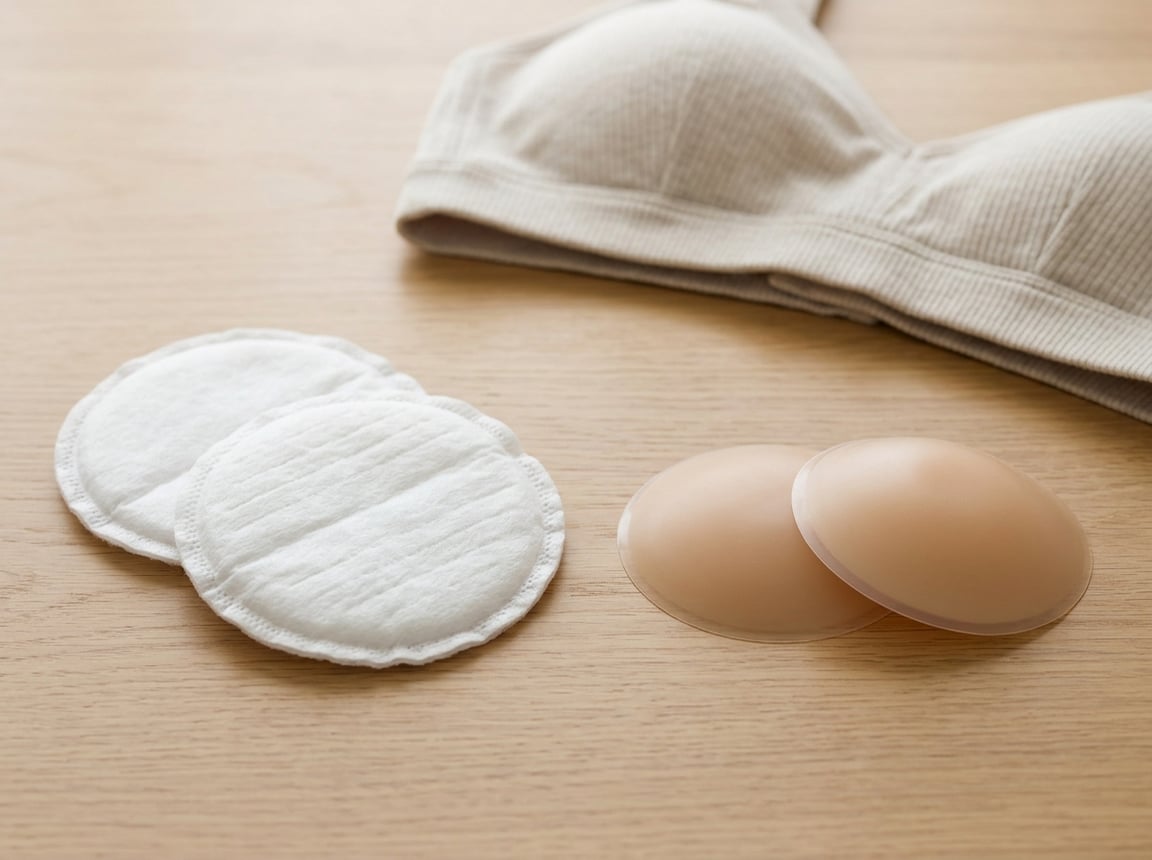
Shopping gets confusing when both products are labelled "nipple pads". You'll make a clearer choice by checking the stated purpose: milk absorption or outfit coverage. If you're breastfeeding and dealing with sensitive skin, that distinction also helps you avoid putting cosmetic adhesive on sore nipples.
Do You Need Leak Absorption or Nipple Coverage?
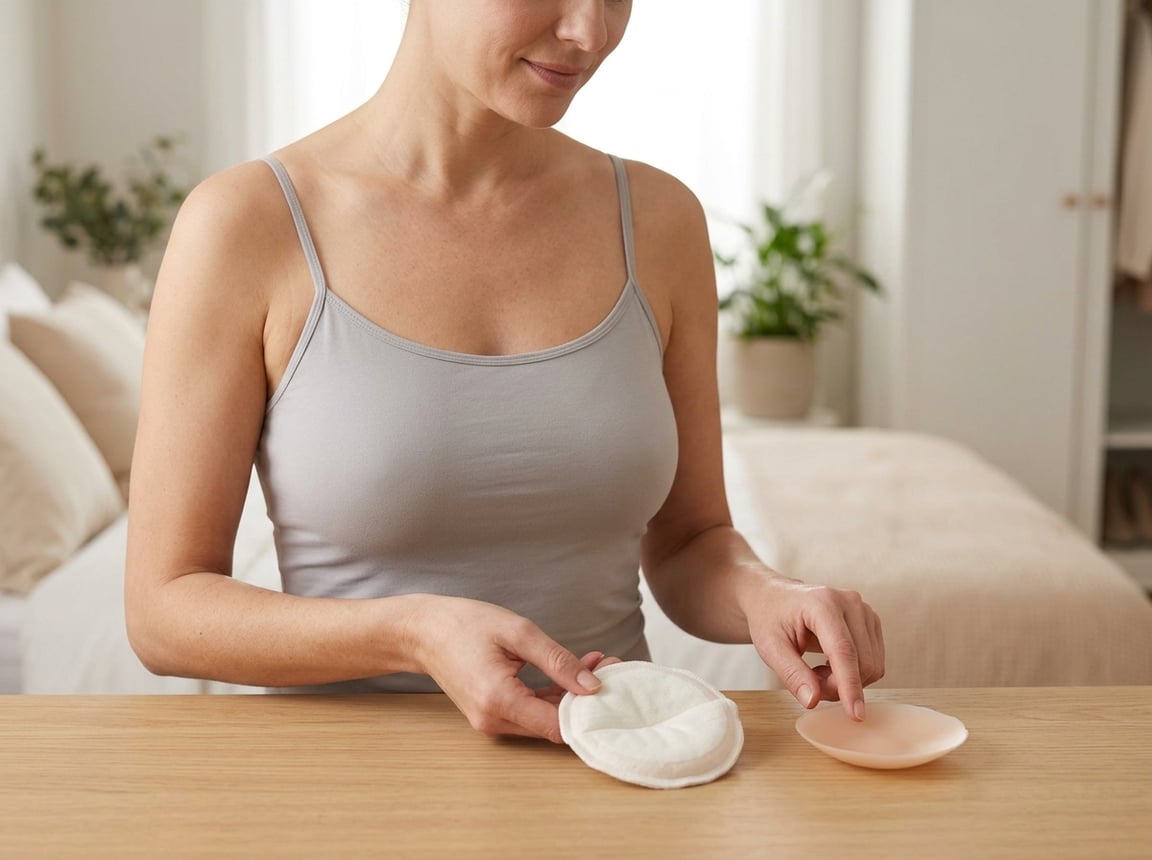
Choose absorbent nursing pads when you're leaking milk; choose cosmetic covers when your goal is a smoother outline under clothing. You'll need a separate support garment if you also want lift or help holding your breasts in place.
Breast Pads Absorb Milk; Cosmetic Covers Conceal Nipples
With breast pads, you place an absorbent layer between your nipple and your clothing. With cosmetic nipple covers, you place a thin fabric or silicone cover over your nipple to reduce show-through.
Use the product description to sort out vague terms such as "nipple pads" or "nipple covers for breastfeeding". Look for a clear statement about absorption, materials and intended use.
| What you're comparing | Breast pads | Cosmetic nipple covers |
|---|---|---|
| Main goal | Milk absorption | Nipple concealment |
| Material against your skin | Absorbent fabric or lining | Silicone or thin fabric |
| Placement | Inside a bra or fitted top | Directly over your nipple |
| Staying in place | Garment support; some adhesive tabs | Skin adhesive or close-fitting clothing |
| Reuse options | Disposable or washable | Single-use or reusable |
Why Neither Product Replaces Bra Support
You get support from a garment's band, cups and straps. A breast pad adds an absorbent layer, while a standard cosmetic cover adds localised coverage. Neither gives you the structure of a supportive bra.
If you enjoy going braless, you might need only nipple coverage for a particular outfit. If movement feels uncomfortable or you want lift, choose a suitable bra or supportive garment and check how your pads fit inside it.
How Nursing Pads Differ from Feeding Nipple Shields and Silver Cups
You wear nursing pads between feeds to catch leaks. A feeding nipple shield is a thin, shaped device with openings that your baby feeds through. La Leche League GB's guide to nipple shields explains how they're used, and a lactation professional can help with fit and use.
You wear silver nursing cups between feeds to help keep fabric away from your nipples. They have no absorbent core, and you should follow their care instructions carefully. If you have persistent nipple pain, cracks or bleeding, get feeding and medical support rather than relying on an accessory to fix the cause; the NHS advice on sore nipples explains why getting help early matters.
Which Breast Pads Work Best for Milk Leaks?
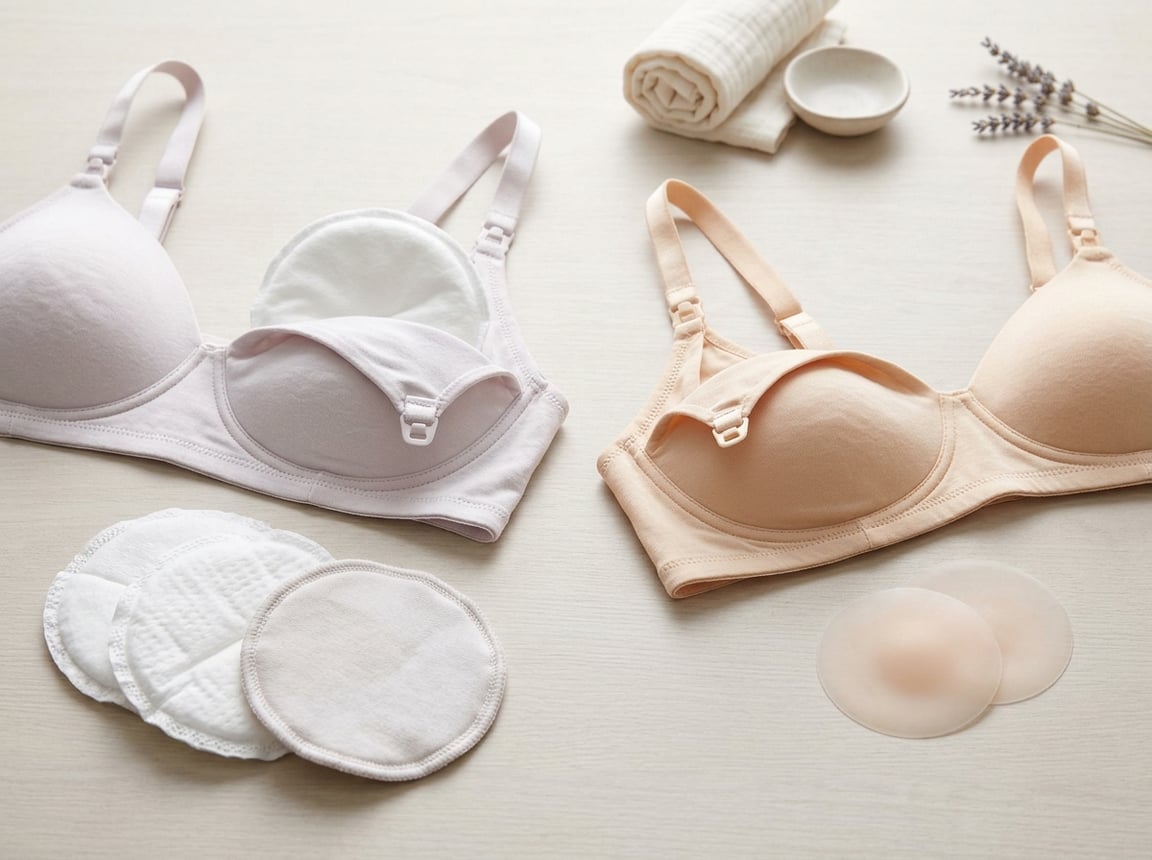
Choose breast pads with enough absorbency for your leaks and a shape that lies flat inside your bra. Your choice between disposable and washable pads also affects how often you shop, do laundry and carry replacements.
Disposable vs Washable Breast Pads: Absorbency, Convenience and Fit
Disposables give you a fresh pad without laundry. Many have an absorbent core, a moisture-resistant backing and tabs that attach to your bra. Check the pack for absorbency guidance, since a thin daytime pad and a higher-capacity pad serve different needs.
With washable breast pads, you pay upfront for a supply that you clean and reuse. Compare the full fabric blend and layer construction; a "bamboo" label alone tells you little about capacity. Start with a small pack so you can check the fit before buying enough for your laundry routine.
A mixed supply often works well: washables at home and a few disposables in your bag. Add spare pads and a bag for used washable pairs to your hospital bag, alongside the nursing bras you'll need; our guide on when to buy nursing bras helps you time that purchase.
What Helps Nursing Pads Stay Put Without Showing?
You'll get a flatter fit when you centre the pad over your nipple and smooth its edges inside the cup. A contoured pad follows your breast's shape, while a large flat disc sometimes folds near the cup edge. Check the result under your shirt while sitting and moving.
Choose a nursing bra that holds the pad gently against you without squeezing. Fasten adhesive tabs to the bra fabric as directed, keeping the sticky surface away from your nipple. If you're breastfeeding with large breasts, look for enough cup depth to fit a pad without pressing it flat.
When you use a nursing bras guide, look for cup coverage and room for a pad alongside feeding access. Smooth or lightly lined cups help soften visible pad edges; an overly tight cup compresses the pad and presses its outline into clothing.
Two wire-free options from our range show the difference. The Serenity Nursing Moulded Bra has seamless moulded cups in soft, stretchy cotton Lycra for a smooth fit under clothing, with easy-access clips, in B and C cups. The Nova Nursing Bra uses a stretchable fabric that adapts as your body changes, with one-hand clips and a side sling, in B to E cups and bands up to 44.


When Should You Change Nursing Pads?
Change your nursing pads whenever they feel damp, become saturated or get dirty. Check them during feeds and pumping sessions, then adjust your routine to how much you leak.
You don't need to wait for milk to soak through your shirt. Keeping a wet pad against your nipple prolongs moisture exposure and irritation.
Wash your hands before handling clean pads. If a pad sticks to tender skin, dampen it with clean water and ease it away gently. Seek care for worsening redness, persistent pain or fever.
When Do Cosmetic Nipple Covers Make Sense?
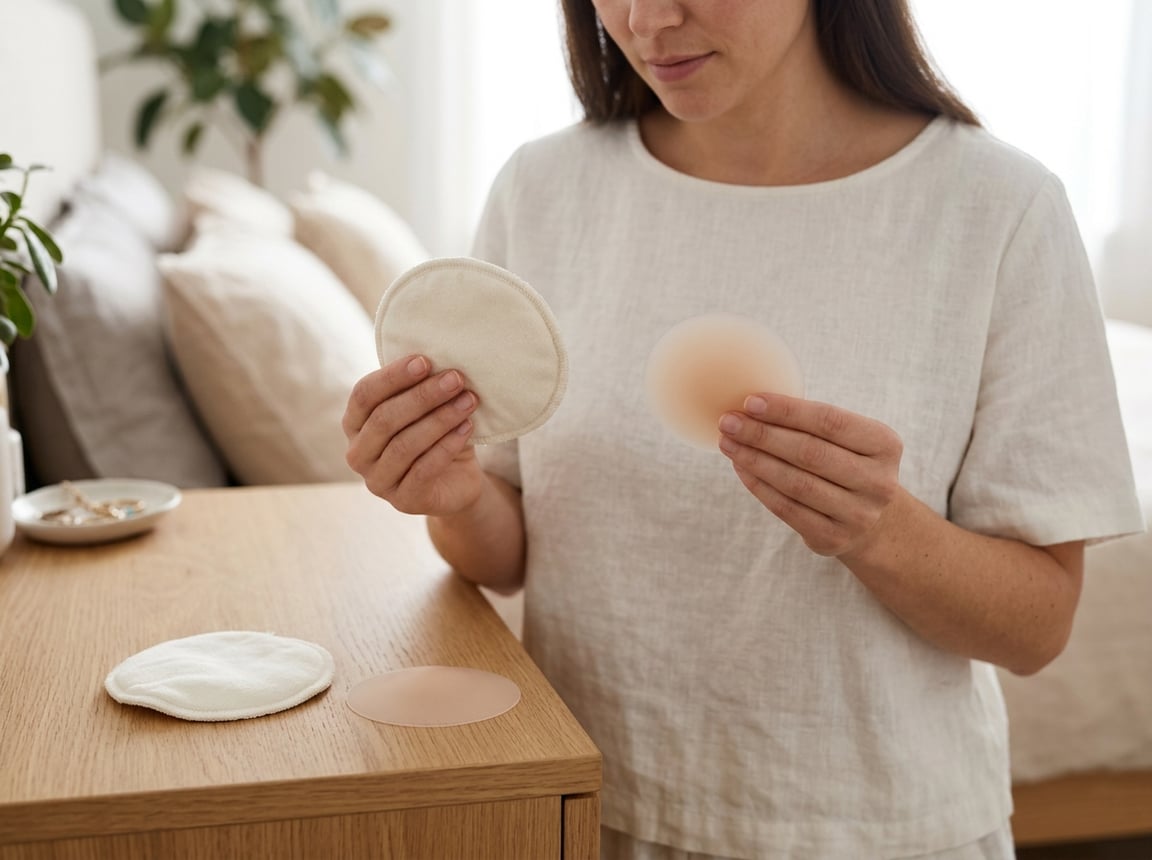
Cosmetic nipple covers suit you when you want discreet nipple coverage under an outfit and your skin is healthy and intact. Choose a style that works with your clothing's fabric and neckline, then check the fit before wearing it out.
Choosing Coverage for Sheer, Backless and Braless Outfits
For sheer outfits, look for a shade close to your skin tone and enough opacity to give you the coverage you want; our guide to choosing lingerie colour for your skin tone applies here too. Check in daylight as well as indoor light. A cover that blends under a dark shirt might show through a pale, thin blouse.
For backless clothing, small covers keep your back clear of a bra band. Going braless also means deciding whether you're comfortable without support; if you'd like some, compare adhesive bras vs strapless bras.
For the best chance of seamless coverage, compare diameter and edge thickness. A wider cover with a tapered edge spreads the transition across more skin, though very thin or clingy fabric still reveals some edges.
Pastie Paws are designed for exactly these outfits: reusable silicone covers for backless, strapless and sheer looks, with top tabs that add a gentle lift and a stated wear time of up to 8 hours. That lift is useful, but it still isn't the support you'd get from a bra's band and cups.
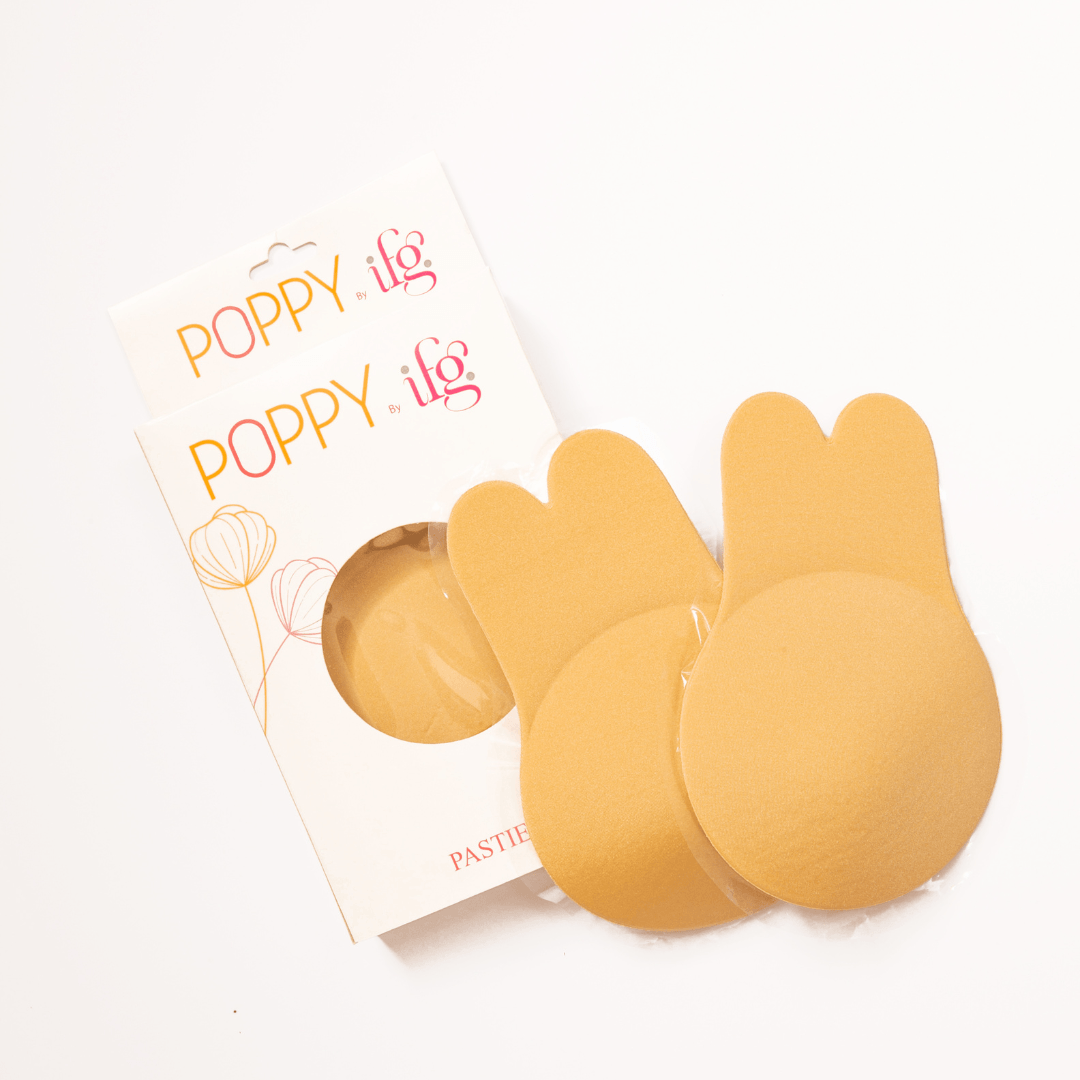
Silicone vs Fabric Nipple Covers: Edges, Adhesion and Reuse
Many silicone nipple covers have a smooth outer surface and tapered edges. Some use adhesive; adhesive-free versions rely on their design and close contact with your skin or clothing. Check the instructions, especially if you plan to wear a loose top.
Fabric covers give you a thin, flexible layer, and many are single-use. Their texture or outline sometimes shows through smooth fabric.
If you want reusable nipple covers, confirm the cleaning method and replacement guidance before buying. The best nipple covers for you are the ones whose size and attachment method suit your outfit without irritating your skin.
Our LUNA Silicone Nipple Pads show why names can mislead: despite being called "pads", they're cosmetic silicone covers, not nursing pads. They're washable and reusable, made for everyday wear under outfits, and the listing says to apply them to clean, dry skin and wear them for up to 6 hours at a time.

Why Cosmetic Covers Are Not a Solution for Nursing Leaks
A solid silicone cosmetic cover gives you no meaningful absorption. When milk leaks underneath, moisture collects against your skin or escapes around the edge. Thin fabric cosmetic covers also lack the absorbent capacity you need for nursing leaks.
During breastfeeding, choose products specifically intended for nursing care. Keep cosmetic adhesive away from cracked, bleeding or irritated nipples, and remove cosmetic covers before any feed or pumping session.
If you're managing active leaks and want a smooth outfit finish, focus on low-profile nursing pads inside a suitable bra. Check both comfort and pad visibility before leaving home.
How Do You Wear and Care for Each Product?
Breast pads stay put best when your clothing holds them securely, and cosmetic covers work best on clean, dry skin. Follow the care label for each reusable product, since absorbent fabrics and silicone adhesives need different handling.
How Can You Wear Breast Pads Without a Bra?
To wear breast pads without a bra, use a fitted nursing tank or camisole with a shelf lining or pad pockets. You still need enough fabric contact to hold each pad over your nipple as you move; see whether you can wear a camisole instead of a bra for your level of support.
A loose shirt gives an ordinary nursing pad little support. Even a pad with adhesive tabs needs suitable fabric to attach to, and those tabs belong on clothing.
Try your setup at home by reaching overhead and bending forward. If a pad slips or folds, choose a top with better containment. For sleep, a fitted nursing top with secure pad pockets helps keep the pad in place without a separate bra, and our pick of the best nursing pajamas covers comfortable night-time options.
Applying and Removing Cosmetic Covers Without Irritating Skin
Apply cosmetic covers only to healthy, clean, fully dry skin. Keep lotions and oils away from the application area unless the manufacturer says otherwise. If the instructions call for a patch test, do it before extended wear, especially if you have sensitive skin.
Centre each cover and smooth it down gently. Stay within the stated wear-time limit, and remove it if you notice itching, burning or redness.
For removal, support your skin with one hand and slowly peel the cover back with the other. Follow the maker's removal method and avoid pulling sharply. Before breastfeeding or pumping, remove the cover and clean away any adhesive residue.
Washing, Drying and Storing Reusable Pads and Covers
Wash reusable nursing pads after use according to their care label, then dry them completely before storing. Follow detergent guidance and avoid fabric softener when the label warns that it reduces absorbency. Carry used pads separately from clean ones. For the rest of your drawer, see our tips on how to care for your lingerie.
For reusable silicone covers, use the cleaning method specified by the maker. Many call for gentle washing with mild soap and water, followed by air-drying with the adhesive side facing up.
Keep adhesive surfaces away from towels, lint and dust. Replace the protective film once the covers are dry, then store them in their case. Discard reusable products when they develop damage, a persistent odour or a surface that no longer cleans properly.
What Should You Compare Before Buying?
Compare your total cost alongside absorbency or coverage, then check the exact product specifications. A low pack price gives you limited value if you need frequent replacements or the product fits poorly.
Upfront Price vs Cost per Wear
For disposable nursing pads, divide the pack price by the number of individual pads. Remember that you'll use two each time you change both sides, and heavy leaking increases your daily use.
For washables, include enough pairs to cover washing and drying time. Add laundry costs when comparing them with disposables, especially if you run separate loads.
For cosmetic covers, calculate cost per pair and use the manufacturer's reuse guidance as a limit, not a promise. Replace a pair earlier if adhesion weakens or the surface becomes damaged, rather than assuming every reusable pair lasts a fixed number of wears.
Checking Breast Pad Prices in Pakistan
If you're checking breast pad prices in Pakistan, compare current listings in rupees for the same pack size and product type. Confirm whether the listing counts individual pads or pairs, since that changes the comparison substantially.
Check delivery charges and seller return terms before paying. For washable pads, look for details about the absorbent layers and backing, not just the outer fabric.
If you're ordering from abroad, add international shipping and any import charges to your total. Compare that landed cost with a similar product available locally before choosing an overseas listing.
Checking Product Specifications Before Choosing a Brand
Start with the intended use written on the pack. For nursing pads, check the absorbent materials, backing, dimensions and care directions. For cosmetic covers, check the adhesive type, diameter and wear-time guidance.
Look for clear photos of the edges and the surface that touches your skin. For a nursing bra, use your current measurements, since your bra size changes during pregnancy, and check them against our bra size guide. Intimate items usually can't be exchanged, so if you're unsure, book a virtual bra fitting before you order.
Choose products with clear safety instructions and a complete materials list. Treat claims such as "invisible", "leakproof" or "all-day comfort" as prompts to inspect the details, especially when your skin is sensitive.
Choose Absorbency for Leaks and Coverage for Outfits
Start your purchase with the job you need done: absorbent breast pads for milk leaks or cosmetic nipple covers for outfit coverage. If you need both at different times, you have a reason to keep separate products.
Before buying several packs, try a small supply where possible. Wear nursing pads with your usual bra and shirt, or check cosmetic covers under the outfit you plan to wear. Move around and inspect the edges so you can judge fit before committing to more.
If your main problem is a pad shifting, change how your clothing holds it. If you're soaking through pads, review absorbency and how often you change them.
Frequently Asked Questions About Breast Pads and Nipple Covers
Use the product's stated purpose to check whether your "nipple pads" are meant for nursing care or cosmetic coverage. Similar names on packaging deserve a closer look before you put the product against sensitive skin.
Can silicone nipple covers absorb breast milk?
No. Solid silicone nipple covers don't absorb milk. If you're leaking, choose nursing pads with an absorbent core and change them when damp.
Can you wear breast pads and nipple covers together?
Avoid layering cosmetic covers directly over your nipples beneath nursing pads while you're actively leaking. The cover blocks the pad's direct access to the milk and adds a moisture-trapping layer against your skin.
How many times can you reuse nipple pads?
Disposable nursing pads are single-use, while washable nursing pads and reusable cosmetic covers follow different replacement rules. Check the care label and replace your product when its fabric, shape or adhesive deteriorates.
Are nipple covers the same as breastfeeding nipple shields?
No. Cosmetic nipple covers are for concealment, while a breastfeeding nipple shield is designed for your baby to feed through. If you need help with latch or feeding pain, ask a lactation professional about assessment and shield fit.
What is the difference between breast pads and silver nursing cups?
Breast pads soak up leaks, while silver nursing cups help keep fabric away from your nipples between feeds. If you use cups, follow their fitting and cleaning directions and remove them before feeding.
Conclusion
Choose breast pads when you need milk absorption and cosmetic nipple covers when you want a smoother outline under clothing. Give each product the placement and care its instructions require.
For your next purchase, check the intended use and materials first. Then check fit under your usual clothing, keep clean replacements ready and stop using anything that irritates your skin.