

Bridal Trousseau Checklist for Pakistani Brides: What to Pack and How Many
A practical bridal trousseau checklist for Pakistani brides: one outfit per planned wedding function, two to four reusable formals, seven to ten everyday outfits, seven to ten pairs of underwear, three to five bras and three to five sleepwear sets. Add comfortable shoes, a small selection of accessories, your toiletries, medicines and essential documents. Treat these quantities as starting points for a weekly laundry routine.
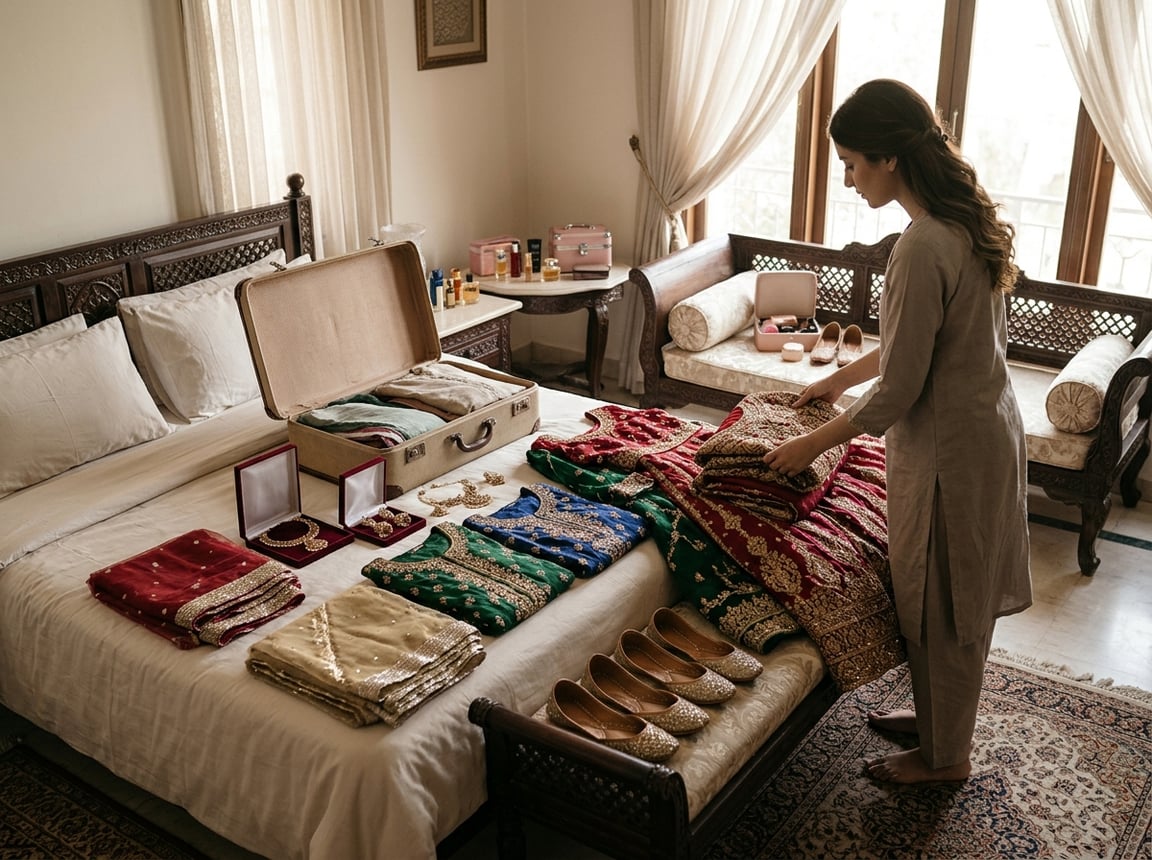
Your bridal trousseau should serve your wedding calendar and the life you're returning to afterwards. If you wear jeans or office clothes most days, whether in Pakistan or abroad, include those in your everyday count. Your existing wardrobe counts too, including the comfortable suit you already reach for on busy days.
What Clothes Should You Pack, and How Many?
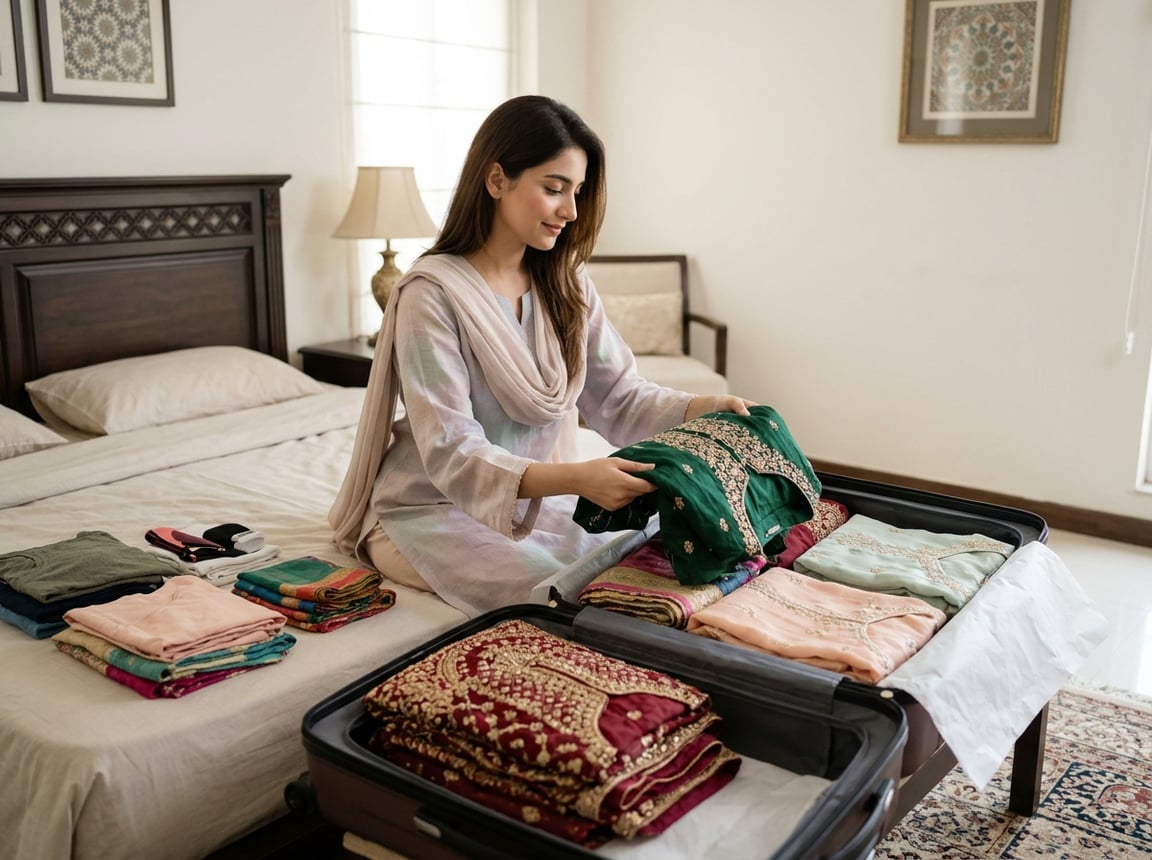
Build your clothing count around confirmed functions and one week of ordinary wear. Keep wedding looks separate from your reusable wardrobe so you know where each purchase fits.
Start with a Category-by-Category Quantity Checklist
Use this as your working jahez list, then reduce or increase quantities for your stay and laundry access. Your "pack" total includes suitable pieces you already own. For each row, record what you have before adding anything to your shopping cart.
| Category | Starting quantity | How to adjust |
|---|---|---|
| Wedding outfits | 1 look per planned function | Reuse a look for combined events |
| Post-wedding formals | 2–4 outfits | Match confirmed invitations |
| Everyday clothing | 7–10 complete outfits | Include workwear and casual clothes |
| Underwear | 7–10 pairs | Add spares for heat or delayed laundry |
| Bras | 3–5 total | Include any outfit-specific bra |
| Sleepwear | 3–5 sets | Count optional nightwear within this total |
| Shoes | 2–4 pairs | Include comfortable walking shoes |
| Bags | 1–2 | An everyday bag and an optional clutch |
| Jewellery | 1 event selection per look; 1 small daily selection | Reuse pieces across outfits |
| Extra dupattas or shawls | 1–2, beyond outfit dupattas | Adjust for weather and your preferences |
| Toiletries and beauty | 1 working kit | Pack familiar products |
| Medicines and emergency supplies | 1 accessible pouch | Carry enough for your trip |
| Documents | 1 secure folder | Keep digital backup copies |
| Household linens | 0 unless needed | Confirm sizes and existing supplies |
If you're using a family jahez list for marriage, mark every entry "owned", "buy", "borrow" or "optional". You can apply the same method to a template labelled "jahez list for girls", keeping only the items that suit your plans.
Wedding Outfits: One Look per Planned Function
Assign a complete look to each function you're holding, such as your nikkah, mehndi, baraat or walima. If your nikkah and baraat share one celebration, a single outfit is a valid choice. Include smaller events only when they're on your calendar.
Write down the accompanying trousers, lining, dupatta and any separate blouse or inner. For your mehndi, check that you can lift your arms and keep fabric clear of fresh henna. Ask your artist what's in the paste and avoid so-called "black henna", which the US Food and Drug Administration's fact sheet on henna and mehndi warns may contain a dye linked to allergic skin reactions. Borrowed jewellery or an existing formal suit also works for smaller gatherings.
Post-Wedding Visits: Two to Four Versatile Formal Outfits
Choose two to four outfits that cover the invitations you expect during your first few weeks. A lightly embroidered suit suits a daytime visit, while a dressier ensemble covers an evening dawat. Include a saree only if you enjoy wearing one.
Look for separates you'll wear again. Pair an embroidered dupatta with a plain suit, or use the same trousers with a different kameez. Try the combinations before packing so each look has the right coverage and proportions.
Everyday Wear: Seven to Ten Outfits, Adjusted for Laundry
Pack seven to ten complete everyday outfits if you expect to wash clothes weekly. Count your normal mix of shalwar kameez, kurtas, jeans, work clothes and loungewear. You need enough clean clothing to move through your usual week comfortably.
For a short stay with reliable laundry, start at the lower end. Add a few changes if you expect hot weather or long gaps between washes. If you're moving permanently, separate your first-week suitcase from the clothing you'll unpack later.
How Much Lingerie and Nightwear Do You Need?
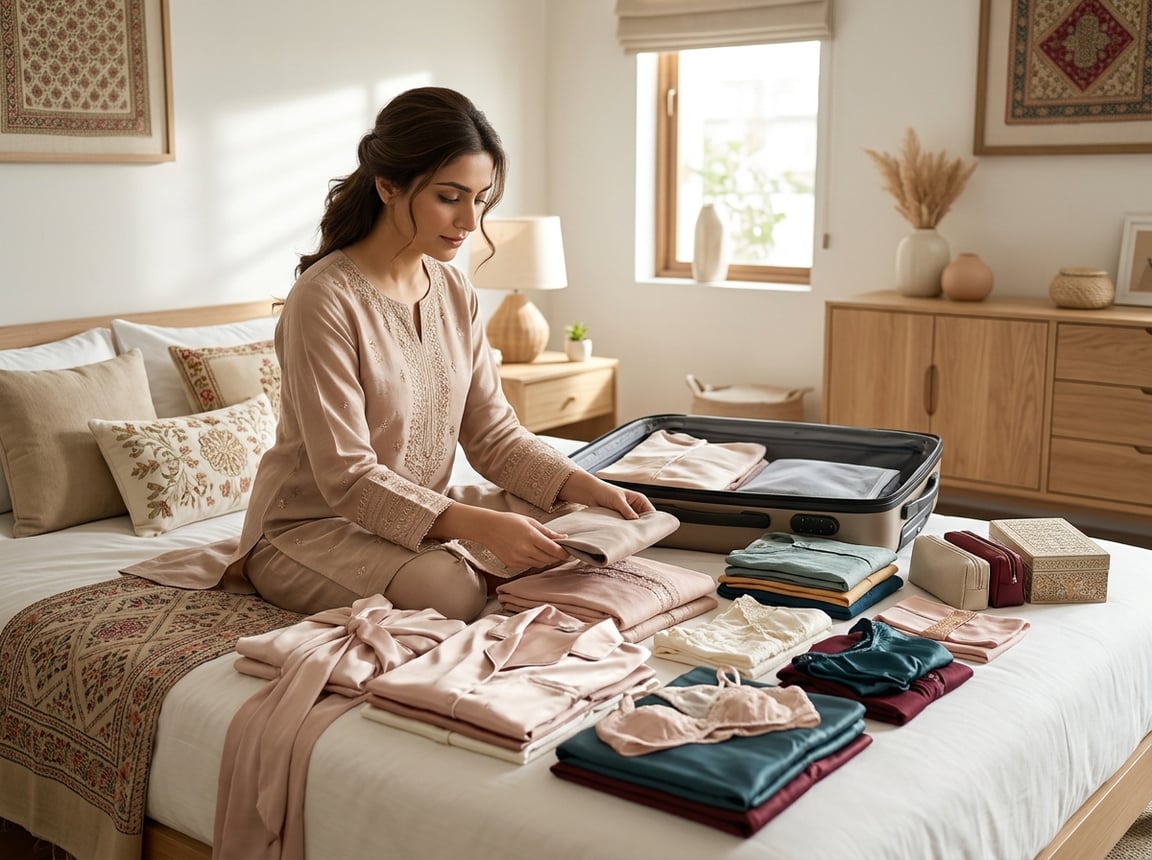
Start with seven to ten pairs of underwear, three to five bras and three to five sleepwear sets. Use your outfit fittings alongside our wedding lingerie guide for brides in Pakistan, with comfort and coverage guiding each choice.
Everyday Underwear: Seven to Ten Pairs and Three to Five Bras
Choose underwear you already know feels comfortable through a full day. Include smooth pairs for fine fabrics and your preferred coverage for heavier outfits. Brief packs make it easy to reach your count without buying piece by piece. Add period underwear or your usual menstrual supplies if you use them.
The Self-Love pack is one easy option: three mid-rise briefs in soft, breathable cotton with playful heat-sealed motifs, in sizes from S to 2XL.

Within your three-to-five-bra total, include everyday support and any specialist style your clothing requires; building a small capsule lingerie wardrobe keeps the count manageable. Rotate bras between wears and follow their care labels. When shopping for undergarments for brides, check the same fit details you would for your regular underwear, including soft seams and a secure band.
How Do You Choose a Bra for Your Wedding Outfit?
Choose a bra for your wedding outfit by checking the neckline, back, fabric and built-in support. Bring the exact bra to fittings so your tailor works with the shape you'll wear. A strapless bra is useful only when your outfit requires it and the fit feels secure. If you're unsure of your size, book a virtual bra fitting well before your first outfit trial.
During the fitting, sit down, bend forward and raise your arms. Check for visible bra lines in daylight and with flash photography, especially under pale fabrics. If you plan to use adhesive support, follow the product instructions and patch-test ahead of the event; our comparison of adhesive vs strapless bras can help you decide.
Shapewear is optional. If you choose it, wear it during a full outfit trial and confirm that you can breathe, sit and use the bathroom comfortably.
Sleepwear: Three to Five Comfortable Sets
Choose three to five nightwear sets that suit your room temperature and sleeping habits. Cotton pajama sets are useful for warm rooms, while warmer fabrics suit cold weather. A button-front top also makes changing after hair and makeup easier.
Count a robe as a layer, with its matching sleepwear counted as one set. When comparing nightwear for brides, check the fabric composition and washing instructions. Satin describes a weave, so read the label to find out whether you're buying polyester, silk or another fibre; our guide to cotton vs satin nightwear covers the trade-offs.
If you'd like one dressier set, the Nighty and Gown Set 724 pairs a silky, lace-trimmed nighty with adjustable straps and a matching gown, in red or navy blue. It's hand-wash only, so factor that into your laundry plan.

Optional Occasion Pieces: Buy for Your Comfort, Not Expectations
Include special lingerie sets only if you want to wear them. One or two preferred pieces are a reasonable starting point, and you can count practical bra and panty sets within your everyday totals. You have full control over the style and coverage.
For a coordinated look you'll also wear day to day, the Zoey Bra is our first locally made padded, wired lace bra, in skin or black, with B to F cups. You can pair it with the Zoey Lace Brief, a cotton mid-rise brief with lace trim, in the same two colours.

Assess lingerie bundles by the pieces you'll actually use. Check whether the bra and underwear come in suitable sizes, whether each item is washable and what the return policy allows; our exchange and return policy doesn't accept returns on intimate items, so confirm sizes before you order. Compare the bundle price with the cost of buying your useful pieces separately.
Which Accessories and Personal Essentials Are Worth Packing?
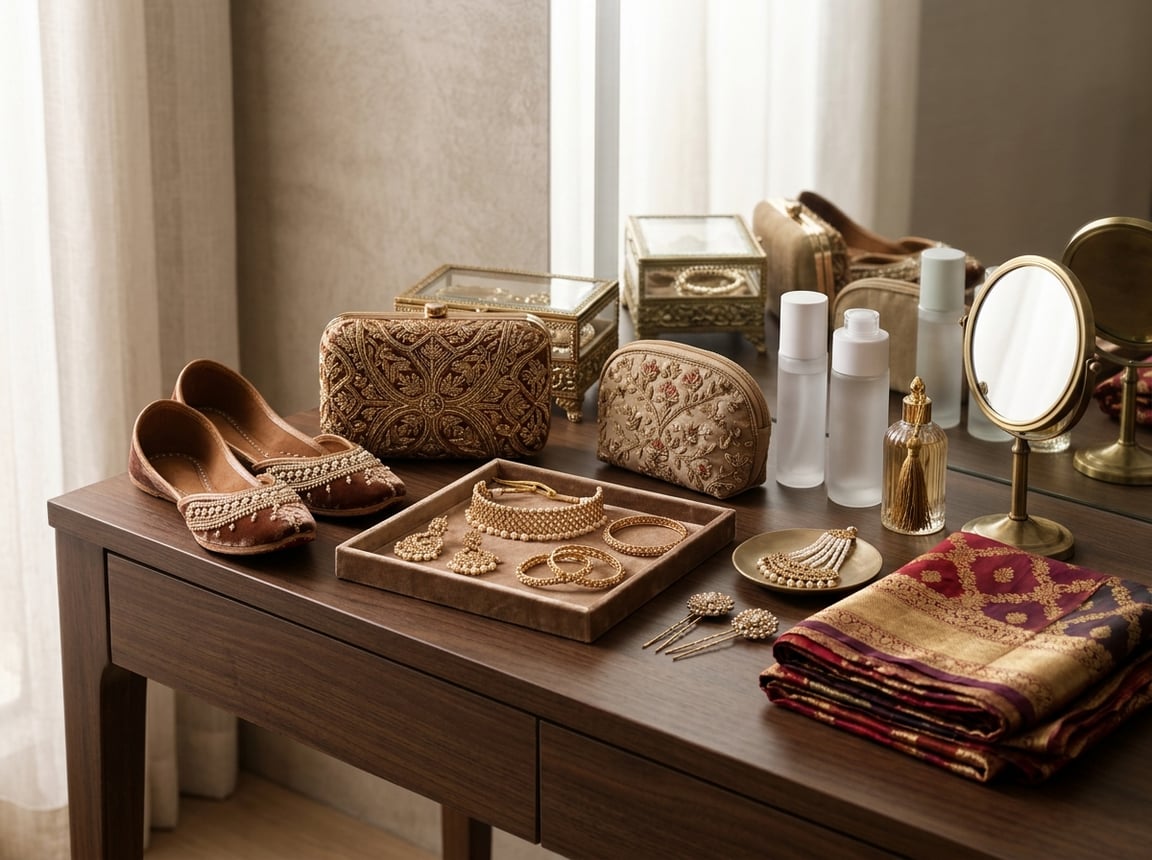
Pack accessories that complete your planned looks and personal essentials you use regularly. If you start with a template labelled "jahez list Pakistan", check each entry against your destination and available storage.
Shoes and Bags: Two to Four Pairs and One to Two Bags
Start with your event shoes, comfortable flats and everyday walking shoes. Add house slippers or another pair if your routine calls for them, keeping the total around two to four pairs. Wear your occasion shoes indoors before the wedding and check for rubbing.
One everyday bag and one clutch cover a useful range of needs. Check that your clutch holds your phone and essential touch-ups. Use the same pair of shoes across several functions when the colour and hem lengths work together.
Jewellery and Dupattas: Match Existing Outfits Before Adding More
Lay out your jewellery with each finished outfit before buying extra pieces. Choose a main event selection, then a smaller group for daily wear or visits. Reuse earrings and bangles wherever you like the combination.
Count the dupattas supplied with your suits before adding one or two versatile extras. Include a warm shawl if your destination calls for it. Store delicate embroidery away from jewellery clasps, and carry valuable pieces securely in your hand luggage.
Beauty, Toiletries, Medicines and a Small Emergency Kit
Build one kit around familiar products and your daily health needs. Pack enough for your stay, with a little extra medication for travel delays where your prescription allows. Keep medicines in labelled packaging and check destination rules before international travel.
Use separate, easy-to-clean pouches for:
- Your cleanser, moisturiser, sunscreen, deodorant and dental care.
- Your makeup essentials and remover.
- Your hairbrush, ties, pins and any tools you use.
- Your menstrual products and personal medicines.
- Your emergency supplies: safety pins, thread, spare hooks, blister dressings and fashion tape.
Check airline rules for liquids and sharp items. Test stain products on a hidden area before using them on a wedding outfit, and follow the garment's care instructions.
Documents, Keepsakes and Household Linens You Actually Need
Keep your ID, passport, travel bookings and relevant marriage paperwork in one secure folder, such as your Nikah Nama and, once issued, your computerised Marriage Registration Certificate (MRC). Check that your booking name matches your travel document. Store protected digital copies separately from the originals.
Choose a few keepsakes that you have space to carry safely. If you need linens, confirm your mattress dimensions and what your household already has. If you're moving abroad, check mattress measurements, including depth, before buying bedding in Pakistan, since standard bed sizes differ between countries.
How Can You Set a Budget Without Turning Traditions into Obligations?
Set a firm spending limit before you place orders, and keep voluntary gifts separate from your personal packing needs. Your budget should reflect what you can afford comfortably, including delivery and alterations.
What Is the Difference Between a Trousseau, Jahez and Bari?
Use "trousseau" for the personal clothing and belongings you prepare for your wedding and early married life. In your family, jahez might cover those belongings as well as household goods traditionally provided by the bride's family. Bari commonly refers to clothing, jewellery or other gifts presented to you by the groom's family.
Ask both families what they mean by bari and jahez, since practices vary by region and household. If you receive a bari list for wedding planning, confirm what is already being gifted before shopping. Treat every contribution as voluntary and agree on boundaries early.
Build a Jahez List with Prices and a Spending Limit
Create a jahez list with price columns in PKR, using current quotes from the shops you choose. Record the full cost, including stitching and delivery. If you're paying from abroad, also track the amount charged in your own currency and any conversion fees.
| Budget line | Planned amount | Quoted or paid amount |
|---|---|---|
| Wedding clothing | PKR ___ | PKR ___ |
| Everyday and formal clothing | PKR ___ | PKR ___ |
| Underwear and nightwear | PKR ___ | PKR ___ |
| Shoes, bags and jewellery | PKR ___ | PKR ___ |
| Beauty and personal essentials | PKR ___ | PKR ___ |
| Alterations and delivery | PKR ___ | PKR ___ |
| Shipping, duties and extra baggage, if applicable | PKR ___ | PKR ___ |
| Contingency | PKR ___ | PKR ___ |
| Total spending limit | PKR ___ | PKR ___ |
Set aside a contingency, such as 10% of your chosen budget, for adjustments. If your family prefers a jahez list in Urdu, keep the same quantity and payment columns. Share one updated copy so you avoid duplicate purchases.
Separate Essentials from Optional Gifts and Household Purchases
Mark each item by purpose before deciding who will pay for it. Your personal essentials cover daily clothing and care needs, while optional gifts sit in their own category. Keep furniture and appliances on a separate household plan.
For household purchases, confirm space, measurements and shared preferences with your partner. If you're moving abroad, check voltage compatibility before buying electrical items in Pakistan; this list of mains voltage and plug types by country shows where Pakistani appliances will and won't work. Postpone anything without a clear use or place in your home.
When Should You Shop, Check Fits and Pack?
Begin planning three to six months ahead, test complete outfits during the final month and pack in stages. Confirm custom-order deadlines directly with your designer, especially when international shipping is involved.
Three to Six Months Ahead: Plan Orders and Reuse What You Own
List your confirmed functions and inspect your existing wardrobe before placing orders. Try on reusable pieces and note any repairs or alterations. Order time-sensitive bridal clothing once your event plans are settled.
Request written measurements, delivery dates and alteration terms. For overseas orders, allow time for shipping and a local fitting after arrival. Keep receipts and order details together so you can check progress without searching through messages.
The Final Month: Test Complete Outfits and Finish Alterations
Try each important outfit with its exact underlayers and shoes. Add the jewellery and dupatta to check weight, movement and placement. Complete major alterations with enough time for another fitting.
Take reference photos of finished combinations for your own packing record. Check hooks, zips, trouser lengths and lining before storing each look. Confirm how to press or steam delicate fabrics, since direct heat damages some embellishments.
Pack Wedding-Day and First-Week Essentials Separately
Keep your wedding-day bag focused on the next function and immediate touch-ups. Pack your first-week clothing in a separate suitcase with toiletries and sleepwear easy to reach. This keeps your main luggage organised while you move between venues or homes.
Label garment bags by function and place a written accessory checklist inside each one. Keep shoes in protective bags away from fabric. Carry your documents, medicines and valuable jewellery with you, subject to transport rules.
Adjust Honeymoon Quantities for Destination, Duration and Laundry
Base your honeymoon packing on the number of days between washes. For a seven-night trip, begin with seven to ten pairs of underwear, two or three sleepwear sets and clothing combinations suited to your activities. Reuse suitable pieces already counted in your trousseau, and see our tips on travel-friendly lingerie for packing light.
Add weather-specific clothing and footwear only after checking your destination. If you want honeymoon lingerie, include it within your existing optional-piece total. For a trip longer than a week, plan laundry access before increasing every category.
Pack for Your Routine, Not Someone Else's Expectations
Your bridal trousseau should fit your regular week and the occasions you have planned. Keep the clothes you reach for within easy reach, whether that means cotton suits, office trousers or comfortable layers.
Before keeping an extra purchase, give it a specific use. Check whether you own something suitable and whether you have space to store it. If a gift overlaps with an item on your list, update your quantities before buying more.
You're allowed to repeat outfits and choose a smaller wardrobe. Leave optional purchases until after the wedding if you want time to settle into your routine. Keep your working checklist to hand so you can fill a clear gap later.
Frequently Asked Questions About the Bridal Trousseau
Use your bridal trousseau checklist for a final check of quantities and practical needs. These answers help you handle common packing decisions.
What does bridal trousseau mean in Pakistan?
A bridal trousseau is the collection of personal clothing and belongings you prepare for your wedding and early married life. Your family might use the term alongside jahez, with the meaning shaped by your household's customs.
How many outfits should a Pakistani bride pack?
Add one look per function to two to four reusable formals and seven to ten everyday outfits. With four separate wedding looks, that gives you 13 to 18 outfits before sleepwear, including pieces you already own.
How many bras and nightwear sets should be in a bridal trousseau?
Three to five bras and three to five sleepwear sets are a practical starting point if you do laundry weekly. Include any outfit-specific bra, such as a strapless style, within that bra total.
What should I check before closing my bridal suitcase?
Check that every planned look has its required pieces and that your first change of clothes is easy to reach. Weigh your suitcase, photograph its contents and move travel documents and essential medication into your personal bag.
Does a bridal trousseau have to include furniture and appliances?
No. You choose whether furniture or appliances belong in your household plan; your personal trousseau can focus entirely on your own belongings. Keep any shared purchases voluntary and confirm their cost and suitability with your partner.
Should honeymoon clothes count toward my trousseau quantities?
Yes, count honeymoon clothes within your trousseau totals whenever they serve both purposes. Add only the destination-specific items your existing clothing doesn't cover, such as swimwear or a weatherproof layer.
Conclusion
Build your trousseau from your confirmed functions, weekly routine and existing wardrobe. Use the starting quantities to check for gaps, then adjust for your climate and access to laundry.
Before you close your bags, finish the full outfit trials and update your spending sheet. Keep your wedding-day pouch separate, place first-week essentials near the top, and carry your documents and medicines with you.