

Sleepmaxxing: Does What You Wear to Bed Change How Well You Sleep?
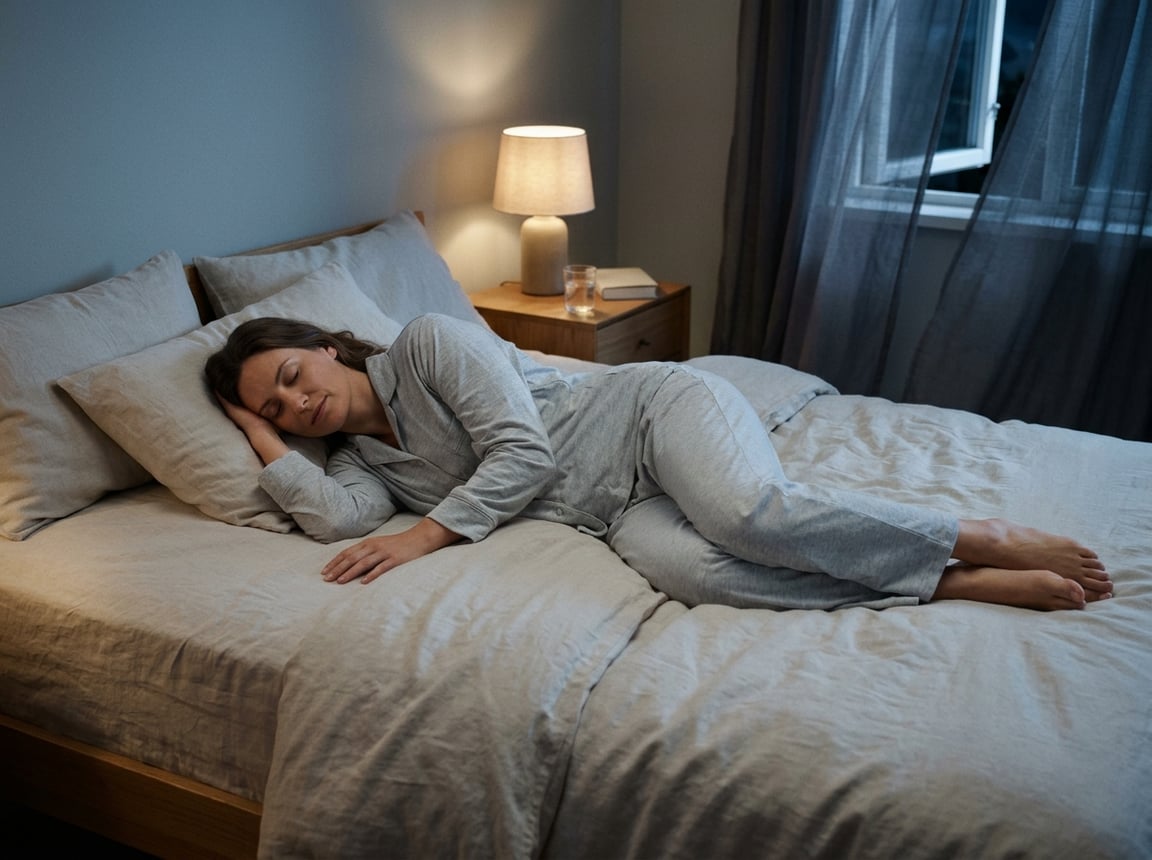
Yes, what you wear to bed can affect how well you sleep, mainly by keeping you cool, dry and free of tight pressure. Sleepmaxxing is the social-media trend of improving your sleep through routines and small upgrades, and for warm nights in Pakistan, loose, lightweight cotton nightwear is the easiest place to start. No fabric boosts deep or REM sleep on its own.
If your pajamas cling when you sweat or a waistband digs in every time you turn, changing what you wear to bed removes those small disturbances. It matters even more during load-shedding, when the fan or AC stops in the middle of a hot night.
Key Takeaways
- Sleepmaxxing: a trend for improving sleep quality with routines, products and tracking. Start with comfort before gadgets.
- Best fabric: lightweight, breathable cotton suits most warm nights. Check the fiber label on anything called "satin".
- Best fit: loose enough to roll over and bend your knees, with soft seams and a gentle waistband.
- Bigger factors: a regular sleep schedule, morning light and a cool room matter more than any single garment.
What Is Sleepmaxxing?
Sleepmaxxing is a social-media term for trying to get the best possible sleep through routines, products and sleep tracking. The sleepmaxxing meaning ranges from simple bedtime habits to elaborate supplement plans and gadgets.
Where Nightwear Fits Into the Sleepmaxxing Trend
You can take a sensible approach to the sleepmaxxing trend by fixing physical discomfort first. Your sleepwear sits between your skin and your bedding all night, so its weight, fabric and fit deserve as much attention as your pillow or blanket.
How Does What You Wear to Bed Affect Your Sleep?
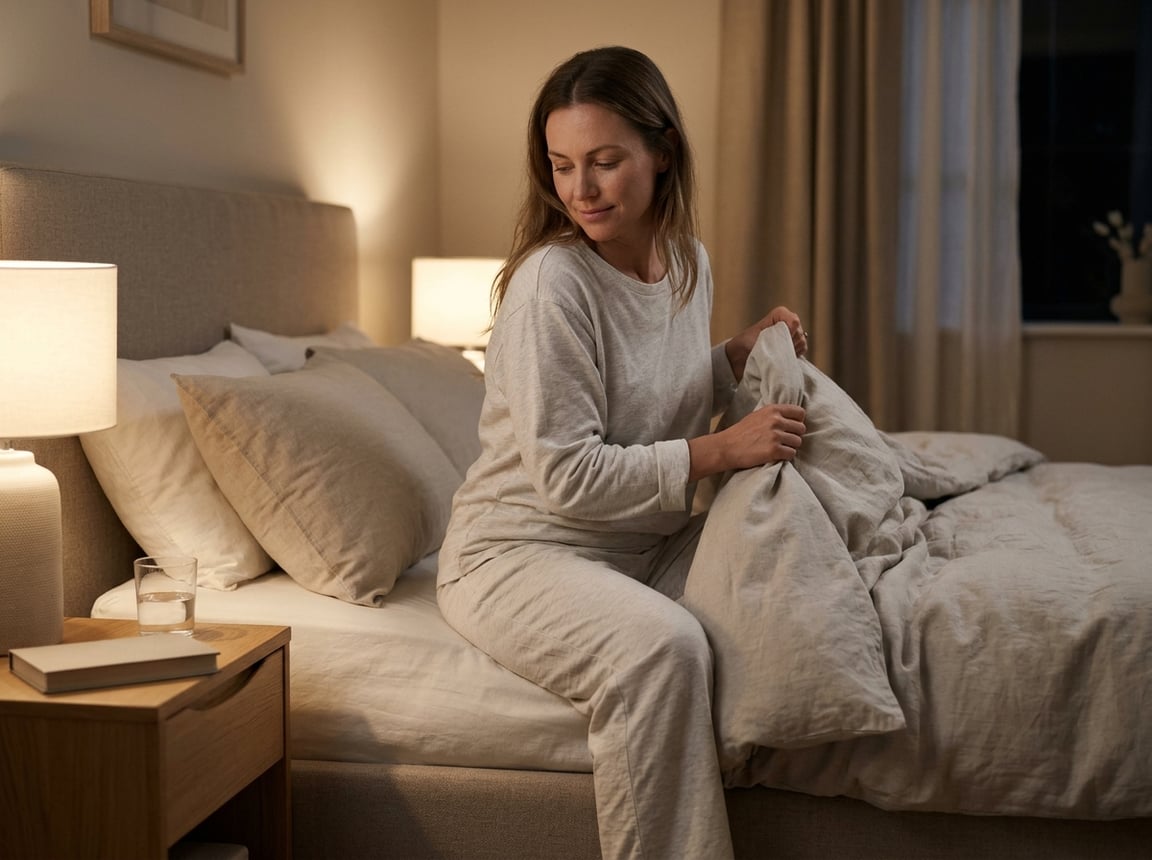
What you wear to bed controls how much heat and moisture stay against your skin. Its fit also decides whether you settle comfortably or keep waking to adjust sleeves and waistbands.
Heat, Body Temperature and Sweat
Your body temperature follows a daily rhythm, and your core temperature drops around bedtime. Heavy clothing and thick bedding make it harder for your body to lose heat, especially in a warm room.
Sweat adds to the discomfort when wet fabric stays against your skin. If you wake up damp, a lighter set of nightwear and fewer bedding layers are the first things to change.
Tight Waistbands and Seams
A close waistband or twisted trouser leg presses into your skin each time you change position. Check your nightwear lying down, not just standing in front of a mirror, because that's how you wear it for most of the night.
Can Nightwear Improve REM Sleep?
No pajama fabric has been shown to increase REM sleep. Comfortable clothing supports a good sleep environment, but no garment works as a REM-boosting product.
REM sleep is a normal stage of your sleep cycle, linked to dreaming, memory and emotional processing. Give yourself enough time in bed, and judge a clothing change by whether you wake less often, not by your tracker's sleep-stage score.
What Is the Best Fabric for Sleepwear on Warm Nights?
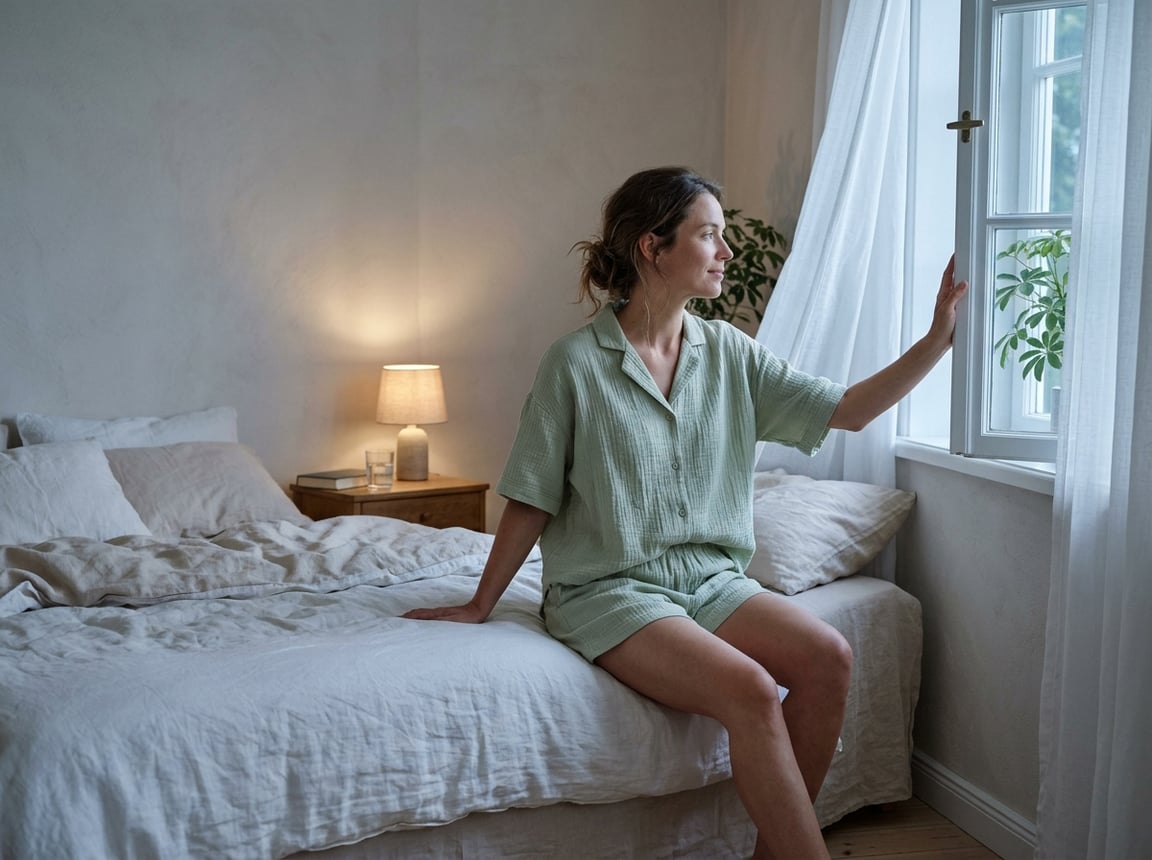
Lightweight, breathable cotton is the best fabric for sleepwear on most warm nights in Pakistan. When choosing the best material for pajamas, look at the fabric's thickness and how quickly it dries, not just the fiber name on the label.
Why Breathable Cotton Works
Breathable cotton is soft, absorbent and easy to wash at home. A light cotton garment lets air move around your body, as long as the cut leaves some space.
Cotton also holds moisture, so heavy sweating leaves it damp. If you wake in wet clothing, change into a dry set and look at your bedding and room ventilation too.
When you browse IFG nightwear, check each item's fabric and care label rather than relying on the collection name. Pajama Set 125, for example, is made from pure cotton knit.
Cotton vs Satin Nightwear: Compare the Fiber, Not Just the Name
Cotton is a fiber, while satin is a weave. A satin nightie can be made from polyester, silk or another fiber, and each behaves differently on a hot night. Read our full comparison of cotton vs satin nightwear for more detail.
| What to compare | Lightweight cotton nightwear | Satin nightwear |
|---|---|---|
| What the label means | Cotton fiber | A smooth weave, made from various fibers |
| How it feels | Soft, with a knit or woven texture | Smooth and glossy |
| Sweat | Absorbent, but stays damp when soaked | Depends on the fiber |
| For warm nights, check | Thickness and a loose fit | Fiber, weight and any lining |
| Care | Follow the garment label | Follow fiber-specific care |
Smoothness is only one part of choosing the best fabric for sleepwear. A dense weave or extra lining adds warmth, whatever the fabric is called.
Pajamas, a Chemise or a Nightie?
Choose pajamas if you like your legs covered or dislike your thighs touching while you sleep. A lightweight chemise or nightie leaves your legs free and removes the trouser waistband, though the hem can ride up when you turn.
With pajama suits, check that the knees bend easily and the top stays comfortable when you reach forward. With a chemise such as the Lightweight Cotton Chemise 708, check the armholes and any strap adjusters. If you like a shorter, airier style, a babydoll nightdress is another option.
Your room helps decide. A light pajama set can feel right in an air-conditioned room, while an airy chemise often suits a warm room with only a fan.
How Should Sleepwear and Undergarments Fit?
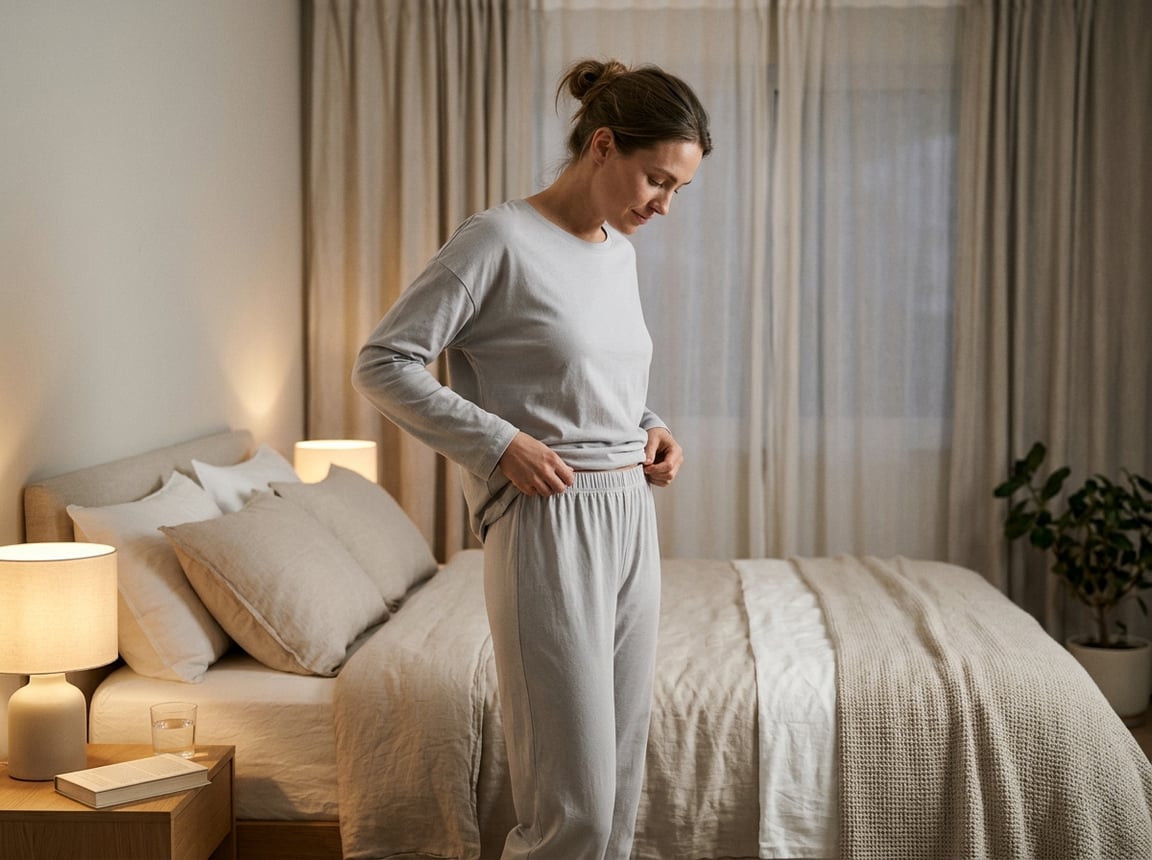
Your sleepwear should give you room to roll over and bend your knees without pulling or pinching. Anything you wear underneath needs the same check for pressure and skin comfort.
Look for Easy Movement, Soft Seams and a Gentle Waistband
Test your nightwear in your usual sleeping position. Lie on your side, draw your knees up and reach one arm forward, and notice whether the waistband folds sharply or a seam presses into your skin.
For sensitive skin, watch out for scratchy labels and decorative trim. Even soft fabric needs flat seams where your body rests on the mattress. If you keep untwisting your trousers, try a straighter leg or a shorter length.
Should You Wear a Bra to Bed?
Wearing a bra to bed is optional. Some women like light support when they lie on their side, and a soft bra can give that. When deciding whether you should wear a bra to bed, focus on how the band and cups feel in your sleeping position.
Choose gentle support with smooth seams and a band that lies flat. Take it off if you notice pain, rubbing or lasting pressure marks. Nursing bras and sports bras need their own overnight check, because both can feel too firm or bulky for sleep.
Underwear or Going Without at Night
Wearing underwear while sleeping is a personal choice. If you wear it, choose a clean pair with gentle leg openings and a breathable cotton gusset.
If you prefer to go without, keep your sleepwear and bedding clean. You may still want underwear during your period or when using a pad. See a doctor about itching or irritation that doesn't settle, because changing your underwear won't fix every cause.
Which Sleep Hygiene Habits Matter Beyond Clothing?
Good sleep hygiene starts with a regular sleep schedule and a comfortable bedroom. Clothing works alongside those basics, together with light exposure and how you wind down.
Keep Your Body Clock Steady With Regular Timing and Morning Light
Your circadian rhythm is your body's internal 24-hour clock, and light and dark have the strongest effect on it, according to the US National Institute of General Medical Sciences. Give it steady cues by waking at the same time each day and going to bed at a similar time.
Get outdoor daylight soon after you wake. In the evening, dim bright lights and cut back on phone use as bedtime gets closer. If you drink tea or coffee late in the day, move it earlier and see whether you fall asleep more easily.
Keep Your Bedroom Cool and Your Routine Simple
Aim for a bedroom that feels comfortably cool, with bedding you can add or remove. If AC isn't an option, use a fan or safe ventilation and drop extra blanket layers. During load-shedding, keep a dry, lightweight set of nightwear by the bed so you can change if you wake up sweaty.
Keep your wind-down routine short enough to repeat every night, such as reading or gentle stretching. If your hair tangles under your neck, a loose, soft scrunchie like the Poppy Silk Scrunchie can help. Place it away from where your head rests, and loosen it if it pulls.
Skip Risky Hacks and Know When to Get Help
Avoid mouth taping without medical advice, especially if you snore or struggle to breathe through your nose. Talk to a doctor before taking sleep supplements, because their safety depends on your health and any medicines you take. If tracking your sleep makes you anxious, take a break from checking nightly scores.
The NHS advises seeing a doctor about night sweats that happen regularly, wake you up, or come with fever or unexplained weight loss. Menopause is a common cause, and the right bras for menopause and hot flashes can make nights more comfortable. Also get advice for breathing pauses or sleep problems that don't improve.
Frequently Asked Questions
What is the best thing to wear to bed in summer?
When deciding what to wear to bed in summer, loose, lightweight cotton nightwear is the best choice for most hot nights. Pick a cut that leaves room to move, and keep a dry spare set nearby in case you wake up sweaty.
Can changing my pajamas help me sleep better?
Yes, if heat, damp fabric or tight clothing is waking you up. Change one thing at a time, such as a lighter fabric or a softer waistband, so you can tell what made the difference.
Is cotton or satin better if I sweat at night?
Lightweight cotton is the practical first choice because it absorbs sweat. With satin, check the fiber content and weight first. Neither fabric treats the cause of regular night sweats.
Should you wear a bra to bed?
You can if gentle support makes you more comfortable. Keep it optional, and take it off if the band presses into your ribs or the cups rub when you lie down.
How do I choose a comfortable sleep bra in Pakistan?
When comparing the best sleep bras in Pakistan, look for soft, wire-free construction and a band that feels comfortable lying down. Check your current measurements, because size and fit vary between styles.
Should you wear underwear while sleeping?
It's up to you. You can sleep comfortably with or without underwear. If you wear it overnight, choose a clean, dry pair and change out of anything damp.
Conclusion
Sleepmaxxing doesn't have to mean gadgets or supplements, and what you wear to bed is one of the simplest things to get right. Loose, breathable cotton nightwear keeps you cooler and drier, and a gentle fit stops waistbands and seams from waking you. No fabric will boost your REM sleep, but removing small discomforts helps you sleep more soundly.
Change one thing at a time, starting with whatever bothers you most, such as heat, damp fabric or pressure when you turn. Pair comfortable sleepwear with a regular bedtime, morning light and a cool, simple bedroom. If night sweats or poor sleep continue despite these changes, talk to a doctor.