

Best Bras for Large Cup Sizes in Pakistan: D, DD & E Cup Options for Comfort and Support
For D, DD and E cups, the best bras are full-cup or minimizer styles with a wide underband, side support panels and broader padded straps, which distribute weight and reduce shoulder grooving.
Note that DD is labelled E in Triumph and IFG sizing, so check the brand's chart before ordering. For a D cup bra in Pakistan or an E cup bra in Pakistan, choose firm support and accurate measurements over padding or appearance.

You can compare full-cup bras for a heavy bust, minimizer designs and everyday options from Pakistani and international brands. The right band should sit level, the cups should contain your bust without gaps or spilling, and the straps should support without digging into your shoulders.
You will also learn which features help with posture and back comfort, how styles suit fuller or pendulous busts, and where online stores offer larger sizes, fit guides, exchanges or discreet delivery.
Understanding D, DD And E Cup Sizing
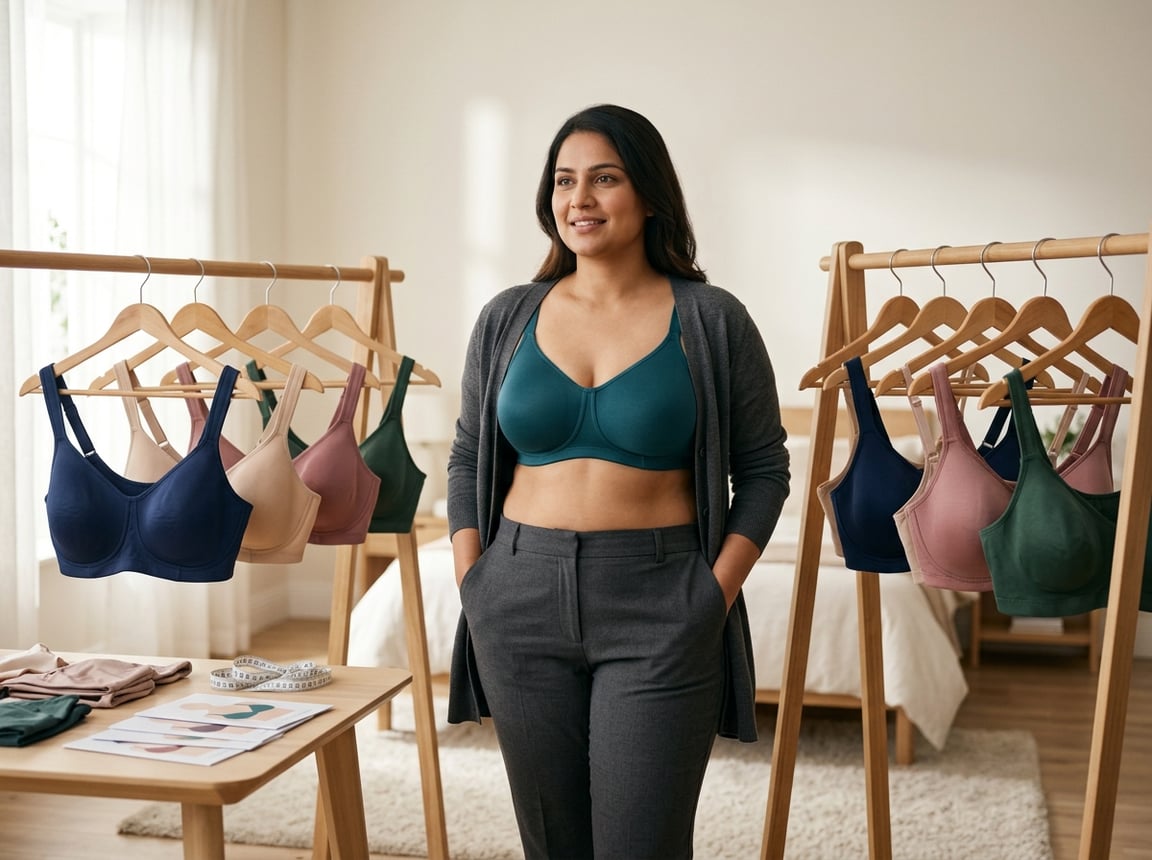
D, DD, and E describe cup volume in relation to your band size, not breast size alone. Brand systems differ, so you should check the size chart and judge fit by the band, cups, straps, and center panel.
How Band Size Changes Cup Volume
A cup letter does not have one fixed volume. A 32D holds less volume than a 38D because the larger band uses a larger cup pattern. This means you should compare both numbers when you shop D cup bras or larger sizes.
If your cup fits but the band feels loose, try a smaller band with a larger cup. For example, 36D and 34DD are sister sizes with similar cup volume, although the 34 band fits more firmly.
Use a tape measure around your underbust and bust, then compare your measurements with the brand’s chart. Your best size may vary between Pakistani, UK, US, and European brands.
Is DD The Same As E Cup
DD and E are not always the same label. In many UK sizing systems, DD is followed by E, making E one cup step larger. In some US brands, DDD or DD may be used instead of E, so the label depends on the manufacturer.
| Label | Common meaning |
|---|---|
| DD | Larger than D |
| E | Often one step larger than DD in UK sizing |
| DDD/F | May replace E in some US ranges |
When you shop E cup bras, check whether the brand lists DD, E, DDD, or F. Do not rely on the letter alone. Wrinkled cups may indicate a cup that is too large, while spilling at the top or sides usually means you need more cup space.
Plus Size Fit And Sizing Guide
For a plus size bra Pakistan purchase, focus on support as well as the label. A firm band should sit level around your body without riding up. You should fasten a new bra on the loosest hook, leaving room to tighten it as the band stretches.
Look for three- or four-row hooks, wide adjustable straps, a stable center panel, and cups that fully contain your breasts. Full-coverage or balconette styles can offer useful support, but your breast shape still affects the fit.
If the band feels tight but the cups fit, try a sister size with a larger band and cup, such as 34DD to 36D. If the band fits but the cups spill, keep the band and move from D to DD or E according to the brand’s chart.
Support Features That Matter Most
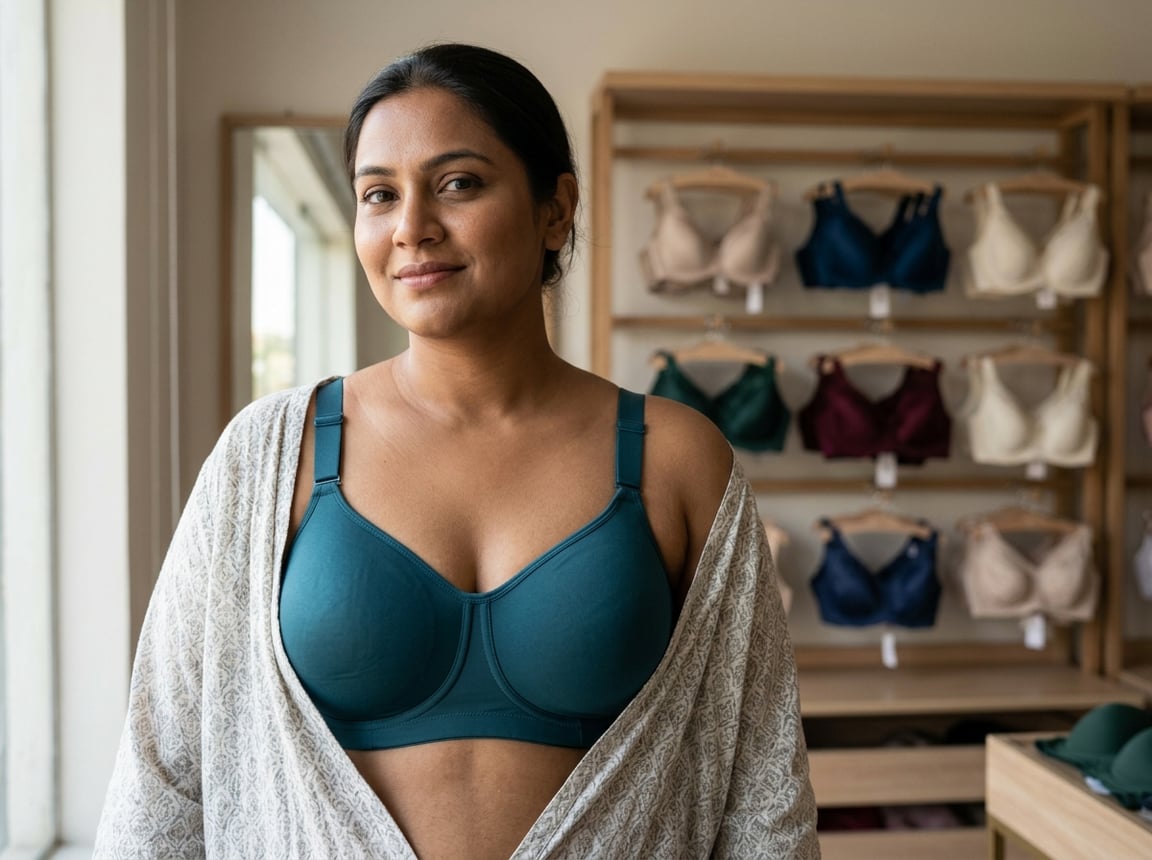
A supportive bra for a larger cup size should control movement, spread weight across your body, and keep each breast securely in place. Full cups, firm underbands, side panels, underwire encapsulation, and comfortable straps work together to improve fit and reduce pressure.
Full Cups And Underwire Encapsulation
A full-figure bra uses cups that cover more of your breast, which helps prevent spilling at the top and sides. This design suits larger busts because it provides more fabric and structure than a low-cut or shallow cup. Look for cups that fully contain your breast without cutting into the tissue.
Underwire encapsulation supports each breast in a separate cup instead of pressing both breasts together. The wire should sit flat in the crease beneath your breast, with its ends pointing toward your armpit. It should not rest on breast tissue or pinch when you move.
Choose firm, sewn-in cups with two or three sections. These seams help shape and lift your bust while keeping the fabric from stretching too much. If you prefer a wireless style, choose a full cup with strong fabric, a tall center panel, and firm cup lining.
Wide Underbands And Side Support Panels
The underband provides much of your bra’s support. Choose a wide underband with firm, elastic fabric that stays level around your body. It should feel snug on the loosest hook when new, but you should still be able to slide two fingers beneath it.
A band that rides up usually feels too loose or lacks enough structure. A firm band spreads the weight across your back instead of leaving the straps to do all the work. This can make a noticeable difference during long days.
Side support panels guide breast tissue toward the center and help limit movement near the underarm. Look for reinforced fabric, vertical seams, or a side sling inside the cup. These features work best when the cup reaches high enough at the sides without cutting into your skin.
Wider Padded Straps And Shoulder Comfort
Wider padded straps distribute pressure over more of your shoulders than narrow straps. Choose straps with firm adjustment sliders and enough length for a secure fit. Padding should feel smooth rather than bulky, especially under thin clothing.
Your straps should provide lift but should not carry the bra’s full weight. If they dig in, loosen them slightly and check the band. A loose band often makes you tighten the straps, which can cause shoulder grooving, soreness, or red marks.
Look for straps set closer to the center back or supported by a racerback option if they slip from your shoulders. Soft lining can improve comfort, but avoid straps that stretch excessively. Excess stretch may allow the bust to drop during the day.
Bra Styles For Fuller And Pendulous Busts
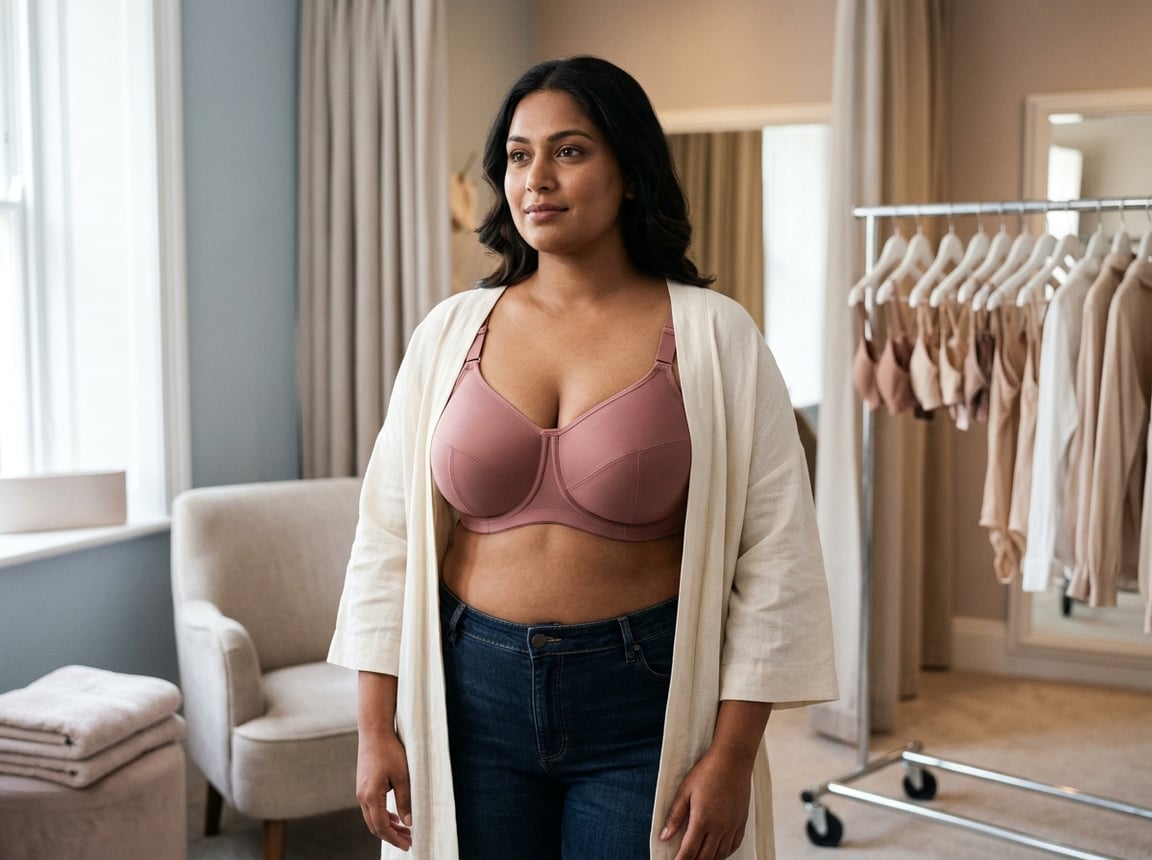
Your best options usually have firm bands, strong straps, full cups, and side support. Four-section cups can shape pendulous tissue, while full-figure and selected lingerie styles give you support without sacrificing comfort or appearance.
Full-Figure Bras For Everyday Wear
Choose a full-cup bra that covers most of your breast and keeps tissue contained during daily movement. A firm underband should sit level around your body without riding up. Wide, adjustable straps can reduce pressure on your shoulders, but they should not carry the main weight of your breasts.
For D, DD, and E cups, look for reinforced side panels, a higher center gore, and three- or four-hook back closures. These features can improve stability for fuller or pendulous shapes. A smooth, lightly lined cup works well under shalwar kameez, shirts, and other fitted clothing.
Triumph’s full-cup range may suit you if you want structured everyday support and broad size availability. Check the exact size chart for each model, since cup depth and band measurements can vary between styles.
Four-Section Cups For Shaping And Lift
A four-section cup uses several fabric panels to guide breast tissue upward and toward the center. The vertical seams create structure, while the side panel can reduce outward spread. This design often works well for pendulous breasts because it provides shape without relying on heavy padding.
Look for cups with firm lower panels and supportive upper sections. The cup should hold your breast fully, with no cutting at the top and no empty space near the neckline. If the center gore does not rest against your chest, try a larger cup or a different cup shape.
For Pakistani shoppers, a four-section bra can offer a rounded shape under traditional and Western clothing. Test the bra while sitting and moving, not only while standing.
Lingerie Picks For Curvy Figures
You can choose attractive lingerie while still prioritizing support. Look for full-cup lace bras, longline bras, and balconette styles made in your full size range. Firm mesh, lined lace, and side panels provide more useful support than thin, decorative fabric alone.
A balconette bra may suit you if your breasts are fuller at the bottom, but check for top-edge gaping. Plunge styles can work for lower necklines when they include strong side support and a stable center panel. Avoid selecting a smaller cup just to create cleavage, as this can cause spilling and discomfort.
For a curvy figure, match the bra to your band and cup measurements rather than relying on a single size. Many specialist full-bust brands offer D-K ranges, while local retailers may stock a narrower selection.
Minimizer Bras And Their Benefits
Minimizer bras for large breasts can reduce forward projection while keeping your bust supported. They use structured cups, a firm band, and wider straps to create a smoother shape under clothing without changing your breast size.
How Minimizer Bras Actually Work
A minimizer bra spreads breast tissue across a wider, more structured cup. This reduces how far your bust projects from your chest, which can help shirts and dresses fit more smoothly across the front. It does not shrink your breasts or permanently change their shape.
For D, DD, and E cup sizes, look for full-coverage cups, a firm underband, and wide, adjustable straps. These features help distribute weight and reduce pressure on your shoulders. Many minimizer styles use non-padded or lightly lined cups to provide support without adding extra volume.
A correct fit matters. The center panel should sit against your chest, the band should stay level, and the cups should not cut into your breast tissue. If the band rides up or the cups wrinkle, try a different size or style.
When To Choose A Minimizer Style
Choose a minimizer bra when you want a smoother side profile or less pulling across button-down shirts. It can also help when your bust feels too prominent under fitted tops, workwear, or traditional clothing. Full-coverage designs often suit fuller busts because they provide more breast coverage and stable support.
A minimizer may not suit you if you want added lift, extra cleavage, or a rounded, padded shape. In those cases, a supportive balconette or full-cup bra may work better. For daily wear in Pakistan’s warm climate, consider breathable cotton blends, soft seams, and moisture-friendly fabrics.
Check the size chart for each brand because measurements can vary. Pakistan retailers commonly offer minimizer styles in larger cup ranges, including D through H, but available sizes, colors, prices, and delivery options differ by seller.
Managing Comfort, Posture And Back Support
A well-fitted bra can reduce pressure on your shoulders and help you keep a natural posture. The right size, firm band, supportive cups, and adjustable straps matter more than padding or appearance alone.
The Link Between Bust Size And Back Pain
Prof. Joanna Wakefield-Scurr and the breast health research team at the University of Portsmouth report that inadequate breast support is a common contributor to breast pain, which around half of women experience.
Their work links ill-fitting bras to neck, back and shoulder pain, poor posture, skin abrasions, and permanent grooves in the shoulders caused by strap pressure - in some cases severe enough that women seek breast reduction surgery.
Larger breasts add weight to the front of your body. This extra weight can make you lean forward, which may strain your upper back, neck, and shoulders. Tight straps can leave grooves, while a loose band may force your shoulders to carry most of the load.
Look for a firm, level band that stays in place without digging into your skin. Full-coverage cups should hold all breast tissue, and underwire should sit around - not on - your breast. Wide, padded straps can improve comfort, but they should not provide the main support.
For D, DD, and E cups, try bras with:
- Three- or four-hook back closures
- Side panels that reduce movement
- Strong cup fabric with few stretch areas
- Adjustable straps that stay flat
- A wide underband that does not roll
If back pain continues despite a good fit, consult a qualified health professional.
Signs Your Bra Needs Replacing
Your bra may need replacing when the band rides up, the cups wrinkle, or breast tissue spills over the top, sides, or center. These signs can indicate that the bra no longer fits or has stretched with use.
Check the hooks and straps too. If you use the tightest hook to keep the band secure, the elastic may have weakened. Frayed fabric, a bent underwire, broken stitching, and straps that keep slipping also affect support.
Replace a bra when:
- The band feels loose on every hook
- The cups no longer contain your breasts
- The underwire pokes or twists
- The fabric has lost its shape
- You experience new shoulder or back discomfort
Wash bras gently and avoid harsh heat to help preserve their elastic and support.
Frequently Asked Questions
For larger cup sizes, focus on firm support, a secure band, wide straps, and cups that fully contain your breasts. Your shape and measurements matter more than the cup letter alone, especially when comparing Pakistani, UK, and US sizing.
What type of bra provides the best support for heavy breasts?
A full-coverage bra with an underwire, wide adjustable straps, and a firm, multi-hook band usually provides the strongest support. Look for cups made from three or more sections because they shape and support the breasts more effectively.
A strong side panel can reduce movement and improve containment. If an underwire feels painful, try a supportive wire-free bra with structured cups and a wide underband.
Which full-coverage bras are suitable for D, DD, and E cup sizes?
Choose bras labeled in your exact band and cup size, such as 34D, 36DD, or 38E. Full-coverage T-shirt bras, seamed bras, and non-padded cotton bras can work well when the cups hold all breast tissue without cutting into the top or sides.
Check the brand’s size chart before buying. UK sizing often uses DD, E, and F, while some brands use different labels, so do not rely on the letter alone.
What bra style can make large breasts look smaller?
A minimizer bra can reduce forward projection by spreading breast tissue across the cups. Choose a lightly lined or unlined style with full coverage and smooth fabric.
Avoid very thick padding, which can add volume. The bra should fit without flattening your breasts or causing bulges near the neckline and underarm.
Which bras offer good back support for larger cup sizes?
Look for a wide underband with three or four hook rows, firm elastic, and a U-shaped or leotard back. These features help distribute weight across your back instead of placing most of it on the straps.
Wide, padded straps can improve comfort, but the band should provide most of the support. If the band rides up, try a smaller band with a larger cup, such as moving from 36DD to 34E when the fit allows.
How much larger is a DD cup than a D cup?
A DD cup is typically one cup size larger than a D cup in the same band size. In many sizing systems, it represents about a one-inch greater difference between your bust and underbust measurements.
Cup volume changes with the band size. For example, 36DD has a larger cup volume than 32DD, so you should compare both measurements rather than the cup letter alone.
What is the equivalent size of a DDD cup?
A DDD cup is often equivalent to an F cup, but the label depends on the sizing system and brand. UK brands commonly use E, F, and FF, while US brands may use DDD or F.
Check the brand’s conversion chart before ordering. In sister sizing, a DDD cup may have a similar volume to a larger-band E or a smaller-band G, but the band and fit will change.
Choosing the Right Support for a Fuller Bust
Finding the best bras for large cup sizes in Pakistan comes down to construction rather than style names. A wide underband, side support panels, four-section cups and broader padded straps all do the same job - spreading the weight of a fuller bust across your back instead of concentrating it on two narrow straps.
That's what prevents the shoulder grooving, red marks and mid-back ache that so many D, DD and E cup wearers describe as normal. It isn't normal; it's a fit problem with a fix.
One sizing note before you order: DD is labelled E in Triumph and IFG sizing, so a DD wearer should be shopping our E cup collections. Check the brand chart rather than assuming your international size transfers directly.
From there, why full-figure bras suit larger busts and how minimizer bras actually work will help you narrow the style, while the link between bust size and back pain explains why proper support matters beyond comfort.