

Why Standard Bra Size Charts Don't Reflect Pakistani Body Measurements
You probably noticed standard bra size charts rarely match your shape.
Global charts use one set of measurements and ignore local body shapes, clothing habits, and how brands in Pakistan cut garments.
That mismatch means you buy the size that looks right on paper but feels wrong on your body.
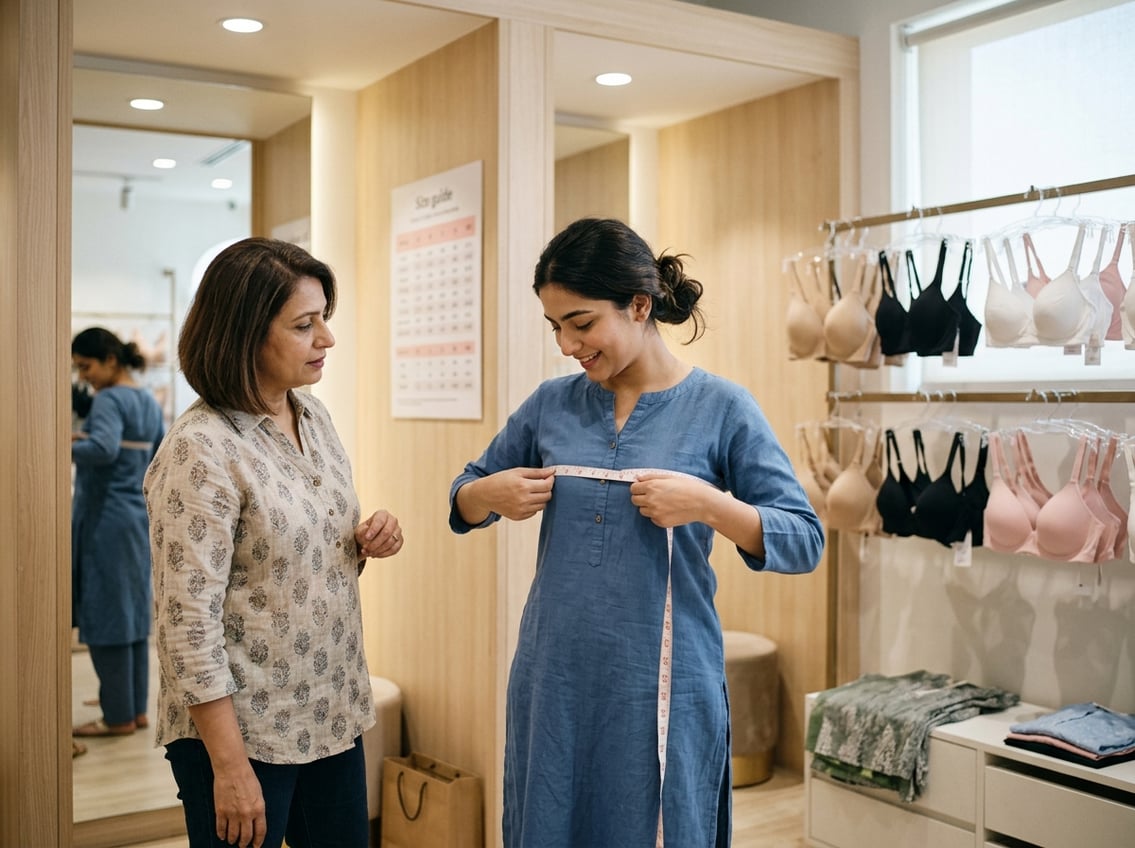
Standard size charts often fail to account for the diversity of Pakistani body types, leading to poor fit and discomfort.
Simple home measuring tips and choosing brands that adapt sizing can help you find a better fit.
History of Bra Size Charts and Their Limitations
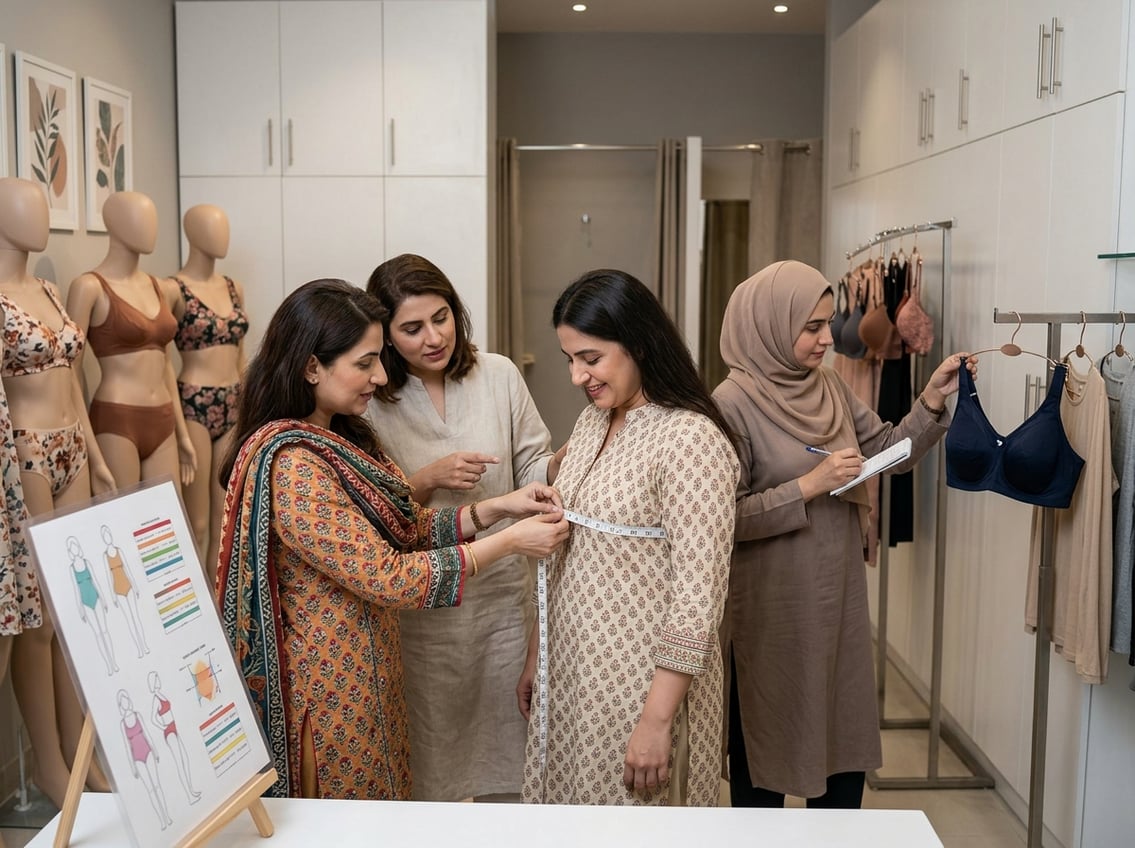
You probably learned bra sizes from a chart that links numbers and letters.
Those charts grew from Western clothing and medical measurements taken decades ago.
Early makers used mostly European and North American body data.
Most popular charts use inches and the band-plus-cup system developed in the UK and US.
That system became global through trade and fashion brands.
EU sizing follows different band-number rules and letter mappings, so conversions can confuse you.
Brands often convert between UK/US/EU systems.
Those conversions rely on formulas that assume Western body proportions.
That means an “equivalent” size may not match your shape if you are in Pakistan.
Local Pakistani fitting traditions and measurements differ from Western anthropometry.
Imported bras use the international charts, while local makers sometimes size by general garment labels or regional fit experience.
You can find “bra size conversion Pakistan” guides, but they usually adapt Western charts rather than redefine them.
If you shop across systems, expect these issues:
- Band-number conventions change by country.
- Cup letters map differently above D.
- Measurement methods (rib vs. +4) give different band fits.
Common Sizing Gaps in Pakistani Bra Fit
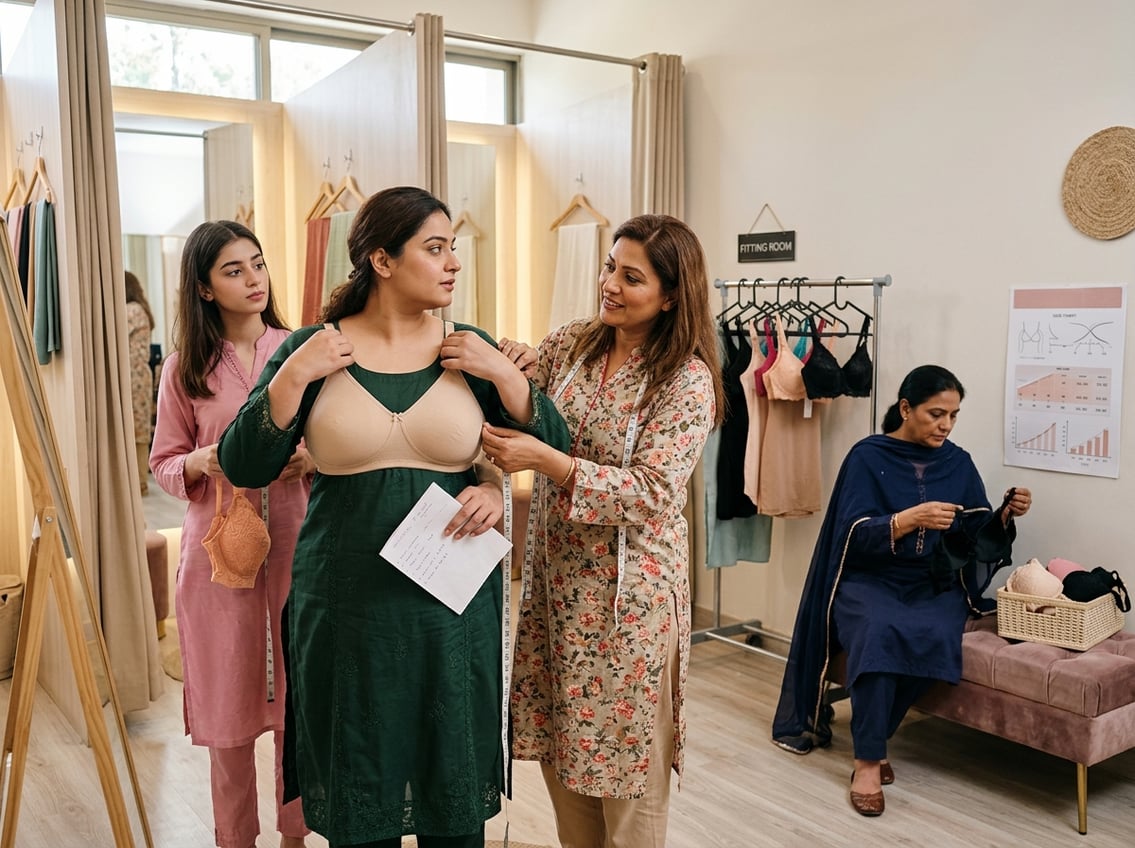
Fit problems appear in how band and cup numbers relate, how the bra sits on your torso, and how fixes like sister sizing often fail for Pakistani body shapes.
This isn't a rare issue; a peer-reviewed study published via the National Center for Biotechnology Information found that 80% of women studied wore incorrectly sized bras, with 70% wearing sizes too small and 10% too large.
These gaps cause loose bands, riding straps, and cups that look wrong even when numbers match.
Band-To-Cup Ratio Problems
Many charts assume a fixed inch difference between your underbust and bust tells the true cup size.
That idea ignores how much of your breast tissue sits high, wide, or low on the chest.
If your rib cage is narrower but your breast tissue spreads more to the side, a band labeled the same as someone else’s will feel loose and the cup will gape at the side.
Brands often scale cups only by whole inches.
That makes bands feel too large, or straps carry more weight.
You may need a firmer band with a slightly larger cup volume than the chart suggests.
Look for bras that list actual cup volume or try sizes based on how your tissue distributes, not just numbers.
Torso Length and Strap Placement Issues
Your torso length and shoulder slope change where straps sit and how a band grips.
Short torsos pull cups and straps up, creating tension at the top of the cup.
Long torsos leave bands lower and straps digging into shoulders.
Many Pakistani body types have variations in torso length that standard charts don’t account for.
Strap placement also matters.
If straps sit too close to your neck, they slip; if they sit wide on the shoulder, they cut in.
The band should sit level under the shoulder blades.
If it rides up, the band is not supporting you; either it’s too big, or the cup shape is wrong for your bust position.
Sister Sizing and Its Limitations
Sister sizing tells you to move a band size up and cup size down (or vice versa) to find fit.
In practice, it changes where the cup sits and how the wire lines up on your breast root.
That often creates gaping at the top or side, or makes straps carry too much weight.
Sister sizing assumes cup shape scales evenly.
It doesn’t for breasts that are fuller on the bottom, wider-set, or shallow on top common traits you might have.
Trying sister sizes can help sometimes, but it won’t fix mismatched cup shape, torso length, or strap placement.
Test both band and cup fit separately instead of relying only on the sister-size rule.
High Return Rates Due to Sizing Mismatch
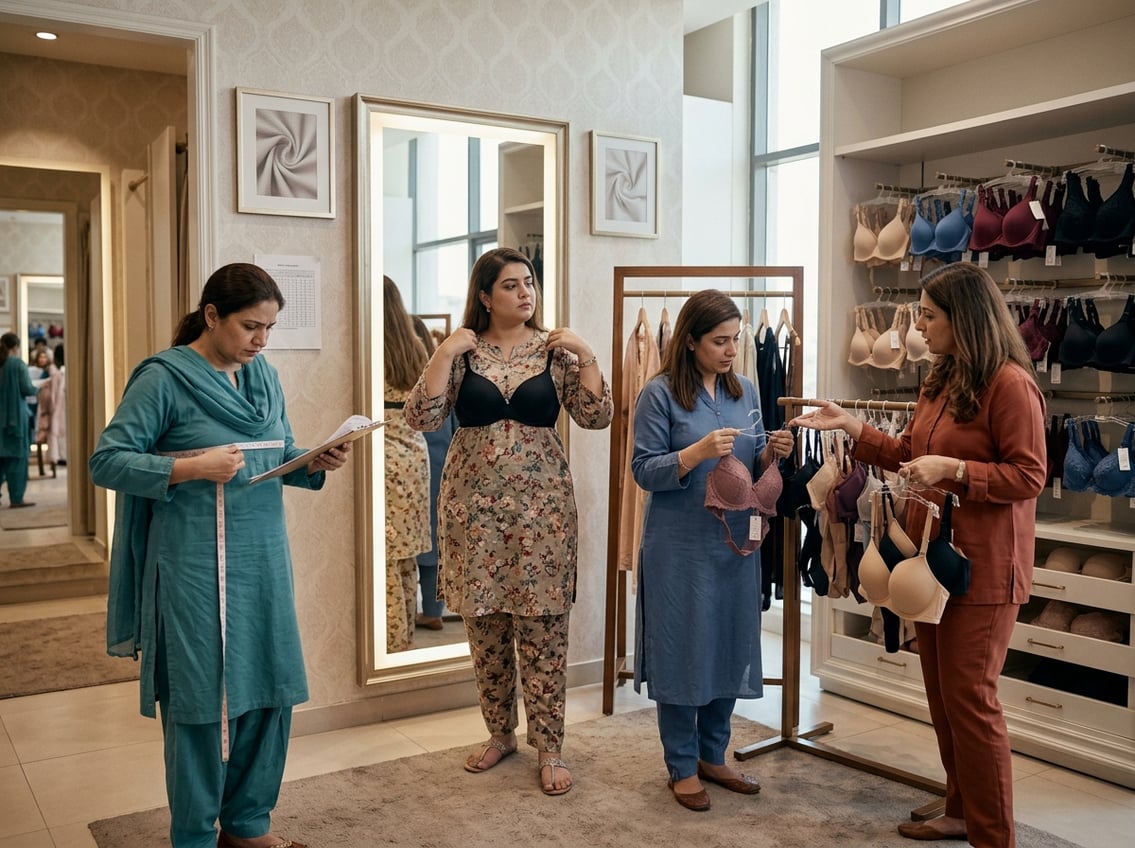
You often see size charts that use international numbers or simple S/M/L labels.
Those charts ignore common body shape differences in Pakistan.
When a cup or band feels wrong, you return or exchange the item.
High return and exchange rates link directly to poor sizing.
Buyers who use cash-on-delivery (COD) may try items at home and send them back more often.
COD lowers the barrier to return because you paid only after delivery.
Many sellers have exchange-only policies to avoid refunds.
That makes you accept a different size or wait weeks for the right fit.
You might choose a different store next time to avoid the hassle.
Stores lose money on shipping and restocking when items come back.
You lose time and trust in the brand.
Both of you pay higher costs that could be cut by better sizing.
- Bold size labels alone mislead you.
- Illustrate fit with photos and measurements to guide your choice.
- Use customer-fit feedback to refine sizes and lower returns.
Local Tailoring for Perfect Bra Fit in Pakistan
You often find ready-to-wear sizes don't match your body.
Shops use general charts, but your shape can sit between sizes or need different bust and waist fits.
Local tailors, or darzis, act as a quiet fix for that gap.
They measure your exact curves, adjust patterns, and make small changes that make big differences in comfort.
Tailored pieces fit your posture and bust shape better than off-the-rack items.
A darzi can raise or lower a neckline, move darts, or change cup space so the garment supports you where ready-made styles don’t.
You also get flexibility.
Want looser hips or a snugger waist? Tailoring lets you pick fabric behavior and stitch strength for daily wear.
This matters when standard charts treat bodies as identical.
Think of tailoring as a practical choice, not a luxury.
Many people mix both: buy ready-to-wear for convenience and ask a darzi for key alterations.
That keeps costs lower while giving you a closer fit.
If you shop online, tailoring helps too.
You can order a near-size and have it altered locally.
This two-step approach cuts guesswork and saves time compared with hunting for a perfect chart match.
How to Measure for a Better Bra Fit at Home
Measure your ribcage and bust with a soft tape, note where the band sits, and check how the bra feels on your body.
Small changes in where you place the tape or how tightly you hold it will change the size and fit.
Step-by-Step Measuring Method
Start with the underband measurement.
Wrap the tape right under your bust where the bra band would sit.
Keep the tape snug and level.
Breathe normally and record the number in centimeters.
If the tape feels tight, loosen it one notch. Pakistani body shapes often need a firmer band, but not so tight that it digs in.
Next, take the bust measurement.
Stand straight, wear an unpadded bra, and measure at the fullest part of your breasts.
Keep the tape parallel to the floor and don’t compress the breast tissue.
Subtract the underband from the bust to estimate cup volume.
Use centimeter differences instead of the “plus 4/5” rule; that rule can push band sizes up and give a loose fit for many local proportions.
If your band measurement falls between standard sizes, try the smaller band and a sister size for the cup.
Write down both numbers and try bras in both sizes because fabric and brand cut matter.
Fit Checks Beyond Sizing
Check the center gore (the piece between cups).
It should sit flat against your sternum.
If it lifts, the cup might be too small, or the wire sits incorrectly.
If it digs in, try a larger cup or a wider band.
Look at strap behavior.
Straps should hold breasts without carrying all the weight.
If they slip, tighten them slightly and check the band fit; a loose band causes strap slippage.
If straps dig, try wider straps or a larger band.
Examine underwire flare and cup coverage.
Wire should follow your breast root without sitting on breast tissue.
If wire sticks out or sits on breast, the cup shape or size is wrong.
Also check side coverage and wing fit; wings should lie flat against your ribcage without folding.
Try movements: raise your arms, bend, and walk.
Watch for gaping, overflow, or bounce.
Make small adjustments and retest until the bra feels secure and comfortable.
How Pakistani Bra Brands Can Improve Sizing
You need size ranges that match real bodies, not just a narrow chart.
Offer more band and cup combinations so people with different frames and shapes can find a true fit.
Small changes in band or cup can make a big comfort difference.
You should use local fit models and test on a variety of body types.
That means trying designs on people across ages, heights, and chest shapes in Pakistan.
Add clearer, local sizing guidance on product pages.
Show how to measure with simple steps and images.
Include a conversion note if you label sizes using international standards.
Make returns and exchanges easy and fast.
Let customers swap sizes without a hard penalty so they can try the best fit at home.
That builds trust and reduces wasted purchases.
Use better fabric and construction notes for fit behavior.
Tell customers whether a cup runs tight, a band stretches more, or a style suits fuller or shallower breasts.
You could include a short fit tag like: runs small, band stretches, good for full-on-top.
You should collect and share fit data.
Track which sizes get returned and why.
Use that info to adjust patterns and size charts.
Sharing anonymized stats helps customers choose more accurately.
Consider offering in-store or virtual fittings.
Even a brief video call can guide someone to the right size.
It gives you feedback and makes customers feel supported.
Bra Fitting FAQs for Pakistani Shoppers
This section answers common fit and measurement problems you meet when shopping for bras in Pakistan.
You will find clear steps to measure yourself, reasons for size differences between brands and countries, and simple tips to get a better fit using local size charts.
Why do bras that match my usual UK/US size feel off when I buy in Pakistan?
Manufacturers in Pakistan often use different measurement points and grading tables than UK/US brands.
That means the same label (like 34C) can have a different band length or cup volume.
Fabric, cut, and padding also change how a bra fits.
A Pakistani brand may use firmer bands or different cup shapes that shift fit even if the size number matches what you wear abroad.
How do I measure my band and cup size correctly at home in Pakistan?
Stand straight and wear a non-padded bra.
Measure under your bust, snug but not tight, for your band in centimeters or inches.
Then measure the fullest part of your bust, keeping the tape level.
Subtract the band measurement from the bust measurement to estimate cup size using the Pakistani bra size guide or a local converter.
Bra Sizing Systems by Country: Differences and Conversion Tips
UK, US, EU, and Pakistani systems use different band numbering and cup lettering.
Some systems add or subtract inches to the band size before calculating cup size.
Use a Pakistani bra size chart or an online converter to find band and cup equivalents.
Try on sister sizes (one band up, one cup down, or vice versa) if conversions still feel off.
Body Shape Differences and Bra Size Chart Accuracy for Pakistani Women
Many Pakistani women have different rib cage shapes, breast roots, and tissue distribution compared to the bodies used for standard charts.
These differences affect how cups and bands fit.
Charts often assume a single bust-to-band difference method.
Real bodies vary in torso length, breast placement, and fullness, making standard charts less accurate.
Why Cup Sizes Differ Between Bra Brands
Brands use unique molds, seam placements, and padding levels, which change cup volume and shape.
Fit models and grading rules also differ, so two brands can label a bra 36D but produce different cup depths and projections.
How to Find the Perfect Bra Fit in Pakistan
Measure yourself using a reliable bra fitting guide designed for Pakistani women. Try several brands and sizes to find the best fit.
Start with your measured band and cup size. Test sister sizes if your initial choice doesn’t feel comfortable.
Look for stores that offer professional fitting assistance. Online shops with easy return and exchange policies can also be helpful.
Consider made-to-measure options or tailoring for a custom fit. This ensures the bra matches your unique body shape.
Conclusion
Standard bra size charts are usually built around Western body measurements, which is why so many Pakistani women struggle to find a comfortable, well-fitting bra using them alone. Band width, cup shape, and torso proportions can all differ, making a universal chart an unreliable starting point.
The best approach is to measure yourself at home, try on a few different sizes, and pay attention to how a bra actually feels rather than relying only on the number on the tag. Once you understand your true shape, shopping becomes easier, and every bra you choose will offer better support and comfort.