

How to Use a Bra Extender: When You Need One and How to Pick the Right Size for a Better Fit
A bra extender is a small strip of hook-and-eye fabric that clips onto your existing bra band to add roughly 1–3 inches of width. You need one when the band feels tight on the loosest hook during pregnancy, weight change, or bloating not when the cups themselves stop fitting.
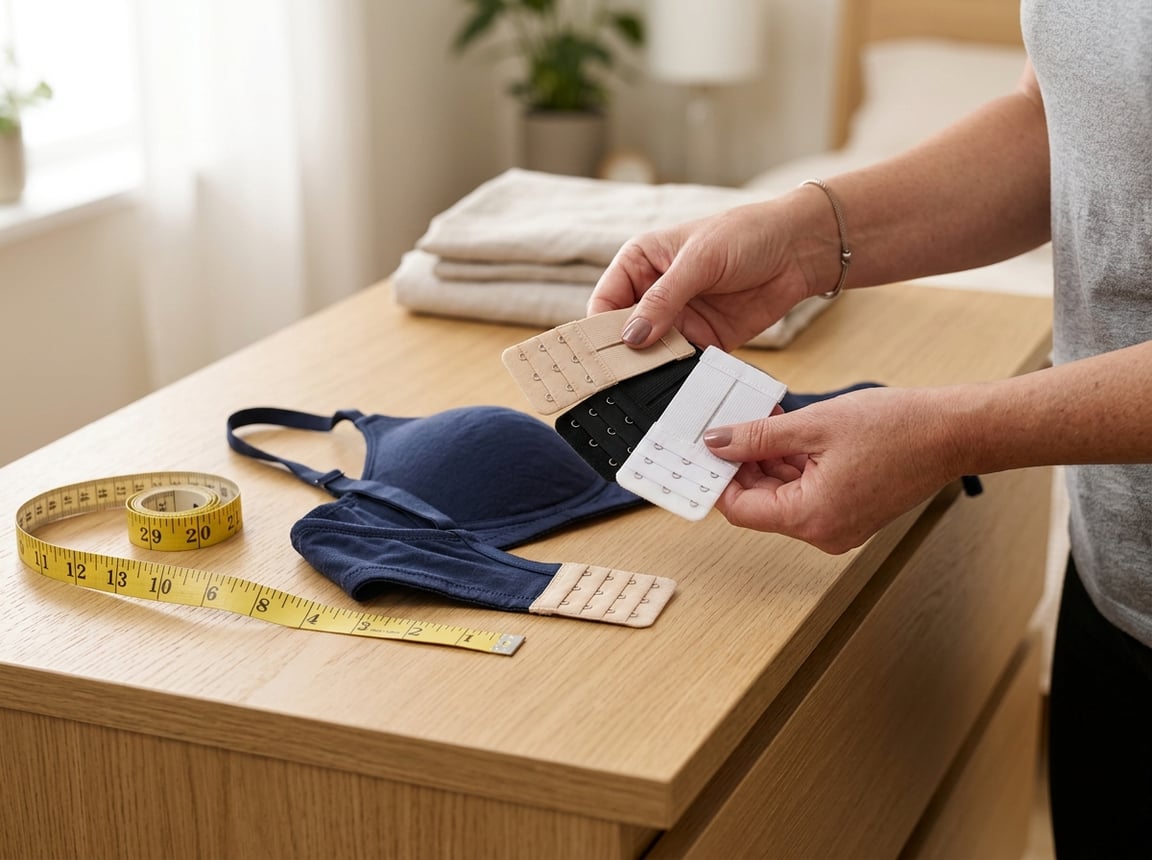
Choose an extender that matches your bra’s hook count, spacing, and width, and use it only when the band needs extra room. You will learn how to check the fit, attach a bra band extender correctly, and decide whether an extender or sister size will serve you better.
You will also find guidance on comfort, care, safety, bra accessories, and buying bra extenders in Pakistan. These steps can help you improve a short-term fit while you look for a long-term bra that fits your current shape.
What a Bra Extender Does
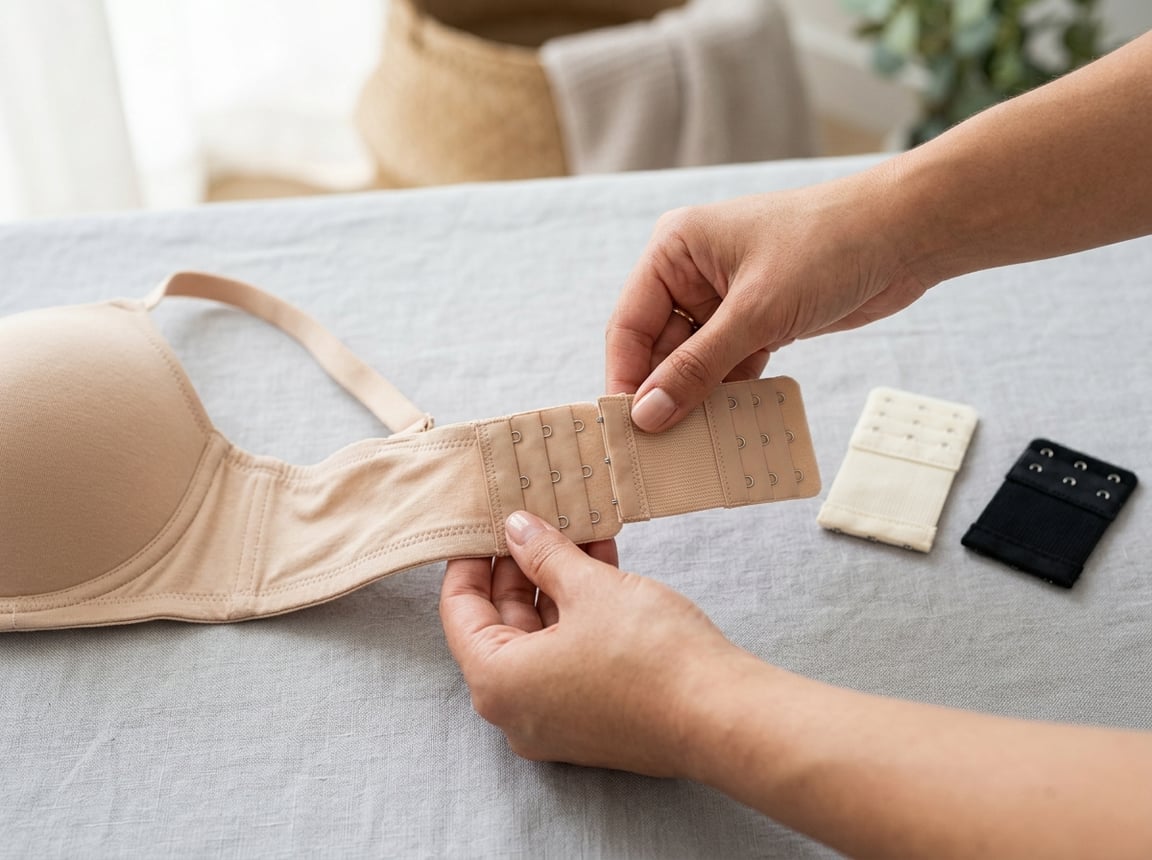
A bra extender adds length to a tight band without changing the cup volume. It can improve comfort when your bra fits well elsewhere, but it may not solve problems caused by the wrong band or cup size.
How Hook-And-Eye Extenders Add Band Length
A bra extender has a short fabric panel with hook-and-eye fasteners. You attach the extender’s hooks to the bra’s existing eyes, then fasten the bra’s hooks into the extender’s eyes. This places extra material between the bra and your back.
Choose an extender with the same hook width and number of rows as your bra. For example, a bra with three rows of hooks usually needs a three-hook extender. The added length makes the band less tight, but it does not increase the cup size or change the cup shape.
Use the loosest setting that feels secure. Your band should sit level around your body and stay in place when you move. If the extender makes the straps shift, the cups wrinkle, or the band rides up, you may need a different bra size.
When an Extender Is a Temporary Solution
An extender works well when a new bra feels slightly tight, when your body size changes, or when you need extra room during pregnancy. It can also help you test whether a looser band improves the fit before you buy another size.
Treat it as a temporary fix, not a replacement for a well-fitting bra. Wearing one for too long can alter the bra’s support and pull the straps closer together. If you need an extender on every setting or with several bras, consider buying a bra with a larger band size and a suitable cup size.
When Extra Band Length Is Helpful
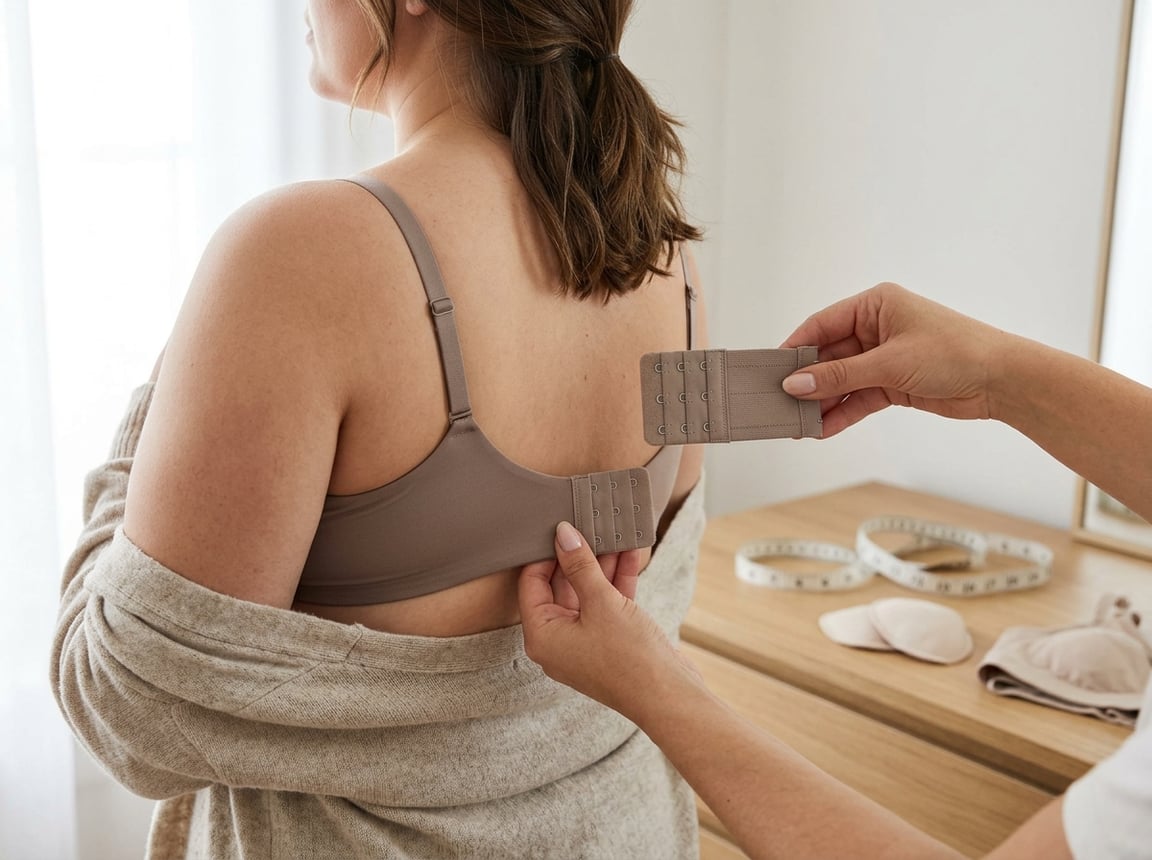
A bra extender can give your ribcage a little more room when the cups still fit and the bra remains supportive. It works best as a temporary adjustment for body changes, a new bra with firm elastic, or occasional comfort.
Pregnancy, Postpartum, and Weight Changes
During pregnancy, your ribcage and breast size may change at different rates. A bra extender can add room to the band while your current cups still fit. This lets you keep wearing a suitable bra without buying a new size immediately.
After birth, your body may continue changing as swelling decreases and your weight shifts. An extender can help during this transition, but it should not replace maternity lingerie designed for nursing access, adjustable cups, or changing breast volume.
Check the fit often. If the cups wrinkle, spill over, press into breast tissue, or leave gaps, extra band length will not solve the problem. You may need a different bra size, especially if weight change affects both the band and cups.
New Bras and Stretched Elastic
A new bra may feel firm because its elastic has not relaxed with wear. If the band feels slightly too tight but stays level and the cups fit correctly, an extender can provide temporary comfort while you break it in.
Attach the extender to the bra’s existing hooks, then fasten the bra onto the extender’s hooks. Start with the smallest added length that feels comfortable. This helps preserve support and reduces the chance that the straps will slip.
Elastic also loses tension over time. An extender may make a stretched band looser, but it cannot restore worn-out support. Replace the bra when the band rides up, the fabric no longer holds its shape, or the cups and straps stop fitting securely.
Comfort During Short-Term Body Changes
You may need extra room during temporary bloating, fluid retention, or small weight changes. An extender can relieve pressure around your ribcage without sewing or permanently altering the bra.
Choose an extender with the same hook spacing, number of rows, and a similar width to your bra’s fastening. A mismatch can cause twisting, uneven tension, or discomfort against your skin.
Use it only when the bra still supports you and the cups fit. If you need the extender every day for several weeks, consider a new bra in a better band size. A temporary fix should not hide a lasting fit problem.
Check Whether Your Band Is Actually Too Tight
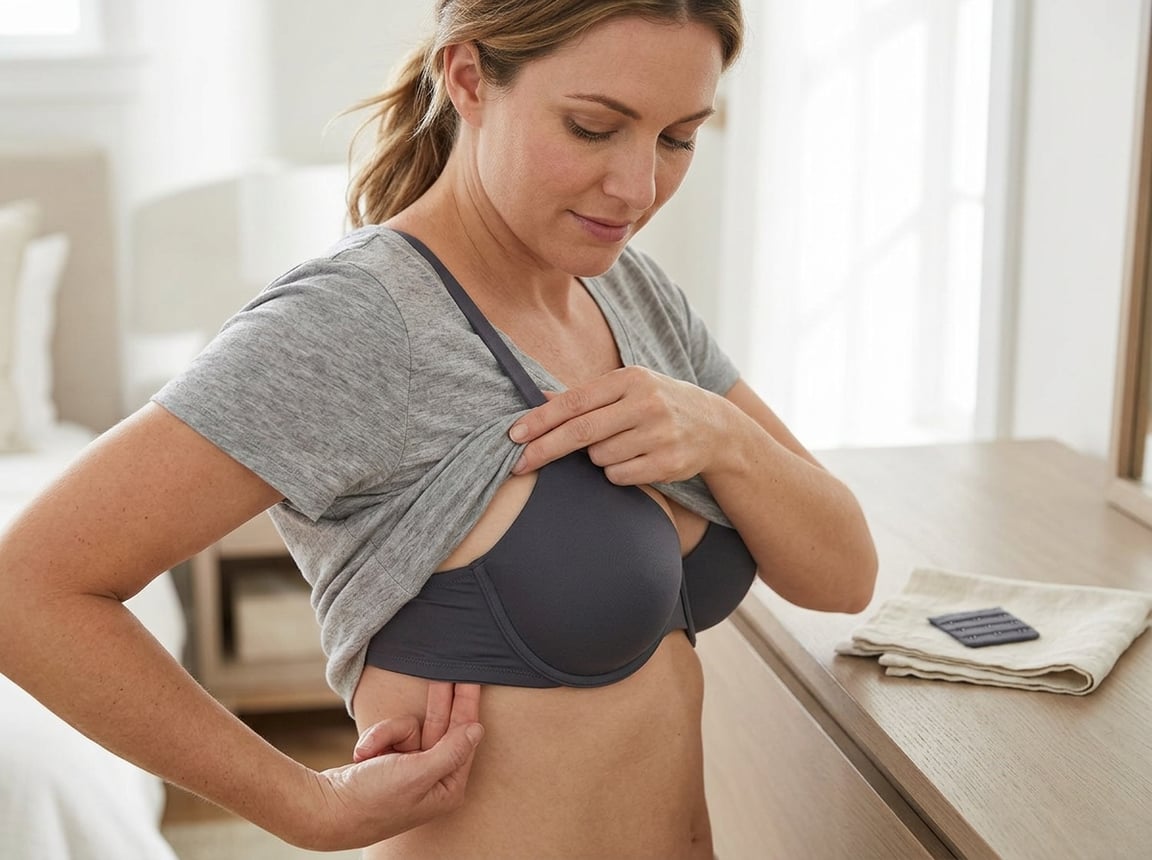
A firm band should sit level around your body and provide most of the bra’s support. Check the band, cups, and straps together before adding an extender, because a cup or strap problem can make the band feel tighter than it is.
Signs of a Genuinely Tight Band
A genuinely tight band may leave deep red marks, cause chafing, or feel painful after a short time. You may also feel pressure around your ribs or find it hard to take a full breath. Some marking is normal, but pain and lasting irritation signal a poor fit.
Check the band in a mirror. It should sit level across your back, stay in place when you move, and allow you to slide two fingers underneath without forcing them. You should fasten a new bra on the loosest hook, leaving room to tighten it as the elastic stretches.
If the bra feels tight but the cups spill over, cut into your breast tissue, or leave gaps, the cups may be the real problem. Try the bra on backward, with the cups hanging away from your body. If the band still feels tight, you may need a larger band or an extender.
Common Fit Problems and Their Causes
A tight-feeling band can result from several issues:
- Cups that are too small: Breast tissue pushes the cups outward, which pulls the band tighter.
- Straps adjusted too tightly: Short straps can pull the bra upward and increase pressure near your shoulders and back.
- A new or stiff bra: Fresh elastic may feel firmer than a worn bra.
- Body changes: Weight changes, swelling, or muscle gain can alter your usual fit.
- A narrow or firm band: Some designs feel tighter than others, even in the same labeled size.
Loosen the straps and check the cups before using an extender. If the cups fit well and the band feels only slightly tight, an extender can add useful room without changing the cup fit.
Why a Loose Band Rides Up Instead
A band that rides up your back usually lacks enough tension. It may be too large, stretched out, or pulled upward by straps that are too tight. In this position, the band cannot anchor the cups properly, so the bra may offer less support.
Do not add an extender to a band that already moves upward. Fasten the bra on the loosest hook and loosen the straps slightly. If the band still rides up, try a smaller band size with a larger cup size to keep a similar cup volume. Replace the bra if its elastic has lost its recovery.
Attach and Wear an Extender Correctly
Choose an extender that matches your bra’s hook-and-eye closure. It should have the same number of hooks, similar hook spacing, and a compatible width. Attach it carefully, then check that the band stays level and does not twist or press into your skin.
How to Use a Bra Extender Step by Step
- Find the right extender. Match the extender to your bra’s two, three, or four rows of hooks. Choose a similar color and fabric when possible.
- Put on your bra normally. Fasten it on the loosest hook. This gives you room to tighten the band later as the bra stretches.
- Connect the extender. Place the extender’s eyes over the bra’s hooks, then fasten the extender to the bra. Make sure every hook sits fully inside an eye.
- Check the closure. The extender should lie flat against your back. Do not leave a hook partly attached, since it can scratch you or pull away from the fabric.
- Put on your top and move. Raise your arms, bend, and sit to check whether the band remains secure.
Adjusting for a Secure, Comfortable Fit
An extender should add a small amount of room without changing the bra’s shape. The band should feel snug but comfortable, sit level across your back, and stay in place when you move. If it rides up, the extender may be too long, or the bra may not provide enough support.
Check the cups after attaching it. Extra band room can pull the cups outward and create gaps, overflow, or loose straps. Adjust the straps and reposition your breasts in the cups before deciding whether the fit works.
Use the loosest hook whenever possible. Move to a tighter row only after the band stretches. If the extender pulls at the hooks, leaves gaps, or causes discomfort, stop using it and try a different size or a bra with a larger band.
Choose the Right Hook Count and Width
Match the extender to your bra’s hook count, width, and hook spacing. A correct match keeps the band flat and helps the bra maintain its intended support.
2-Hook vs. 3-Hook Bra Extenders
Count the hooks on your bra’s back closure before buying an extender. A 2-hook bra extender fits bras with two hooks in a vertical row, while a 3-hook bra extender fits bras with three hooks. The extender’s hook-and-eye layout must match your bra.
Measure the closure’s width from the outer edge of the top hook to the outer edge of the bottom hook. Use this measurement with a bra extender size guide, because two extenders with the same hook count may have different widths or spacing.
Do not attach a 2-hook extender to a 3-hook bra. The hooks and eyes may not line up, which can cause uneven tension or leave part of the band unsupported. A 3-hook extender usually provides a wider connection and may suit bras with broad back closures.
Matching Width, Spacing, and Rows of Hooks
Check the width between the rows of hooks and the distance between individual hooks. The extender’s eyes must align with your bra’s hooks without forcing them sideways. Compare the extender with the bra closure, or measure the bra using a ruler.
Also check how many adjustment rows the extender has. Most extenders offer two or three rows of eyes, allowing you to choose the fit that feels comfortable while keeping the band secure.
Choose an extender with a similar fabric and color when possible. A soft, flexible fabric usually feels more comfortable against your skin, while a firm extender can better support a wider band. If the extender pulls, twists, or leaves hooks exposed, its width or spacing may not match your bra.
Use a Bra Extender Size Guide
Match the extender to your bra’s closure before choosing its length. You need the correct number of hook rows, a compatible hook direction, and enough added band space to improve comfort without changing the fit too much.
Measure Your Existing Closure
Count the rows of hooks on the bra. Choose a one-row, two-row, or three-row extender that matches your closure. The extender should also match the hook spacing and width. A mismatched piece may not attach securely or may pull the band out of shape.
Check the bra band while wearing it on the loosest setting. If the cups fit well but the band feels tight, measure how much extra room you need. Start with about 1 inch of added length for mild tightness. Use a longer extender, such as 2 inches, if the band leaves strong marks or feels restrictive.
Make sure the extender uses the same hook-and-eye design as your bra. Match the color and fabric when possible, but prioritize fit and secure attachment.
Select the Appropriate Extension Length
Choose the shortest extender that makes your band size comfortable. Adding too much length can loosen the band and change the position of the straps, which may reduce support. It can also cause the bra to ride up your back.
Use this guide as a starting point:
| Fit problem | Suggested added length |
|---|---|
| Slight tightness | ½–1 inch |
| Noticeable tightness | 1–2 inches |
| Major tightness | Consider a larger band size |
Attach the extender to the bra’s existing hooks, then fasten the bra on the extender. Check that the band stays level across your back and that the cups remain smooth. If the extender creates gaps, twists, or slipping, try a shorter length or choose a different bra size.
Know When Sister Sizing Is the Better Choice
An extender adds length to the band, while sister sizing changes both the band and cup size to keep a similar cup volume. Choose based on whether the band alone feels tight or the bra’s full fit needs adjustment.
What Sister Sizing Means
A sister size uses a smaller band with a larger cup, or a larger band with a smaller cup. For example, 34C has a similar cup volume to 36B and 32D, although the cups and band may fit differently.
If your cups fit well but the band feels loose, try one band size down and one cup size up. If the band feels too tight while the cups fit correctly, try one band size up and one cup size down.
Use sister sizing when you need a different band fit and your current cups already contain your breast tissue without spilling or gaping. The new band should sit level across your back and feel firm on the loosest hook. Sister sizing may work better than an extender when the bra has stretched elastic or when adding length would make the band too loose.
When to Replace the Bra Instead of Extending It
Treat an extender as a temporary fix when the bra feels tight because of a small size change, a new bra needs breaking in, or you need extra room during daily wear. It should not correct major fit problems.
Replace the bra if the cups spill, wrinkle, gape, or sit away from your body. An extender changes the band length but cannot fix the wrong cup size, a poor cup shape, worn-out fabric, or weak support.
A study by Wood, Cameron & Fitzgerald, Chiropractic & Osteopathy (2008) found that 80% of women wore incorrectly sized bras - 70% wore bras that were too small, and 10% wore bras that were too large.
Replace it when the band rides up even without an extender, the straps carry most of the support, or the elastic has become stretched and soft. In these cases, extending the band can make the bra less secure. Try a new bra in your measured size, or use a sister size only after checking that the cup volume and shape still suit you.
Care, Comfort, and Safety Considerations
A well-fitted extender should add room without causing rubbing, slipping, or pressure. Check the hook-and-eye connection, your bra’s stretched elastic, and the extender’s condition each time you wear it.
Preventing Irritation and Slipping
Choose an extender with the same hook-and-eye spacing and similar width as your bra band. Mismatched parts can twist, catch your skin, or pull unevenly. A soft fabric-covered extender usually feels more comfortable than a rough or stiff one.
Fasten the extender securely to the bra’s original hooks. Check that all hooks sit fully inside the eyes and that the band lies flat against your back. If the extender shifts, folds, or leaves red marks, adjust it or try a different size.
Wear the extender for a short time first. Remove it if you feel pinching, itching, numbness, or strong pressure. Do not use it to compensate for a bra with stretched elastic, damaged closures, or cups that no longer fit. In those cases, replace the bra.
Caring for Extenders and Bra Closures
Follow the care label when washing your bra accessories. If the extender has no label, hand-wash it in cool water with mild detergent, then rinse it well. Press out excess water with a towel and let it air-dry flat. Avoid bleach, fabric softener, and high heat, which can weaken elastic and damage the hooks.
Inspect the extender and bra closure regularly. Look for bent hooks, loose stitching, frayed fabric, rust, or stretched elastic. Replace the extender if it no longer stays attached or if its hooks scratch your skin.
Store the extender dry and unfastened so its hooks do not catch on other garments. Keep it away from sharp objects that could bend the eyes or tear the fabric.
Buying Bra Extenders in Pakistan
You can find bra extenders through Pakistani online marketplaces, lingerie stores, and specialty shops. Compare the hook style, measurements, material, delivery terms, and total cost before placing your order.
Where to Buy Bra Extenders in Pakistan
You can buy bra extenders in Pakistan from local lingerie shops, and online stores or other underwear retailers. Daraz often lists single pieces and packs in common colors, including black, pink, and skin tones. Specialty stores may offer matching adjustable straps and more size choices.
Search using terms such as bra extender, bra hook extender, bra back extension, or bra extensor. Check whether the product works with your bra’s hook spacing. A 2-hook extender will not fit a 3-hook bra correctly.
If you need the item quickly, confirm the seller’s delivery area and cash-on-delivery option. Read recent buyer reviews and check product photos before ordering.
Bra Extender Price in Pakistan
Bra extender prices vary by seller, material, hook count, and pack size. Search results show some three-piece packs priced near Rs. 168, while other products may cost more because they use softer fabric, stronger stitching, or offer several sizes.
| Product type | Common use |
|---|---|
| Single extender | Testing fit or replacing one piece |
| Pack of three | Keeping extras in different colors |
| 2-hook extender | Bras with two rows of hooks |
| 3-hook extender | Wider bands and bras with three rows |
Add delivery fees to the listed price when comparing products. A low item price may not be the cheapest choice after shipping. Avoid choosing only by price; rough edges, weak hooks, or loose stitching can make the extender uncomfortable.
What to Check Before Ordering
First, count the hooks on your bra. Use a 2-hook extender for a bra with two hooks and a 3-hook extender for one with three hooks. The extender should also match the hook spacing and band width.
Use this bra extender size guide:
- Length: Choose the amount of extra room you need, often about 0.5 to 1.5 inches.
- Width: Match the extender to the width of your bra band.
- Rows: Match the number of hook rows.
- Color: Select black, white, or skin tone for a less visible fit.
- Fabric: Look for soft, flexible material with covered edges.
Check the seller’s measurements instead of relying only on labels such as small, medium, or large. Confirm the return policy, delivery charges, customer reviews, and whether the listing shows the actual product.
Find a Long-Term Bra Fit Solution
A bra extender can add comfort while your body changes, but it may not solve every fit problem. Pay attention to changes in your band size, cup fit, support, and daily comfort when deciding whether to shop for a different bra.
When to Explore Maternity Lingerie
Consider maternity lingerie if pregnancy or breastfeeding changes your breast size, shape, or sensitivity. Maternity bras often use softer fabrics, wider bands, adjustable closures, and cups that allow more room. Nursing styles may also include drop-down cups for easier feeding.
You may need more than a bra extender if the cups feel tight, the underwire presses painfully, or your breasts spill over the top or sides. An extender changes the band length but does not increase cup volume. Choose a bra that fits comfortably on the loosest hook so you can tighten it as the band stretches.
Your size may change more than once during pregnancy or after birth. Measure again when your current bra feels tight and choose support that feels secure without squeezing. Avoid buying a large supply of one size until your fit becomes more stable.
How to Shop for Better-Fitting Bras
Start by checking your band. It should sit level around your body and feel firm without digging in. If it rides up, try a smaller band size. If it feels tight but the cups fit, try a bra extender temporarily or test a sister size with a larger band and a smaller cup.
Check the cups and center section as well. The cups should contain all breast tissue, and the center should rest against your chest when the style includes a center panel. Straps should stay adjusted without carrying most of the support.
When you browse all bras, compare closure types, cup shapes, materials, and support levels. Try each bra on the loosest hook, move your arms, bend forward, and check for gaps, spilling, or slipping before you buy.
Frequently Asked Questions
A bra extender can add temporary room to a tight band when the cups and straps fit well. Choose one that matches your bra’s hook layout, closure width, and desired amount of extra length.
When should you use a bra extender?
Use a bra extender when your bra band feels too tight, but the cups fit correctly. It can help with temporary changes in body size, a new bra that needs breaking in, or extra comfort during the day.
Avoid using one if the cups spill over, wrinkle, or sit away from your breasts. Those signs point to a cup-size or bra-shape problem, not only a tight band.
How do you choose the right bra extender size?
Choose an extender with the same hook spacing and closure width as your bra. Measure the distance across the hooks and eyes or compare the extender with the bra before buying.
Select the smallest added length that makes the band comfortable. Extenders commonly add about 1 to 3 inches, depending on the design.
Do bra extenders work for all bra styles?
They work best with bras that fasten with standard hooks and eyes at the back. They may not work with front-fastening bras, sports bras, strapless designs, or unusual closures.
Adding length can change the position of the straps and the way the bra supports you. If the fit feels unstable, buy a bra in a better band size instead.
How much extra length does a bra extender add?
Most bra extenders add about 1 to 3 inches to the band. Some models offer multiple rows of eyes, so you can adjust the added length.
Check the product measurements before buying. The listed length refers to the extra band space, not your full bra band size.
How do you match a bra extender to the number of hooks on your bra?
Match the extender to the number of hook rows on your bra. A bra with two rows needs a two-hook extender, while a bra with three rows needs a three-hook extender.
Also check the hook spacing and the width of the closure. An extender with the wrong layout may not fasten securely or may pull unevenly.
Can a bra extender help if your band feels too tight?
Yes, it can add room when the band is the only part that feels tight. Attach the extender to the bra’s existing hooks, then fasten the bra to the extender’s eyes.
Use it as a temporary fit adjustment. If you need it every time or the band still feels tight, try a larger band size while keeping the same cup volume through a sister size.
Making a Bra Extender Work for You
A bra extender is one of the cheapest fixes in your lingerie drawer, but only for the right problem. It adds one to three inches of band width, which makes it genuinely useful during pregnancy, weight changes or bloating any period where your band feels tight on the loosest hook, but the cups still fit properly.
Matching the hook count is the part most people get wrong: a two-hook extender on a three-hook bra will pull the band out of line and undo the benefit.
Where an extender won't help is a bra that has stretched out, dug in at the cups, or started riding up your back. Those are sizing and wear issues, not width issues. Before you buy an extender, it's worth checking signs your band is genuinely too tight and reading up on what sister sizing means, since a sister size often solves the problem outright.
You'll find extenders in our bra accessories range, and the full bra collection if it turns out you need a new band size instead.