

Why Pakistani Women Skip Proper Bra Sizing — and It's Not What You Think: Social Stigma, Fit Myths, and Practical Solutions
You probably think most women skip proper bra sizing because they don’t know how to measure. That plays a part, but the bigger reason is discomfort with in-store fittings, judgment, and brands that use mixed sizing.
You avoid proper sizing when the fitting process feels awkward, unsafe, or unreliable, not just because measuring seems hard.
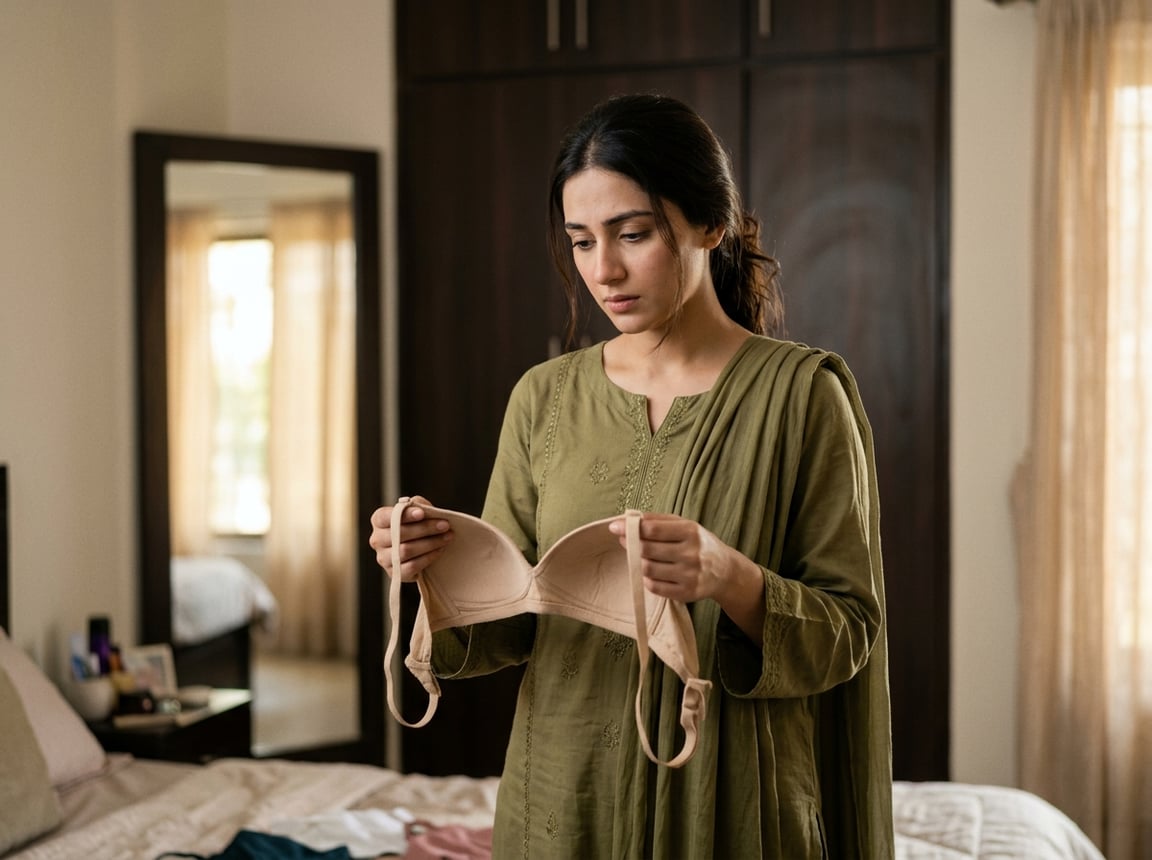
This article will show why quick online guides and crowded stores fail you, and how a private, at-home method can give a better fit. Keep going to learn simple steps that let you find the right size without an uncomfortable trip to a fitting room.
The Assumption: "Women Just Don't Know How to Measure"
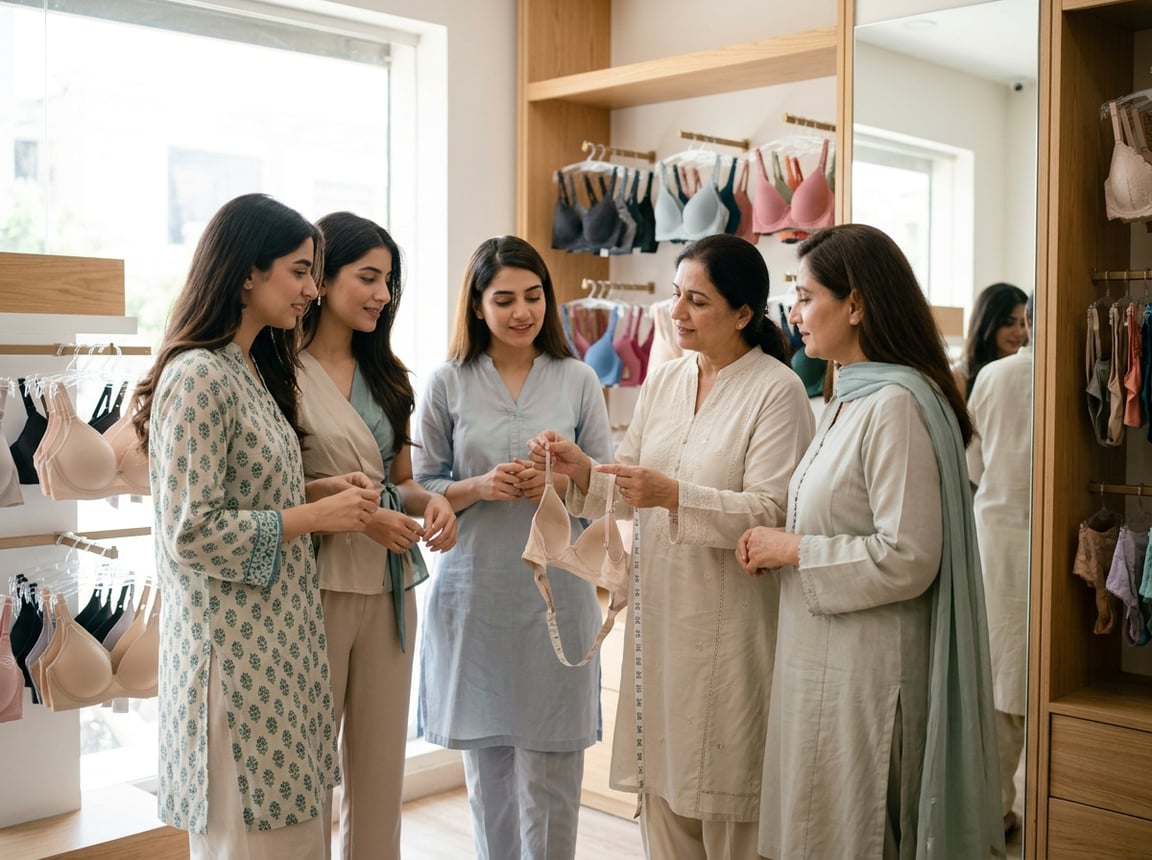
Many people think incorrect bra sizing comes from not knowing tape-measure math. It isn't. A peer-reviewed study in Applied Ergonomics points to inconsistent measurement guidelines across manufacturers and retailers, not user error, as the reason 75–100% of women worldwide persistently wear the wrong size.
Even when you follow the standard method exactly, the math itself is flawed. A University of Portsmouth study found the traditional tape-measure formula overestimates band size in 76% of women and underestimates cup size in 84%.
You'll see myths, mixed advice, and sellers who push one-size-fits-all methods instead of helping you find a real fit.
Common Myths About Bra Sizing
Myth: you only need one number like “34,” and cup letters are flexible. That leads to bras that sit too loose or too tight across the band and cups.
Myth: the measuring tape always gives the right size. Measurements change with posture, breathing, and the type of bra you plan to wear.
Myth: “Sister sizes” mean fit doesn’t matter. Moving between sister sizes without checking cup volume often gives a wrong fit.
Myth: a tight band is always better. A band that’s too tight hides fit problems but causes pain and poor support.
Myth: professional fitting is just retail upsell. Good fitters check shape, breast tissue, and strap placement, not just measurements.
Where This Belief Comes From
You learn many of these ideas from family, friends, and social media trends. Quick tips and one-size guides spread fast, especially in places with few fitters.
Retail environments sometimes push convenience. Stores may only stock common sizes, so staff teach simple fixes instead of accurate measuring.
Cultural modesty and lack of private fitting spaces discourage people from asking detailed questions. That makes measure-first advice seem awkward or unnecessary.
Finally, inconsistent sizing across brands confuses you. A “34B” in one brand can feel different in another, so you assume measuring is useless instead of seeing it as a step that needs brand-specific tweaks.
The Real Barrier: Cultural Discomfort With In-Store Fitting
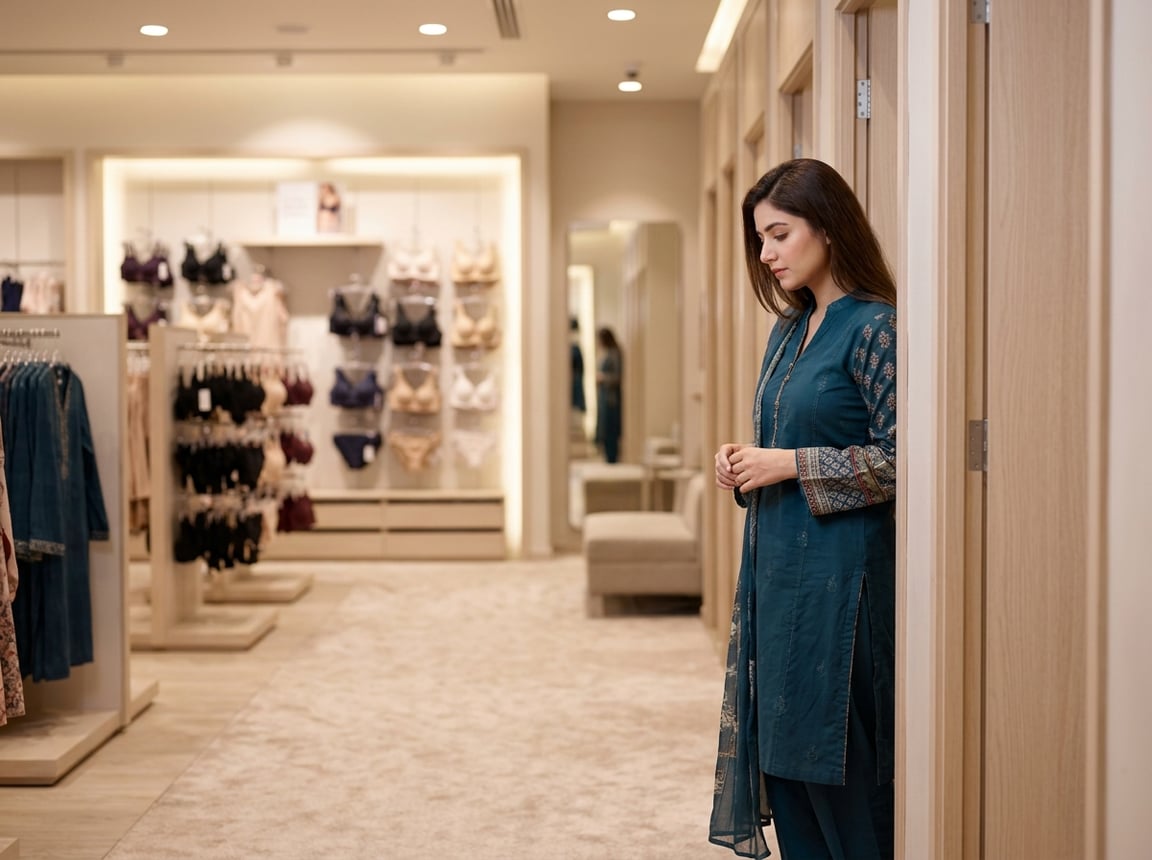
Many women avoid in-store bra fittings because the experience can feel exposed, awkward, or risky to reputation. You face real worries about privacy, judgment, and social backlash when asking for help with intimate items.
Privacy Concerns in Pakistani Society
You might worry about who can see you during a fitting. Shops often lack private rooms or use curtains that don’t fully close. That can leave you uneasy about being observed by staff, other customers, or even family members who may pass by.
Photos or phone cameras are another fear. With smartphones everywhere, the thought that images could be taken intentionally or accidentally makes many women prefer buying without trying.
You also think about where records of measurements could be kept, and whether staff respects confidentiality.
Practical fixes matter. Lockable fitting rooms, female-only staff, and clear privacy policies would help. But until stores make those changes, many women choose comfort over proper sizing.
Stigma Around Discussing Intimates
Talking about breasts or bras can feel taboo in many homes and communities. You may have been taught not to discuss underwear with elders or friends, so asking for a fitting feels like breaking a rule. That stigma turns a simple sizing chat into a high-stakes social test.
You may also fear gossip. Staff who come from your neighborhood or know your relatives can trigger anxiety about rumors. Even professional language from store assistants can sound too personal in a culture where modesty is prized.
Stores that normalize the conversation using neutral terms, private consultations, and clear professionalism reduce stigma. Until that becomes common, silence stays the safer choice for many women.
Personal Stories from Shoppers
You’ll hear similar reasons from other shoppers. One woman described avoiding a mall fitting because the shop assistant was a distant cousin; she bought online instead.
Another said she left a boutique when the dressing room door had a gap. Small details made the experience feel unsafe.
Some women choose friends as fitting helpers to create a private, trusted space. Others measure themselves at home with a tape and buy looser styles to avoid the stress of a store.
These personal choices show that the barrier is not about ignorance; it’s about managing social risk while still trying to find comfort.
Practical changes female-only hours, appointment-only fittings, discreet entrances helped a few women feel brave enough to try in-store fitting again.
Why Generic Self-Measurement Guides Don't Solve This
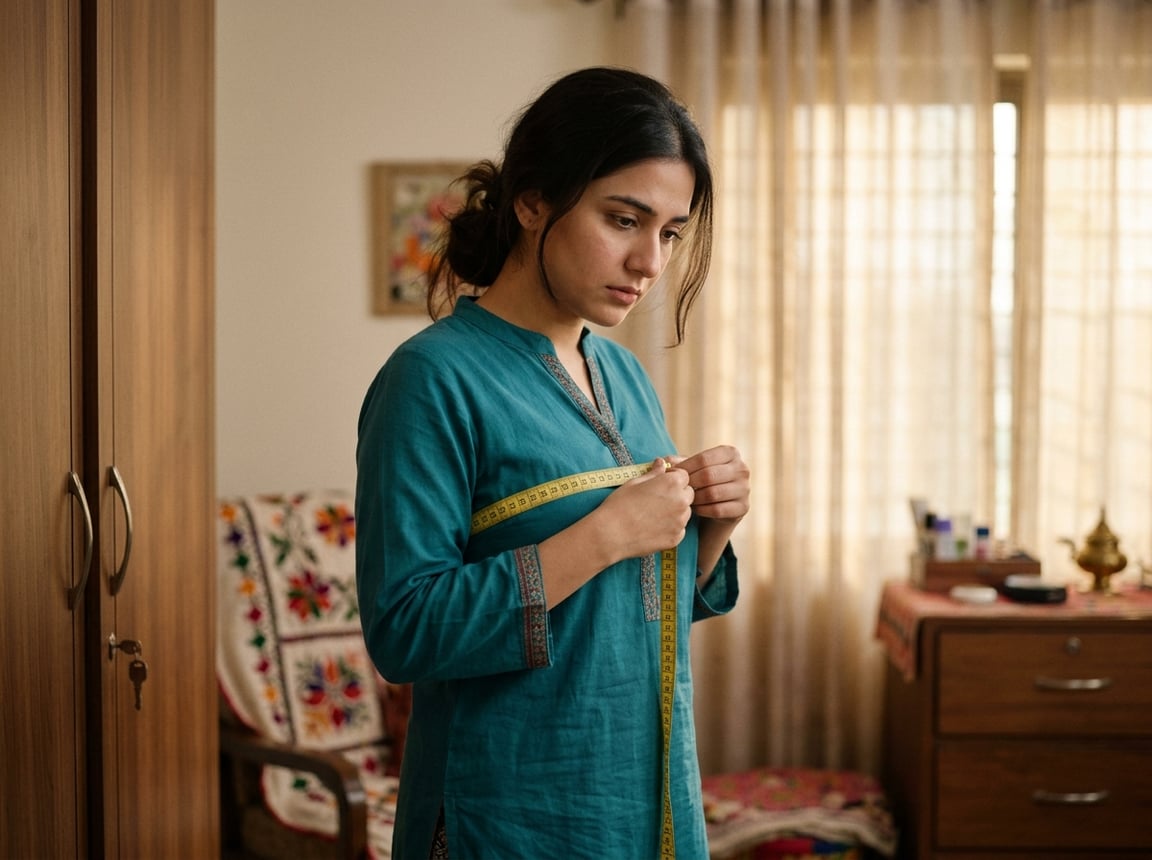
Many step-by-step guides and online calculators promise a quick “true” size, but they leave out key things that affect fit. You still face brand variation, body shape, and local shopping barriers that a tape measure can’t fix.
The Limits of Universal Sizing Advice
Most guides tell you to measure underbust and bust and then do simple math. That method ignores breast shape, tissue firmness, and where your volume sits on the chest. Two people with the same numbers can need very different cup shapes.
Guides also assume access to a range of sizes and styles. In Pakistan, limited stock, conservative shop layouts, and few trained fitters mean you can’t try many options. A simple size number won’t help if the stores don’t carry the right cut for your shape.
Finally, cultural discomfort plays a role. You might skip fittings or alter tape measurements to avoid awkward moments. That changes the result, so the “correct” number on paper won’t match what feels right on your body.
What Bra Size Calculators Miss
Bra size calculators give a single answer from two numbers, but they miss small fit details that matter most. They don’t account for asymmetry, shallow vs. projected breasts, or how wide your root is. Those shape traits change which cup and wire will sit properly.
Calculators also ignore brand inconsistency. A 34C in one label can fit like a 32D in another. So you can end up chasing sizes rather than trying different cuts and brands that suit your anatomy.
Many calculators feed into myths about bras too, like the idea that a tight band always means a larger cup is wrong. You might need a different band with a different cup shape, not just a size up or down.
Calculators can start you, but you still need trial, fit notes, and honest feedback from fittings or reviews to find something that truly fits.
A Private, At-Home Sizing Method That Actually Works
You can get an accurate fit at home with just a tape, a mirror, and a bra you already own. Measure two numbers carefully: your snug underbust and your full bust,,then use those numbers to find your band and cup.
How to Measure Bra Size at Home
Stand straight with your arms relaxed. Wear a thin, unpadded bra or go braless. Wrap a soft measuring tape around your ribcage, just under your breasts. Pull the tape snug but not tight and read the number to the nearest whole inch or centimeter; this is your underbust.
Next, wrap the tape around the fullest part of your bust. Keep the tape level across your back and breathe normally. Read the full-bust measurement to the nearest whole inch or centimeter.
Subtract the underbust from the full bust to find cup volume. Use that difference with a sizing chart or a bra size calculator to get your cup letter and band number.
Tips for Accurate Measuring
Measure when your breasts are unsupported and relaxed. Avoid measuring after exercise or while cold; tissue can tighten and change numbers. Stand in front of a mirror to keep the tape level across your back and avoid twists.
If the underbust number is between sizes, round down for a firmer band or up for comfort. When using a bra size calculator, enter exact numbers and specify inches or centimeters. Re-measure after weight change, pregnancy, or when trying different brands, since fit varies by style and maker.
Recommended Tools
- Soft fabric measuring tape, flexible and marked in inches and cm.
- Full-length mirror helps keep the tape level and aligned.
- Pen and paper or phone notes to record underbust and full-bust numbers and the date.
Optional: use a reliable online bra size calculator to convert measurements into band and cup sizes and to check sister sizes. Try one calculator and then confirm by trying on bras in the suggested sizes to ensure fit.
How to Use Size Charts Without a Fitting Room
You can get an accurate fit at home by measuring carefully, checking brand notes, and converting sizes when needed. Small steps measuring underbust and bust, using a bra size calculator, and reading brand-specific charts make a big difference.
Interpreting Brand Differences
Brands use different band and cup measurements. Always look for the chart’s measurement column (usually "underbust" and "bust"). Measure your underbust snugly and your bust at the fullest point while wearing an unpadded bra. Write those two numbers down.
If a brand shows waist-style numbers (34, 36) instead of UK/US sizes, match your underbust to the band column first. Then find the bust measurement that lines up with that band to read the cup. Use a bra size calculator to double-check if the chart has a size-by-measurement tool.
Check notes on the chart for fit style. Some brands warn “small band” or “shallow cup.” If a brand says “runs large,” choose one size down in the band. If it says “narrow wires” or “low coverage,” consider a fuller cup size.
Converting International Sizes
International labels can confuse you. Common conversions: UK/US cup letters are often the same but shift after D (UK/EU differ). Pakistan-focused charts may use numeric bands that match UK numbers (e.g., 36 ≈ M). Always convert using measurements, not label alone.
Use a conversion table or a bra size calculator that accepts your underbust and bust in inches or cm. Enter your measured numbers and pick the country system you need. If a site shows both inches and cm, use the one you measured in to avoid rounding errors.
When converting, compare two nearby sizes if you sit between measurements. Order the closest band size and the next cup up if you doubt volume. Keep return policies in mind when shopping online so you can swap sizes if the fit differs from the chart.
Frequently Asked Questions
This section answers common points about sizes, fitting mistakes, measuring at home, quick rules for buying, and why younger women pick different styles. Read the short, clear answers to help you find a better fit and avoid common problems.
What’s the average bra size in Pakistan?
There is no single national average that fits everyone. Many local sellers report common sizes in the B–D cup range with band sizes often around 32–36, but this varies by age and body shape.
Accurate averages are hard to trust because many women wear the wrong size. Shop and measure based on your body, not a claimed national average.
Why do so many women end up wearing the wrong bra size?
Many shops sell a narrow range of sizes, so women buy what’s available instead of what fits. Sales staff may not offer fittings, and cultural discomfort makes professional fittings less common.
Online shopping without clear measurements also leads to guesses. Fast-changing brands and inconsistent labels add to the confusion.
Why do bra sizes feel so confusing and inconsistent?
Brands use different patterns, padding, and stretch in materials, so the same label can fit very differently across brands. Conversion between local and international sizing adds another layer of mismatch.
Many sizing systems mix band and cup measures in ways that aren’t obvious. That makes it hard to compare sizes without trying the bra on.
How do I measure my bra size properly at home?
Wear a non-padded bra and stand straight. Measure snugly around your ribcage just under the bust for band size, then measure around the fullest part of your bust for cup size.
Subtract the band measurement from the bust measurement to estimate cup size (about 1 inch = A cup, 2 = B, 3 = C, etc.). Use the brand’s size chart and try on a few sizes to confirm comfort.
What’s the “3 bra rule,” and does it actually work?
The “3 bra rule” suggests you should own three bras: one everyday, one for special support, and one for exercise. It aims to give each bra rest time between wears to extend lifespan.
It works reasonably well for most people. If you have more varied activities or need different support levels, adjust the number to match your routine.
Why do some Gen Z girls skip bras or choose bralettes instead?
Gen Z often values comfort and style over rigid support. Bralettes and soft bras feel lighter, match casual outfits, and avoid tight underwires.
Social shifts and body-positive messages also encourage choice. Some skip bras for comfort, while others pick alternatives that fit their look and daily needs.
Sizing Is Worth the Extra Step
Skipping proper sizing is understandable when convenience, privacy, or lack of guidance get in the way, but it often leads to bras that do not truly fit. Taking a few extra minutes to measure yourself before buying online can save you from returns, discomfort, and disappointment later.
Getting your size right is not complicated once you know what to look for. Use a simple measuring guide, check size charts carefully, and do not hesitate to reach out for help if you are unsure. A little effort upfront leads to better comfort and confidence every day.